

By Brazil Stock Guide – Companhia Siderúrgica Nacional (B3: CSNA3; NYSE: SID) reported a net loss of R$773.1 million in the second quarter, nearly six times the R$130.4 million loss recorded a year earlier, as financial expenses and a sharp deterioration in other operating items outweighed gains in steel, cement and logistics.
The loss also widened 39.3% from R$555 million in the first quarter.
Net revenue increased 5.7% from a year earlier to R$11.31 billion. Gross profit rose 7.5% to R$2.93 billion, while the gross margin improved to 25.9% from 25.5%.
Adjusted EBITDA climbed 4.9% to R$2.77 billion, although the margin was virtually unchanged at 23.4%, compared with 23.5% a year earlier. The result reflected stronger contributions from steel, cement, logistics and energy, partially offset by weaker mining profitability.
Financial Burden Erases Operating Improvement
CSN recorded a negative financial result of R$1.84 billion. The figure was 3% better than a year earlier but deteriorated 41% from the first quarter, largely because of exchange-rate effects on debt and derivatives. The result associated with foreign-exchange movements deteriorated to a negative R$586 million from R$91 million in the previous quarter.
Other operating income and expenses also swung sharply, to a negative R$660.4 million from positive R$246.9 million a year earlier. The second quarter of 2025 had benefited from contingency reversals and gains on iron-ore hedges. Those pressures more than offset the R$129.6 million year-on-year increase in adjusted EBITDA.
Cash Flow Turns Positive Only After New Funding
CSN highlighted free cash flow of R$808.1 million, reversing the negative figures reported in recent quarters. Its cash-flow bridge, however, shows adjusted free cash flow of negative R$714 million before financing transactions.
The final positive figure included R$6.92 billion of new funding, partially offset by R$3.93 billion of debt amortization, R$1.27 billion of repayments related to mining prepayment contracts and R$129 million of share repurchases.
The distinction is important because CSN’s net debt continued to increase despite the working-capital release recorded during the quarter. Net debt reached R$42.14 billion, rising 4% from March and 18.2% from a year earlier. The net debt-to-adjusted EBITDA ratio increased to 3.49 times from 3.36 times in the first quarter and 3.24 times a year ago.
Gross debt stood at R$58.04 billion, while adjusted cash and available resources totaled R$15.90 billion.
CSN said it remained focused on asset sales, debt extensions and initiatives capable of generating cash in the short term. The company obtained a US$1.2 billion bridge loan in April and launched an exchange offer covering US$1.3 billion of notes originally due in 2028, seeking to extend their maturity by two years.
Steel Benefits From Trade Protection
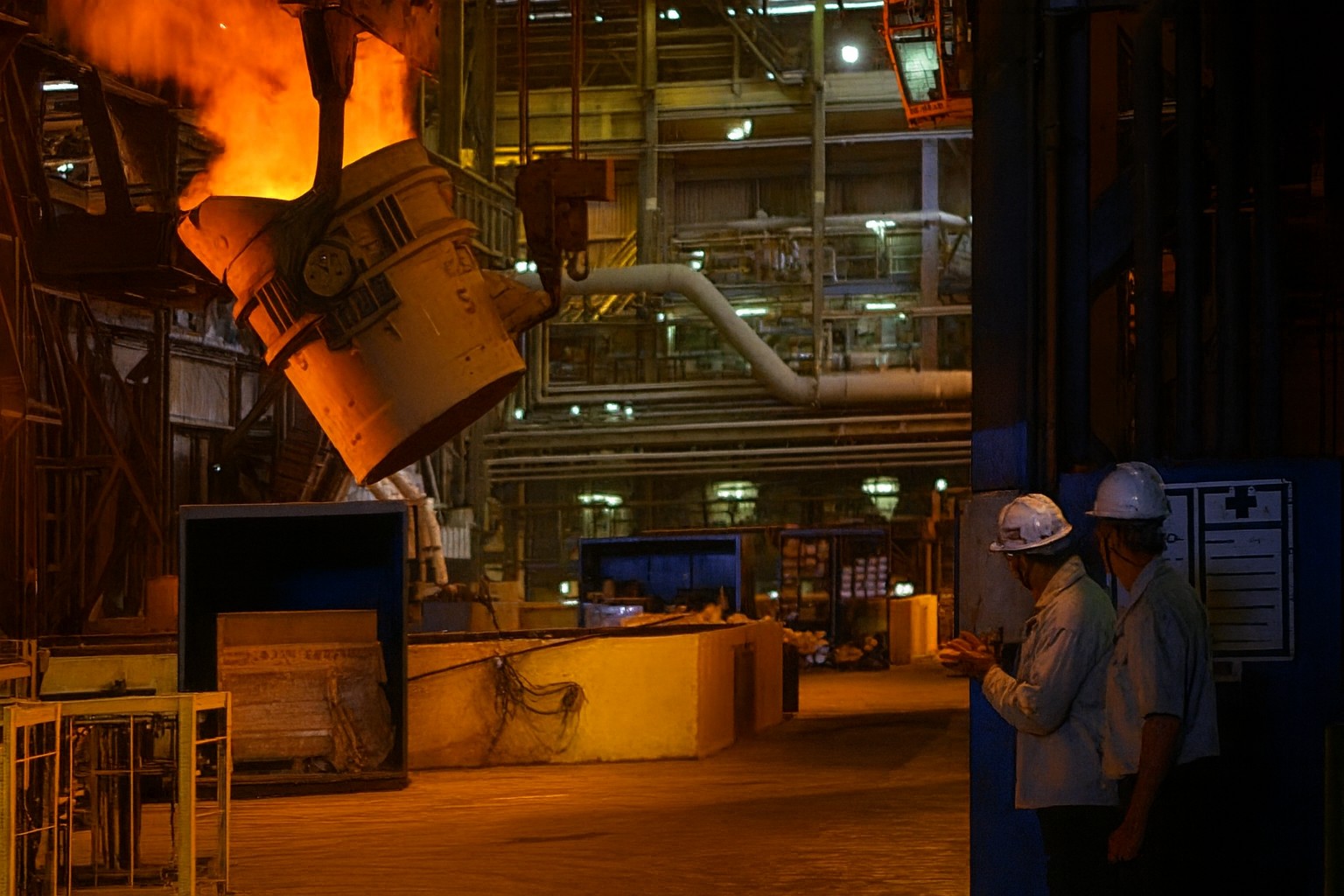
Steel was one of the quarter’s main operational improvements. Adjusted EBITDA from the segment rose 61.7% from the first quarter and 9.5% from a year earlier to R$636.3 million. The EBITDA margin recovered to 10.5% from 7% in the previous quarter, although it remained broadly stable year over year.
Steel sales increased 16.7% to 1.18 million metric tons. Domestic sales rose 9.9% to 825,000 tons, while overseas sales jumped 36.1% to 357,000 tons.
CSN attributed the improvement to Brazilian anti-dumping measures that reduced the inflow of imported steel and allowed local producers to recover market share. Domestic average prices increased 3.5% from the previous quarter but remained 5.7% below the year-earlier level. Steel revenue rose 12.7% to R$6.08 billion.
Mining Margins Contract Despite Strong Volumes
Mining moved in the opposite direction. Iron-ore sales reached 11.85 million tons, the fourth-highest quarterly volume in CSN’s history and broadly stable from a year earlier. Production declined 5.5%, however, after a scheduled 15-day shutdown at the mine and port.
Mining revenue fell 14.9% to R$2.90 billion, while adjusted EBITDA dropped 24.5% to R$929.7 million. The segment’s margin narrowed to 32% from 36.1%.
The stronger Brazilian real and higher ocean freight costs reduced unit net revenue to US$49.09 per ton, down 5.4% year over year. Cash production costs increased to US$24 per ton from US$20.80.
Cement Sets Another EBITDA Record
Cement delivered its second consecutive quarterly EBITDA record even as sales volumes declined. Revenue increased 14.3% to R$1.39 billion, while adjusted EBITDA jumped 45.5% to R$426.9 million. The EBITDA margin expanded to 30.8% from 24.2% a year earlier.
Sales volume fell 9.9% to 3.12 million tons, reflecting scheduled maintenance and CSN’s strategy of prioritizing prices and profitability over volume.
Logistics EBITDA increased 5.6% to R$548.2 million, supported by stronger rail and multimodal operations. The segment’s margin rose to 45.2% from 44.1%.
Exceptional Energy Gain Supports Consolidated EBITDA
Energy revenue nearly doubled to R$395.5 million, while adjusted EBITDA rose to R$245.6 million from R$90 million a year earlier. The margin reached 62.1%.
CSN said the result included an exceptional retroactive revenue recognition following a favorable decision in an administrative proceeding before electricity regulator Aneel involving the Jacuí hydroelectric plant. The company did not disclose the precise amount of the nonrecurring contribution.
The R$155.6 million increase in energy EBITDA was larger than the R$129.6 million increase in consolidated EBITDA. Excluding the energy segment entirely, CSN’s adjusted EBITDA would have declined by approximately 1% year over year.
Capital expenditure increased 6.2% to R$1.41 billion, mainly because of the P15 mining project. A R$934 million working-capital release helped cash generation, but it was not sufficient to produce positive adjusted free cash flow before financing transactions.


Leave a Reply