

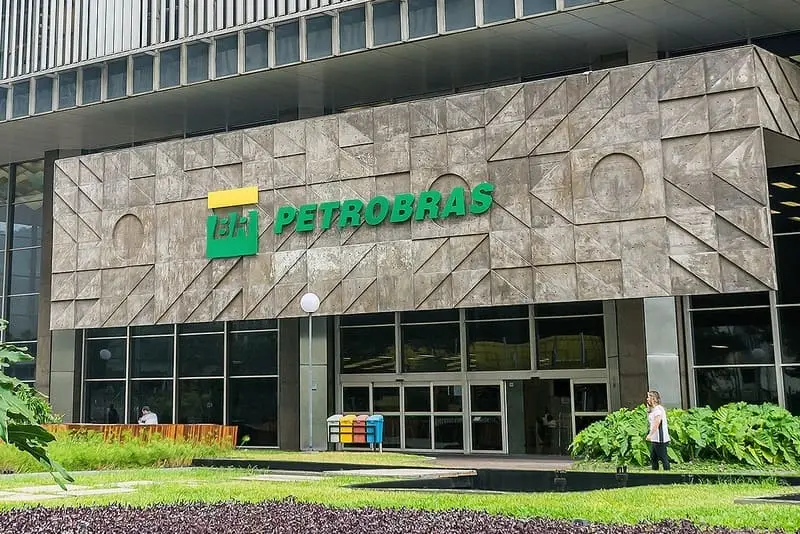
By Brazil Stock Guide – Petrobras (B3: PETR3, PETR4) paid R$251.3 billion in taxes, royalties and other government contributions during the first nine months of 2026, a 26% increase from a year earlier, underscoring the Brazilian oil producer’s growing importance to public finances as production expands and new export duties take effect.
According to the company’s third-quarter 2026 fiscal report, released by Petrobras, the total comprised R$168 billion in corporate taxes, R$58.1 billion in government participation payments and R$25.2 billion in taxes withheld on behalf of third parties. Payments totaled R$199.9 billion in the comparable period of 2025.
Federal revenue boosted by oil export tax
Petrobras contributed R$155.7 billion in federal taxes and government participation payments through September, equivalent to approximately 6.6% of Brazil’s federal revenue over the period, according to the company’s calculations.
The figure included R$97.6 billion in federal taxes and R$58.1 billion in government participation payments, some of which are subsequently distributed to states and municipalities.
Higher corporate income tax payments and a new export duty on crude oil contributed to the increase in federal collections.
Introduced in March under Provisional Measure No. 1,340 and subsequently maintained through resolutions issued by Brazil’s Foreign Trade Chamber, the export duty carries a standard rate of 12%, reduced to 6% for shipments to the European Union under applicable trade rules.
Petrobras paid R$6.9 billion in crude oil export duties during the first nine months of the year, according to the report.
Government participation payments, which include royalties and other charges associated with oil exploration and production, increased 24% from the corresponding period of 2025.
Of the R$58.1 billion collected, royalties accounted for R$38.6 billion, while special participation payments on highly productive or profitable fields contributed another R$18.6 billion.
Signature bonuses generated R$700 million, and payments for the occupation or retention of exploration areas added approximately R$200 million.
Petrobras attributed the increase primarily to higher production volumes and stronger oil prices.
Total fiscal payments reached R$90.4 billion in the third quarter, compared with R$88.6 billion in the preceding three months. Over the four quarters ended September, the company transferred R$329 billion to public coffers.
State tax contributions rise 13%
Petrobras paid R$94 billion in state-level taxes during the first nine months of 2026, an increase of 13% from a year earlier.
According to the company, those payments represented approximately 15.1% of total state tax revenue across Brazil during the period.
The increase reflected stronger sales volumes and higher nominal rates of ICMS, Brazil’s state-level tax on the circulation of goods and certain services, particularly on fuels covered by the single-stage taxation system.
The figures underscore the importance of Petrobras’s refining, distribution and commercial operations to regional government finances.
Rio de Janeiro leads regional revenue distribution
Rio de Janeiro received the largest combined amount of ICMS revenue and government participation payments associated with Petrobras, totaling R$26.4 billion through September.
The state’s share included R$11.2 billion in ICMS and R$15.2 billion in government participation payments, reflecting its central role in Brazil’s offshore oil industry.
São Paulo ranked second with R$18.8 billion, followed by Minas Gerais at R$12.3 billion.
The figures combine Petrobras payment data with information from Brazil’s National Agency of Petroleum, Natural Gas and Biofuels, or ANP.
The distribution reflects contrasting characteristics of Brazil’s energy economy.
Rio de Janeiro benefits from a substantial share of offshore production and associated royalties, while São Paulo’s larger consumer market and significant refining and fuel distribution activities generate considerable tax revenue.
Of São Paulo’s R$18.8 billion in reported collections, R$18.4 billion came from ICMS.
Other major recipients included Rio Grande do Sul, with R$6.5 billion, Mato Grosso at R$6.3 billion, Goiás and Santa Catarina at R$5.8 billion each, and Paraná at R$5.6 billion.
Espírito Santo, another major oil-producing state, recorded R$4.7 billion, including R$1.8 billion in government participation payments.
Municipal revenue reaches R$1.6 billion
Direct tax payments to municipalities totaled R$1.6 billion between January and September, representing a 6% increase from the same period in 2025.
The principal sources were ISS, a municipal services tax, including amounts withheld from third parties, and IPTU, a municipal property tax.
Petrobras said the increase was driven mainly by greater contracting of services related to refining operations.
Oil production and taxation shape public finances
The fiscal report highlights the sensitivity of government revenue to changes in Brazil’s oil production, international crude prices and taxation policies.
The introduction of the crude export duty added a significant source of federal revenue, while higher production and oil prices supported increased royalty and special participation payments.
These flows are particularly important for states with major offshore operations, although refining, fuel distribution and consumption also generate substantial tax collections in other regions.
Petrobras calculates its fiscal contributions on a cash basis, recording amounts actually paid during the reporting period.
As a result, the R$251.3 billion total should not be confused with the company’s earnings or directly compared with figures in its value-added statement, which follows accrual accounting.
The reported amount also includes taxes collected or withheld on behalf of third parties, rather than solely obligations arising from Petrobras’s own operations or profitability.


Leave a Reply