
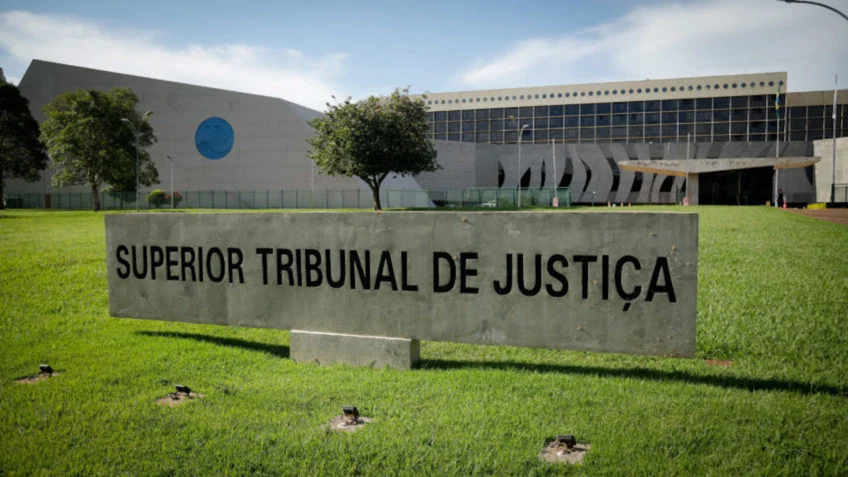
By Brazil Stock Guide – Brazil has enacted a relevance test allowing the Superior Court of Justice, known as the STJ, to reject special appeals that lack broader legal, economic, political or social impact while turning selected decisions into binding nationwide precedents, according to Law No. 15,484/2026 published in the Official Gazette.
The measure, published Tuesday, Aug. 4, regulates a constitutional requirement introduced by Amendment No. 125 of 2022 and changes Brazil’s Code of Civil Procedure. The STJ said the system is intended to focus the court’s work on cases capable of affecting the interpretation of federal law beyond the interests of the parties directly involved.
The legislation adds Article 1,035-A to the procedural code. Under the new framework, the STJ may decline to hear a special appeal when the underlying question of federal law is deemed irrelevant.
The change strengthens the court’s role as a precedent-setting institution, reducing its focus on reviewing individual disputes and allowing it to select cases with wider implications for Brazil’s legal system.
Appeals require a specific relevance section
Appellants will be required to include a separate, reasoned section explaining why the federal legal question raised in the appeal is relevant. The argument must show that the dispute extends beyond the parties’ individual interests and carries economic, political, social or legal significance.
An appeal that omits the section or fails to provide adequate reasoning must be denied admission. Lower courts may identify the formal omission during their initial review, while the decision on whether the legal question is substantively relevant remains exclusively with the STJ.
A finding that a matter lacks relevance requires the support of at least two-thirds of the members of the STJ panel responsible for hearing the case. That decision cannot be appealed.
The reporting justice may also permit submissions from interested third parties represented by qualified counsel. Proceedings under the relevance system must generally be heard in person, except when the reporting justice votes against recognizing relevance or proposes reaffirming the court’s prevailing case law.
Cases with presumed relevance
Brazil’s Constitution establishes categories in which relevance is automatically presumed. They include criminal cases, administrative misconduct proceedings and lawsuits in which the amount in dispute exceeds 500 times the minimum wage.
The presumption also applies to cases that may result in electoral ineligibility and appeals against lower-court decisions that conflict with the STJ’s prevailing jurisprudence. Federal law may create additional categories.
Appellants in those cases do not need to prove relevance because the requirement is satisfied by operation of law.
Nationwide suspensions and binding rulings
Once the STJ recognizes the relevance of a federal legal question, the reporting justice may suspend all pending individual or collective cases addressing the same issue across Brazil for six months.
The suspension may be extended once for another six months when a public hearing or third-party participation is required, bringing the maximum period to 12 months.
Decisions issued under the relevance system will be included among the precedents that courts and judges must observe. The rule is designed to give selected STJ judgments a broader and more uniform effect throughout the country.
Presidents or vice presidents of lower courts will be able to block special appeals involving questions that the STJ has already found irrelevant. They may also deny appeals against decisions that comply with an STJ precedent established under the new system.
An interlocutory appeal to the STJ will not be available when denial of admission is based on an interpretation established under the relevance regime.
Complaints and pending appeals
In exceptional cases, parties may file a procedural complaint to enforce compliance with a decision issued under the relevance system. The complaint must be summarily rejected if the ordinary court levels have not been exhausted or if the challenged act is not clearly inconsistent with the qualified precedent.
Withdrawal of the special appeal will not prevent the STJ from examining a legal question after its relevance has been recognized.
If the court finds that a question lacks relevance, other special appeals suspended while awaiting that determination will be considered automatically inadmissible. The procedural and substantive effects of an STJ decision recognizing or rejecting relevance will also apply to pending cases before the court and in lower jurisdictions.
The law takes effect 30 days after its official publication. Its requirement for a separate, reasoned relevance section will apply only to special appeals challenging rulings published after the legislation enters into force. The STJ will establish additional implementation rules through amendments to its internal regulations.


Leave a Reply