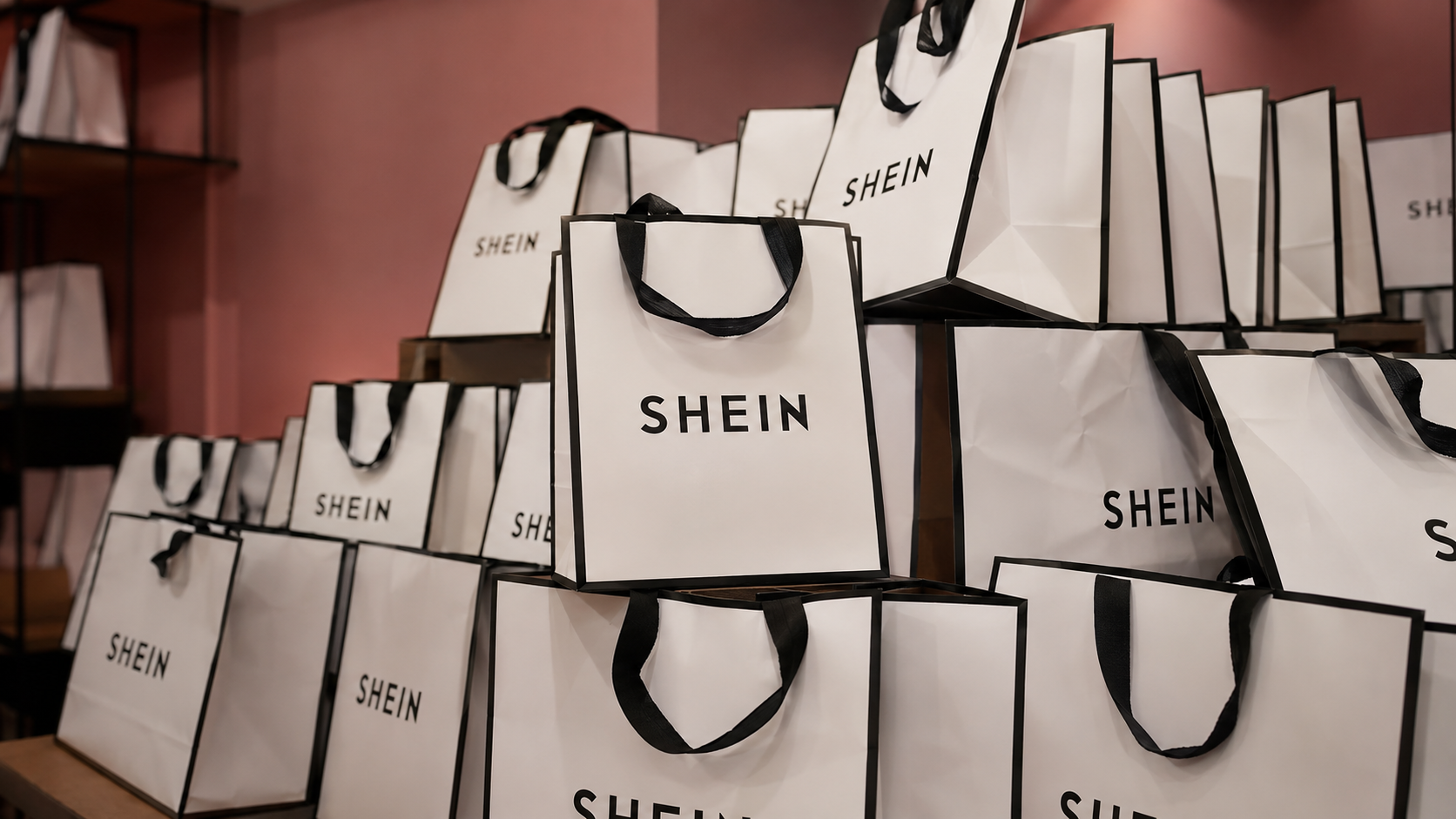
By Brazil Stock Guide – Shein raised about $1.7 billion in its Hong Kong initial public offering at a valuation of roughly $26 billion, as tighter US and European import rules pressured the Chinese retailer’s low-cost, cross-border business model.
The listing fell short of expectations and valued Shein 74% below its $100 billion peak in 2022, according to a report by Brasil 247. The decline illustrates how tariffs, customs changes and regulatory scrutiny have reshaped the outlook for Asian e-commerce platforms.
Shein’s growth was built on shipping inexpensive clothing, accessories and other goods directly from manufacturers in Asia to consumers worldwide. That model benefited from simplified customs treatment and tax exemptions for low-value parcels in several major markets.
Those advantages are now being curtailed. Higher tariffs, additional compliance requirements and rising logistics expenses are squeezing margins while reducing the price gap between imported merchandise and goods sold by domestic retailers.
US Listing Plan Runs Into Political Resistance
Shein initially sought to list in the US, where the company might have secured a higher valuation. The plan encountered growing political resistance as Washington intensified its scrutiny of Chinese technology companies.
US concerns have centered on data protection, national security and the relationship between Chinese companies and Beijing. ByteDance Ltd., the privately held owner of TikTok, has faced similar pressure.
At the same time, US authorities moved to tighten rules governing low-value imports. The measures affect the commercial structure used by Shein and Temu, the platform owned by PDD Holdings Inc. (NASDAQ: PDD), which rely heavily on direct shipments to consumers.
European authorities have also increased oversight of foreign e-commerce platforms. Policy discussions have focused on customs charges, product safety, platform accountability and the competitive impact of inexpensive imports on local businesses.
Higher Costs Challenge Direct-Shipping Model
Stricter customs rules directly affect the economics behind Shein’s expansion. Higher duties and compliance costs make individual parcels more expensive and limit the advantage gained by avoiding traditional wholesale and retail distribution networks.
The pressure is particularly significant because Shein depends on international markets to sustain growth. Even with a large global customer base, the company faces greater difficulty converting sales expansion into profits at the pace previously expected by investors.
The drop from a $100 billion valuation in 2022 to about $26 billion at the Hong Kong listing represents a decline of approximately $74 billion. It also marks a reversal from the pandemic period, when online shopping growth helped turn Shein into one of the world’s most valuable private startups.
Brazil Remains More Exposed to Low-Cost Imports
Brazil has raised taxes on low-value international purchases, but its market remains comparatively more open than the US and major European economies, according to Brasil 247.
Brazilian manufacturers and retailers argue that the current framework does not provide equal competitive conditions. Domestic companies must comply with local tax, labor and regulatory requirements that do not apply in the same way to goods shipped directly from abroad.
The rapid growth of Asian platforms gave Brazilian consumers access to a broader selection of lower-priced products. It also increased pressure on domestic apparel manufacturers, retailers and other businesses competing with imported merchandise.
The debate now involves the balance between affordable consumer prices, tax collection and the preservation of industrial capacity and employment. Industry groups say taxation on individual parcels has reduced, but not eliminated, the disparity between locally manufactured products and direct imports.
Industrial Policy Reshapes Global Trade
Shein’s disappointing valuation reflects a wider shift in international trade. The US and Europe, long associated with trade liberalization, have increasingly used tariffs, subsidies and regulation to protect domestic industries from Chinese competition.
The shift extends beyond fashion and e-commerce. Electric vehicles, batteries, solar panels and semiconductors have become central to trade disputes between China and Western economies.
For investors, Shein’s Hong Kong debut highlights the regulatory risk embedded in a business that depends on access to large consumer markets and favorable treatment for small international shipments. Rising barriers threaten both growth and profitability.
The listing also intensifies Brazil’s debate over imported e-commerce goods. While the US and Europe are using trade and industrial policies to defend domestic production, Brazil continues to offer foreign platforms comparatively broad access to its consumer market.


Leave a Reply