
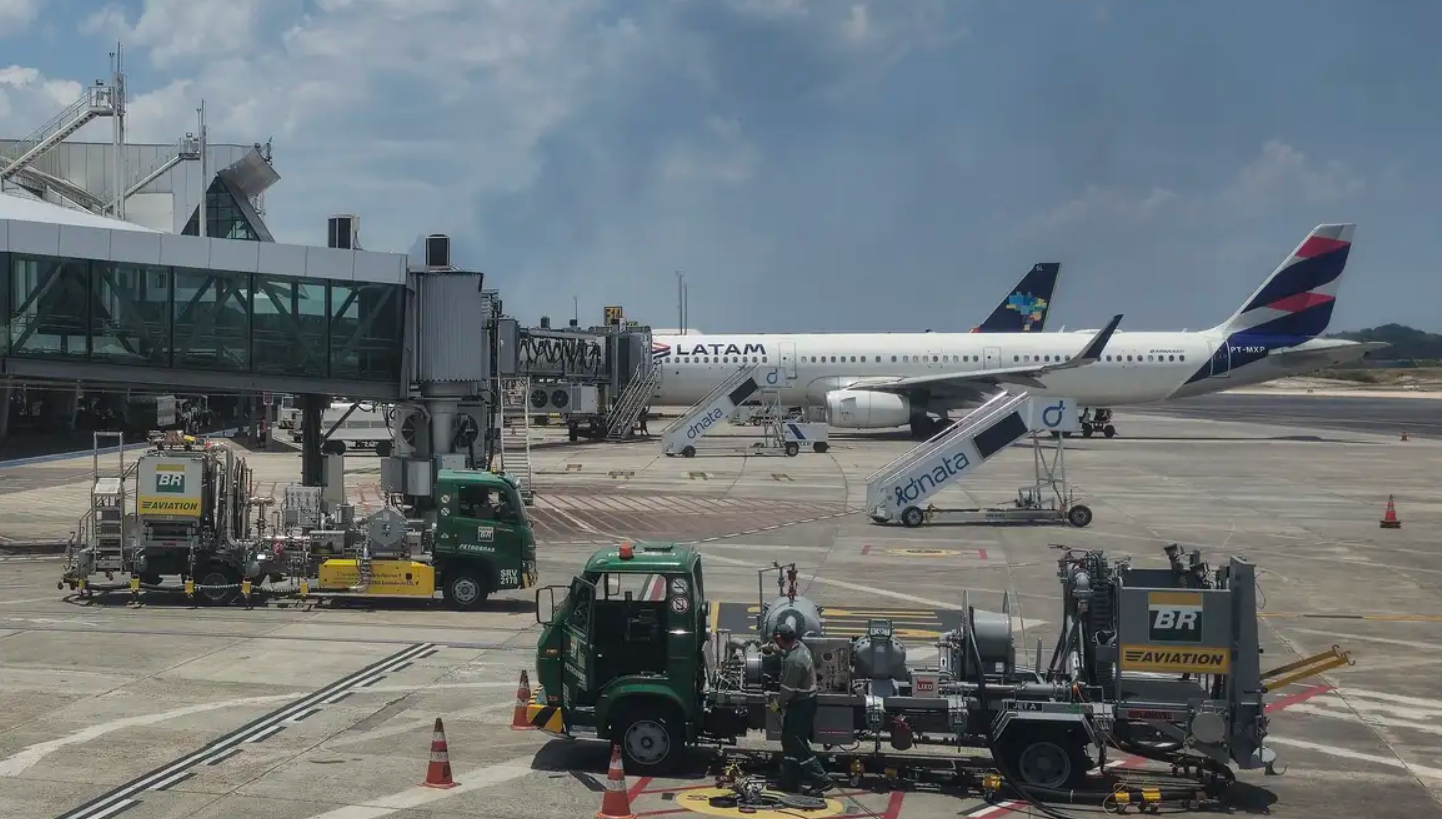
By Brazil Stock Guide – Petrobras (PETR3, PETR4; NYSE: PBR) raised its average jet fuel price by 13.9% as geopolitical tensions in the Middle East disrupted oil supply chains and drove up international prices. The increase took effect Tuesday.
The adjustment adds an average R$0.68 per liter to the price of aviation kerosene, known in Brazil as QAV. Prices at Petrobras refineries now range from R$5.44 to R$5.70 per liter.
São Luís recorded the steepest monthly increase, at 14.34%, while Canoas, in the southern state of Rio Grande do Sul, had the smallest adjustment, at 13.51%.
The increase is set to add pressure to Brazilian airlines, where fuel accounts for about 30% of operating expenses, according to the National Civil Aviation Agency, or Anac. QAV is used to power both airplanes and helicopters.
Annual Increase Reaches 53.3%
Jet fuel prices have climbed 53.3% since the beginning of 2026, equivalent to an increase of R$1.94 per liter.
The latest adjustment “reflects the increase in international aviation kerosene prices, driven by geopolitical tensions in the Middle East,” Petrobras said.
The war launched by the US and Israel against Iran on Feb. 28 disrupted oil-industry logistics and reduced supply in international markets, according to the report.
Instability around the Strait of Hormuz, a strategic shipping route south of Iran, has been a key source of pressure. Before the conflict, about 20% of global oil and gas production passed through the region.
Concerns over shipping flows and supply availability pushed crude oil and refined-product prices higher. Brazil is a major oil producer, but domestic fuel costs remain exposed to international markets because crude and petroleum products are globally traded commodities.
Installment Program Returns
Petrobras resumed a payment program in September allowing fuel distributors to spread the latest increase across three monthly installments. The measure is intended to reduce the immediate cash-flow impact of the price adjustment.
“The initiative will allow distributors to pay the increase in three monthly installments, reducing the financial impact,” Petrobras said.
The company also said it has secured all jet fuel volumes requested by distributors, easing concerns about potential supply shortages amid international logistics disruptions.
Petrobras had raised QAV prices by 55% in April and a further 18% in May. The company introduced installment payments at the time to soften the financial burden on airlines and distributors.
Prices declined in June and July as the US and Iran moved closer to a potential agreement. The trend reversed in August, when QAV prices rose 1.9%, followed by September’s larger increase.
Contract Formula Cushions Volatility
Jet fuel sold by Petrobras is adjusted on the first day of each month under contracts with distributors.
The company said domestic QAV prices follow a “contractual parametric formula that acts as a short-term buffer, resulting in more moderate adjustments than those observed in international markets.”
The mechanism is designed to limit the immediate pass-through of abrupt movements in global prices. Persistent geopolitical tensions, however, have kept international fuel costs elevated.
Petrobras supplies distributors with QAV produced at its refineries or sourced through imports. Distributors then transport the fuel and sell it to airlines, helicopter operators, resellers and other airport customers.
The state-controlled company accounts for about 85% of Brazil’s jet fuel production. The market remains open to competition, with no restrictions preventing other companies from producing or importing the fuel.


Leave a Reply