
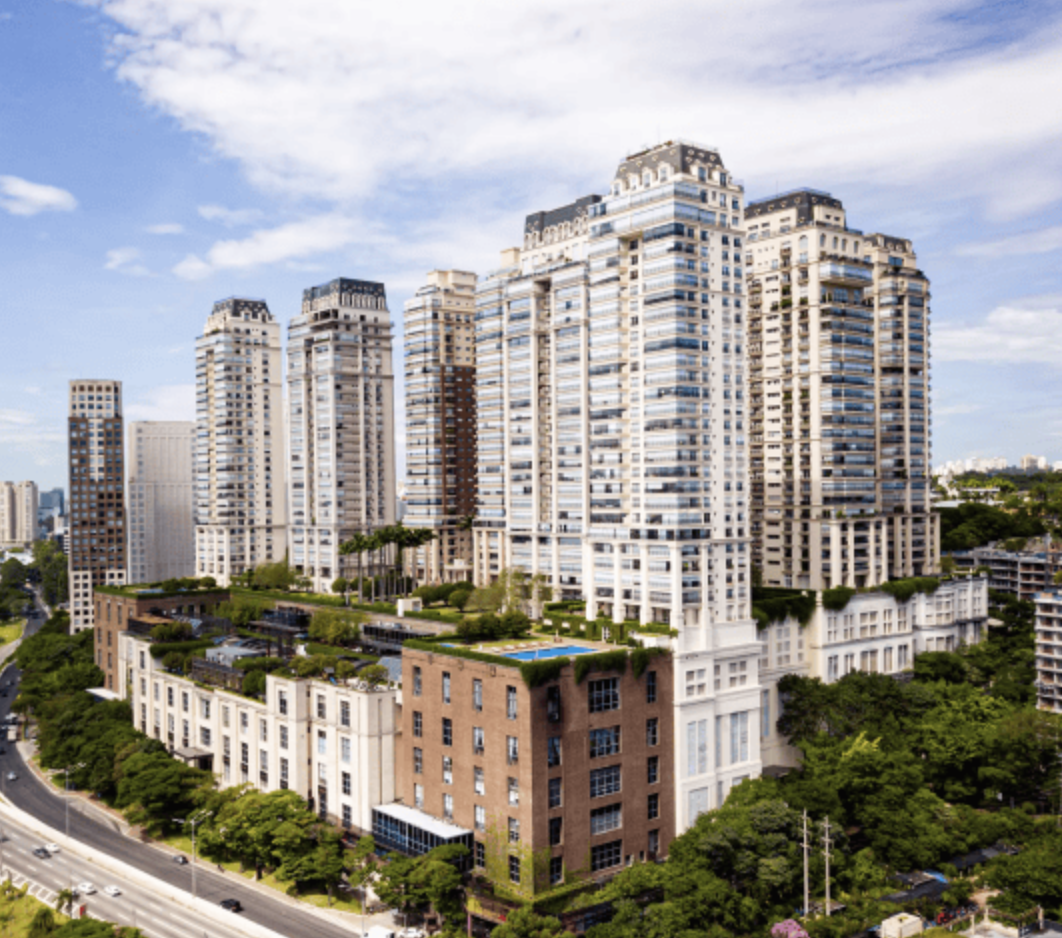
By Brazil Stock Guide – JHSF (B3: JHSF3) reported consolidated net income of R$444.4 million for the second quarter of 2026, up 80.8% from a year earlier, boosted by the recognition of revenue from the sale of Boa Vista Estates inventory to a real estate investment fund structured by the company.
Gross revenue climbed 80.9% to R$985.2 million, while net revenue increased 88.5% to R$935.3 million. Adjusted EBITDA more than doubled to R$502.6 million, up 103.3%, with the margin expanding to 53.7% from 49.8%.
The record result, however, has two distinct components. Real estate development benefited heavily from the accounting recognition of the fund transaction, while JHSF’s recurring-income businesses delivered more moderate but broad-based growth across malls, hospitality, executive aviation, residential rentals and private clubs.
Real estate development drives most of the profit
Gross revenue from real estate development more than tripled to R$558.5 million, a 224.8% increase. The segment’s adjusted EBITDA rose 222.4% to R$345.8 million, while net income reached R$317.8 million, up 200%.
That figure was equivalent to roughly 71% of JHSF’s consolidated net income, before intersegment eliminations.
The increase primarily reflected the recognition of part of the first tranche of the Boa Vista Estates inventory sale, a transaction completed in December 2025. JHSF did not disclose the exact amount recognized from the transaction during the quarter.
At the end of June, the company still had R$1.7 billion in revenue to be recognized from sales to end customers and the real estate fund. Including the second tranche of the transaction, expected to close in December, total future revenue recognition reaches R$3.5 billion.
Despite the sharp earnings increase, the development segment’s adjusted EBITDA margin narrowed to 61.7% from 64.6%, reflecting higher construction costs and commissions related to the fund transaction.
Recurring businesses grow 30%
Gross revenue from recurring-income businesses increased 30.3% to R$439.6 million, while adjusted EBITDA rose 31% to R$197.3 million. The margin was broadly stable at 49.4%, compared with 49% a year earlier.
Net income from the division, however, fell 27.7% to R$143.3 million. Net financial expenses nearly doubled to R$74.5 million from R$39.4 million, while fair-value gains on investment properties declined to R$58.3 million from R$131.3 million.
In malls, gross revenue rose 10.1% to R$106.7 million, and adjusted EBITDA increased 6.6% to R$56.8 million. Tenant sales grew 6%, with same-store sales up 5.7% and same-store rent increasing 10.7%. Occupancy stood at 98.2%.
The figures already include the initial contribution from CJ Boa Vista Village, which opened in late May. JHSF expects its attributable gross leasable area to increase 39% to approximately 98,000 square meters once projects currently under development are completed.
At the executive airport business, gross revenue jumped 53.6% to R$107.4 million, reflecting the contribution from Embassair, the fixed-base operator acquired in Miami. Adjusted EBITDA rose 25.7% to R$56.2 million, but the margin fell to 56% from 68.8% as higher aviation fuel costs offset part of the revenue growth. Aircraft movements increased just 2.3% year over year.
Revenue from JHSF Residences and Clubs nearly doubled to R$78.8 million, while adjusted EBITDA advanced 74.7% to R$52.3 million. JHSF currently has 72 residential rental units in operation, with contracted occupancy close to 100%, and another 54 units scheduled for delivery during 2026.
In hospitality and restaurants, adjusted EBITDA rose 16.6% to R$27.1 million. The average daily hotel rate increased 6% to R$4,384, while revenue per available room, or RevPAR, grew 7.3%.
JHSF Capital ended June with R$12.1 billion in assets under management, compared with R$2.6 billion a year earlier. The asset manager’s revenue more than tripled to R$13 million.
Record earnings have yet to translate into operating cash
JHSF’s gross debt increased by R$870.4 million during the quarter, or 16.1%, reaching R$6.27 billion. Cash, equivalents and marketable securities totaled R$4.39 billion, an increase of only R$72 million.
The company reports net cash of R$1.19 billion, but its calculation includes R$2.94 billion in receivables and adds back R$120.8 million in mandatorily convertible debt. On a stricter cash-only basis—comparing gross debt with cash, equivalents and marketable securities—JHSF would have net debt of approximately R$1.88 billion.
Cash flow from operating activities was negative by R$81 million during the quarter, while investing activities consumed another R$468 million. To fund its expansion program, the company raised R$891 million through new loans and debt securities.
Part of the increase in debt came from a short-term bridge loan that JHSF plans to refinance through a Brazilian real estate receivables certificate, known locally as a CRI. The issuance will initially total R$800 million and could be increased to as much as R$1 billion, with one of the tranches carrying a 10-year maturity.
Despite the increase in debt, the average maturity remained relatively long at 5.3 years. The average spread declined to Brazil’s CDI interbank benchmark rate plus 0.90%, from CDI plus 0.98% a year earlier. Available cash covers the company’s scheduled debt maturities for the next six years.
For the first half, JHSF reported net income of R$816.1 million, up 39%. Gross revenue increased 60% to approximately R$1.6 billion, while adjusted EBITDA rose 69% to R$753.4 million.
The first-half performance therefore combines consistent expansion across JHSF’s recurring businesses with a significant contribution from real estate revenue recognition. For investors, the key issues to monitor will be the pace of future recognition from the fund transaction, the conversion of accounting earnings into cash and the trajectory of the company’s debt.


Leave a Reply