By Brazil Stock Guide — Social media influence built by supporters of Brazilian President Luiz Inácio Lula da Silva, who was recently reelected to an unprecedented fourth term, is increasingly being deployed to exert pressure on economic and corporate decisions.
Ana Elisa, a 21-year-old digital influencer from Lula’s Workers’ Party (PT), elected to Congress with more than 524,000 votes, is seeking to reverse Gerdau’s (B3: GGBR4; NYSE: GGB) decision to halt steel production at its plant in Divinópolis, a city in the west-central region of Minas Gerais state.
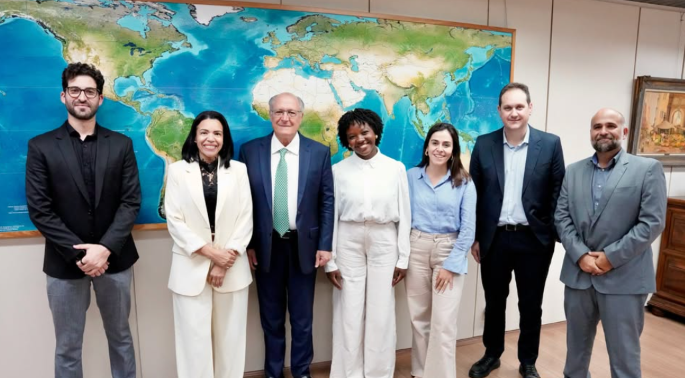
Following a meeting with Vice President Geraldo Alckmin on Wednesday (November 4), she said the shutdown might not be permanent and that the federal government was willing to explore alternatives to preserve jobs.
“There is indeed a possibility of restarting operations,” Ana Elisa said. The congresswoman-elect described the plant as being in a state of “hibernation,” although Gerdau has not confirmed any plans to resume production. The company announced on Tuesday (November 3) that it would halt steelmaking operations at the facility, laying off 278 employees while retaining approximately 180 workers in its remaining activities.
Born in Divinópolis, Ana Elisa rose to national prominence through social media, where she has around 2 million followers. A law student, she received the second-highest number of votes among congressional candidates in Minas Gerais in October’s elections, behind right-wing influencer Nikolas Ferreira of the Liberal Party (PL).
Her digital presence also caught the attention of Lula’s presidential campaign, which invited her to help with communications during the runoff election. Now, even before taking office in February 2027, she is seeking to translate that online following into influence over a major corporate decision.
The meeting with Alckmin also included Divinópolis Mayor Janete Aparecida, a member of the Avante party, and representatives of Gerdau. Despite their political differences, the two women called for a coordinated effort to preserve industrial activity in the city.
From Social Media to Economic Decisions
The initiative comes in the same week that Lula mobilized the so-called “Lula Army,” a WhatsApp network organized by Congressman André Janones, a member of the Rede party, to rally supporters during a public hearing at Brazil’s Supreme Federal Court (STF), the country’s highest court, over a presidential decree provisionally banning sports betting and online gambling.
The network, which surpassed 10 million followers during the presidential runoff campaign, received audio and video messages from Lula on Tuesday (November 3), encouraging supporters to mobilize against online gambling. Throughout the day, the hashtag #ComLulaNãoTemBets — roughly translated as “No Betting Under Lula” — ranked among the most discussed topics on X. The initiative sought to bring the digital mobilization tactics developed during the election campaign into a debate over economic regulation.
The hearing, chaired by Justice Luiz Fux, brought together 34 representatives from government agencies, football clubs, businesses and organizations connected to the gambling industry. The government defended the ban on public health grounds and concerns about household indebtedness. Football clubs and industry representatives, meanwhile, warned of potential losses in revenue, jobs and sponsorship agreements. The hearing did not produce a ruling, and the measure’s constitutionality remains subject to judicial review.
The two episodes illustrate a shift in how Lula’s political allies are using digital influence to engage with economic decisions. Online audiences numbering in the millions, previously mobilized primarily during election campaigns, are now being enlisted in disputes involving corporate strategies, employment and public policy.
Yet social media reach does not necessarily translate into tangible results. Corporate decisions remain subject to economic fundamentals, while judicial rulings must rest on legal and constitutional grounds.
High Costs and International Competition
In Gerdau’s case, efforts to reverse the shutdown face significant economic obstacles. The company attributed its decision to the plant’s declining competitiveness, primarily because of difficulties securing iron ore at commercially viable prices. Gerdau also cited rising steel imports into Brazil and unfavorable international market conditions, particularly for exports, which have historically been important to the Divinópolis operation.
According to Gerdau, the decision is part of a broader strategy to concentrate steel production in more competitive, efficient and technologically advanced facilities. The explanation suggests that any potential restart would depend on improvements in the plant’s underlying economics rather than political negotiations alone.
The economic impact extends well beyond the jobs being eliminated. The Divinópolis municipal government estimates that around 1,000 people, including employees and contractors, could be affected by the decision, equivalent to approximately 7.4% of the city’s industrial workforce. Municipal estimates also suggest that the plant may account for as much as 15% of the city’s transfers from ICMS, Brazil’s state-level value-added tax, which is partially redistributed to municipalities. The facility also supports local demand for transportation, services and retail activity.
Alongside the political negotiations, representatives of Gerdau, the local metalworkers’ union and Brazil’s Labor Ministry have discussed a compensation agreement for affected employees. The proposal includes additional severance payments equivalent to three and a half months of salary, benefits linked to length of service and opportunities for transfers to other Gerdau facilities. The agreement still requires approval at a workers’ assembly.
The mobilization comes amid growing concern within Brazil’s steel industry over international competition. The Minas Gerais Industry Federation (Fiemg) said Gerdau’s decision underscores the need for a long-term industrial policy aimed at reducing costs and strengthening the competitiveness of domestic manufacturing.
For now, the prospect of restarting steel production remains a possibility advocated by political leaders rather than a commitment from the company. Gerdau has not announced any reversal of its decision, provided a timetable for resuming operations or confirmed plans to rehire dismissed workers.
The political reach of digital mobilization is already evident. Whether it can ultimately change corporate decisions remains an open question.


Leave a Reply