
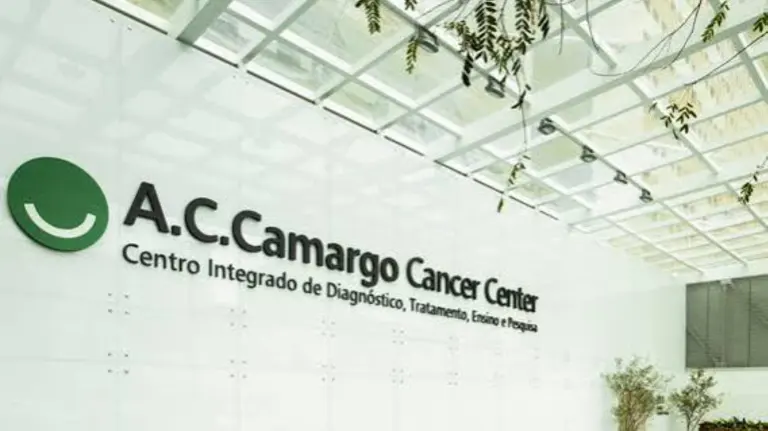
By Brazil Stock Guide – A.C.Camargo Cancer Center and Bristol Myers Squibb Co. (NYSE: BMY) have signed a risk-sharing agreement in Brazil that links the financial cost of advanced lung cancer immunotherapy to patient outcomes, marking the pharmaceutical company’s first oncology contract of its kind in the country.
The partnership, announced Monday, November 9, covers first-line treatment of non-small cell lung cancer using a combination of ipilimumab and nivolumab, two immunotherapy drugs approved by Brazil’s health regulator Anvisa, according to Brasil 247. The arrangement is designed to reduce financial uncertainty for healthcare providers and insurers while facilitating access to innovative cancer treatments.
Drug Costs Tied to Clinical Outcomes
The agreement introduces a performance-based commercial structure under which financial adjustments depend on predefined clinical criteria and patient responses to treatment.
Unlike traditional pharmaceutical procurement contracts, which generally establish prices independently of individual treatment outcomes, the risk-sharing model incorporates clinical performance into the financial relationship between the manufacturer and healthcare provider.
Patient outcomes will be evaluated within 90 days of the first administration of the immunotherapy combination.
If the agreed conditions trigger compensation from Bristol Myers Squibb, the adjustment will be made exclusively through additional product supply rather than direct cash reimbursement.
The arrangement is intended to give healthcare institutions and insurers greater budget predictability when financing expensive oncology medicines.
The companies have not disclosed the financial value of the agreement, the specific clinical thresholds that would trigger compensation or the expected number of eligible patients.
Preserving Medical Independence
The agreement establishes eligibility parameters based on the patient’s diagnosis, disease stage and prescribed line of treatment.
These criteria were developed with input from A.C.Camargo’s medical team and are based on established clinical guidelines.
Importantly, the commercial arrangement does not alter physicians’ authority to determine the most appropriate treatment for individual patients.
The companies also aim to prevent financial negotiations from delaying the initiation of therapy, particularly when patients are eligible for first-line immunotherapy.
For Bristol Myers Squibb, the agreement reflects a broader approach to pharmaceutical innovation that extends beyond drug discovery to include new contracting and reimbursement arrangements.
Christiano Silva, general manager of Bristol Myers Squibb in Brazil, has emphasized the importance of commercial partnerships that make advanced treatments more accessible while providing greater financial security across the healthcare system.
Rafael Ielpo, commercial and marketing director at A.C.Camargo Cancer Center, has similarly highlighted the role of cost-effectiveness and value-based healthcare in supporting the sector’s long-term sustainability.
Brazil’s Oncology Market Tests Alternative Payment Models
The agreement comes as healthcare providers and insurers face mounting challenges in financing advanced cancer treatments, particularly therapies whose high costs can create substantial budget uncertainty.
Risk-sharing agreements seek to address that problem by distributing some of the financial exposure associated with treatment performance between pharmaceutical manufacturers and healthcare institutions.
In the Bristol Myers-A.C.Camargo arrangement, the cancer center will serve as an intermediary between the drug manufacturer and the organizations financing patient care.
The model incorporates real-world clinical outcomes into commercial terms, potentially allowing the participating institutions to assess both treatment performance and financial exposure.
Its 90-day evaluation period provides an initial framework for measuring clinical results, although the companies have not disclosed how longer-term outcomes will be incorporated into their assessment.
The initiative also reflects growing interest in value-based healthcare, an approach that places greater emphasis on clinical outcomes relative to treatment costs.
Strategic Implications for Bristol Myers Squibb
For Bristol Myers Squibb, whose shares trade on the New York Stock Exchange under the ticker BMY, the partnership introduces a new contracting structure for its oncology portfolio in Brazil.
The company develops and markets treatments for serious diseases, with oncology representing a major area of its global pharmaceutical business.
The agreement centers on ipilimumab and nivolumab, two immunotherapies used together in certain treatment regimens for non-small cell lung cancer.
By tying part of the commercial arrangement to clinical performance, Bristol Myers Squibb is testing an alternative to conventional pharmaceutical supply agreements in Brazil’s private healthcare market.
The model could provide practical evidence about the administration and financial management of performance-linked oncology contracts, although its broader applicability will depend on the results of the initial partnership.
A.C.Camargo Cancer Center, which has operated for more than 70 years, combines specialized cancer care with medical research and professional training. The institution employs more than 700 physicians and has approximately 5,000 staff members.
Its participation brings an established oncology treatment infrastructure to the arrangement, including clinical specialists involved in defining treatment eligibility and evaluating patient outcomes.
The agreement establishes a 90-day clinical assessment process and product-based compensation mechanism, creating a framework for evaluating the financial and clinical performance of advanced immunotherapy in Brazil’s supplementary healthcare system.


Leave a Reply