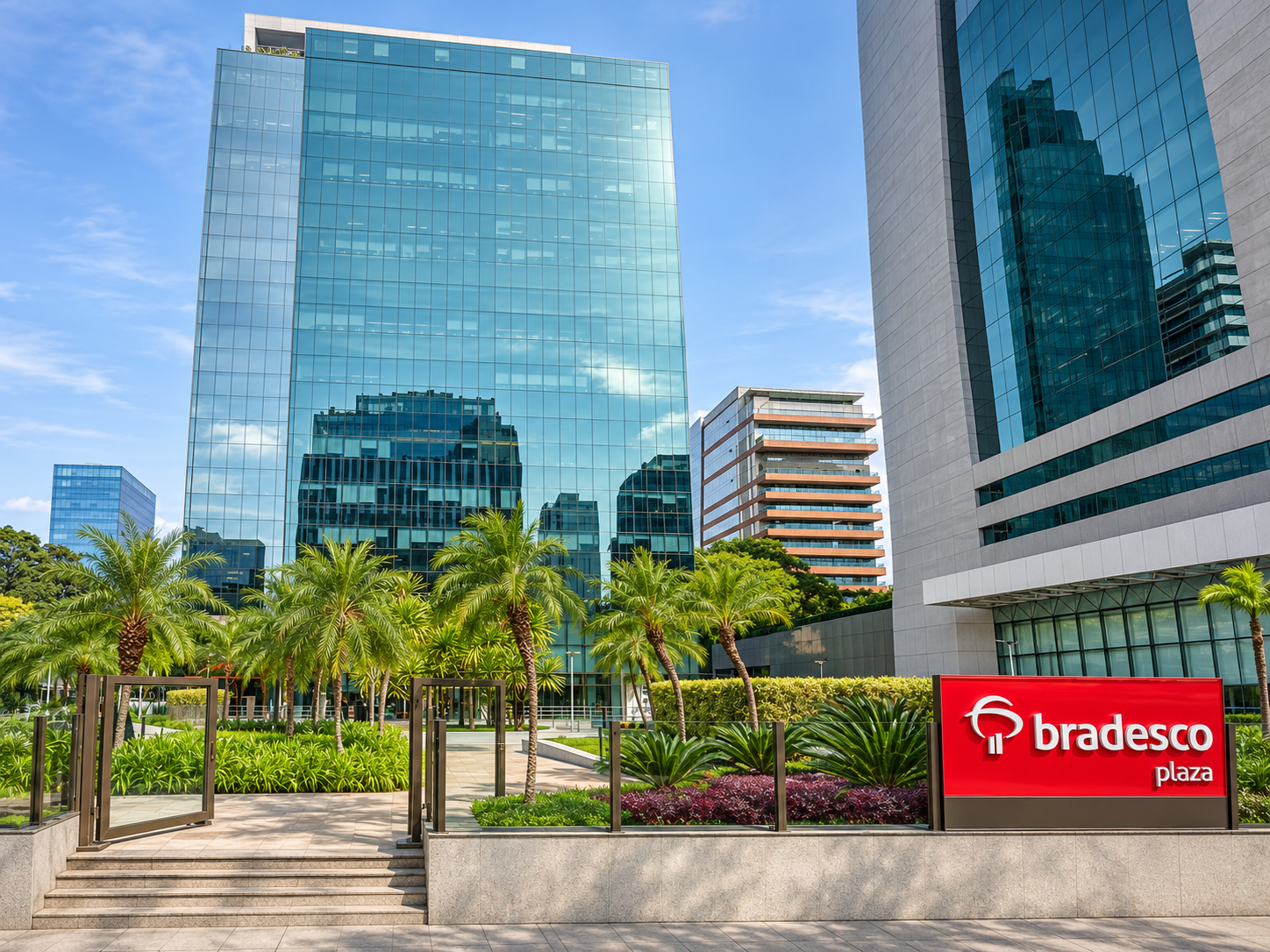
By Brazil Stock Guide — Bradesco BBI sees room for as many as 20 equity offerings in Brazil in 2027 if lower interest rates and clearer economic policy signals help restore investor confidence. Under a more conservative scenario, in which fiscal concerns persist, the Brazilian investment bank expects approximately 10 transactions.
While equity capital markets remain cautious amid uncertainty over the economic direction of President Luiz Inácio Lula da Silva’s fourth administration, mergers and acquisitions (M&A) activity continues to be robust, supported by demand for high-quality assets and companies seeking to restructure their balance sheets.
“M&A is booming. Business is going extremely well,” André Moor, head of Investment Banking at Bradesco BBI, told reporters in São Paulo on Monday, November 9. According to Moor, dealmaking remains as active as it was three months ago, particularly in infrastructure, sanitation, digital infrastructure, and agricultural and mineral commodities. Transactions involving companies exposed to Brazil’s domestic economy are also moving forward, although financing conditions have made negotiations more challenging.
Moor said the main obstacle to a broader recovery in equity capital markets is the lack of visibility surrounding the incoming administration’s economic policies. In Bradesco BBI’s assessment, the government needs to reduce uncertainty over the management of public finances and provide credible signals that could ease pressure on the interest-rate curve. “The market is very anxious, excessively anxious,” Moor said, suggesting that investors’ post-election reactions may have been sharper than warranted by the information currently available.
George Costa e Silva, head of Equity Capital Markets (ECM) at Bradesco BBI, said the number of transactions in 2027 would depend primarily on the direction of interest rates. The bank forecasts Brazil’s benchmark Selic rate at 12.75% by the end of next year, a more optimistic outlook than those of some competing institutions. Stronger fiscal signals that allow rates to fall further could substantially expand the pool of companies able to tap the stock market, potentially lifting the number of offerings to around 20.
The outlook underscores the difficulty of reviving Brazil’s equity issuance market while borrowing costs remain elevated. According to the bank, high interest rates largely restrict access to bigger, lower-risk companies capable of attracting investors even under challenging conditions. A more substantial decline in rates would open the market to smaller businesses with stronger growth prospects but greater sensitivity to financing costs.
Investors Await Clearer Fiscal Signals
The prospects for a broader revival in initial public offerings (IPOs) have weakened since the election, as the interest-rate curve has shifted toward a less favorable outlook. Previously, investors had anticipated rates approaching 10% to 10.5% over longer maturities, a scenario that could have supported offerings from smaller companies. Whether those expectations can be restored will depend on the government’s economic policy decisions.
Investor positioning has also contributed to the slowdown in equity issuance. Brazilian equity fund managers increased their cash holdings after the election and are waiting for greater predictability before redeploying capital. A more sustained recovery would require not only the return of those funds to equities but also fresh inflows from long-term international investors, including pension funds, sovereign wealth funds and other institutional asset managers.
Mergers and Acquisitions Maintain Momentum
Danilo Ene Borges, head of M&A and Financial Sponsors at Bradesco BBI, said strategic buyers and long-term investors are less sensitive to short-term fluctuations in economic policy. Many have already incorporated the political outlook into their investment models and continue to pursue businesses with strong cash generation, consolidation opportunities and companies seeking to strengthen their capital structures.
Debt pressures are also expected to generate additional transactions. According to the executives, companies may sell stakes, bring in new shareholders or pursue equity transactions to reduce leverage. In this environment, premium assets continue to attract buyers, while businesses more dependent on domestic economic growth face tighter financial conditions.
Bradesco BBI is also involved in assessing two potential overseas IPOs by Brazilian companies. A U.S. listing requires more than access to a larger pool of capital: issuers need an investment proposition that international investors can understand and benchmark against businesses already traded in global markets. Without that connection, even successful Brazilian companies may struggle to attract sustained investor interest.
For Bradesco BBI’s executives, Brazil’s equity capital markets are not permanently closed but are awaiting more favorable conditions. Fiscal policy, the path of interest rates and the restoration of investor confidence will determine the strength of any recovery. In the meantime, M&A is expected to remain an important alternative for businesses seeking capital, consolidation or balance-sheet restructuring.
Bradesco BBI will host its traditional CEO Forum in New York next week, bringing together representatives from roughly 100 companies and 250 registered investors, including approximately 210 international participants. The investor count exceeds the 230 recorded at the previous edition, highlighting continued foreign interest in Brazilian assets despite the uncertain economic outlook.


Leave a Reply