
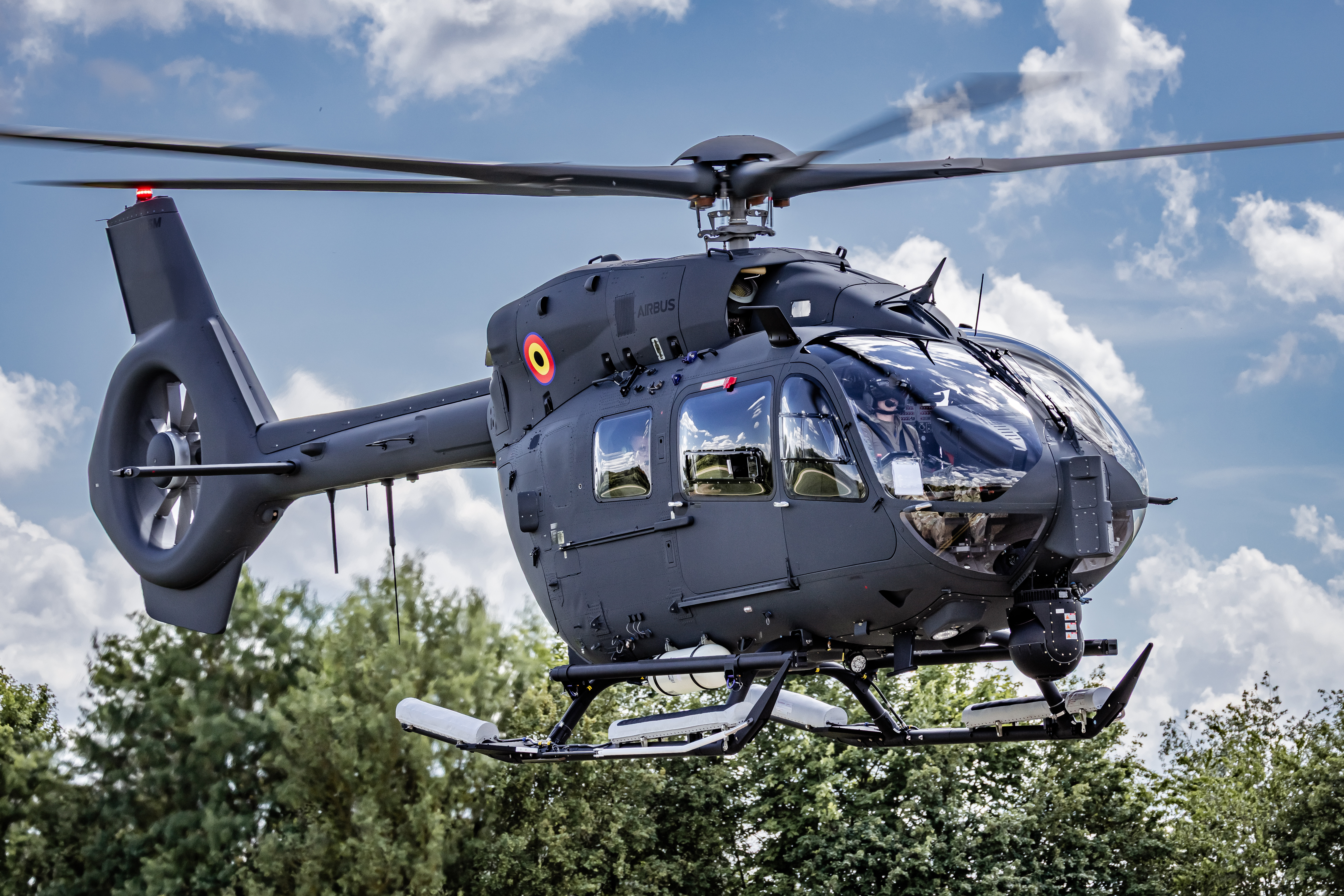
By Brazil Stock Guide – Brazil’s Ministry of Defense has taken another step toward a new helicopter program for joint use by the Navy, Army and Air Force, creating a working group to assess the ability of domestic industry to participate in the production, integration and long-term support of a future Multi-Mission Helicopter.
An ordinance published in Brazil’s Official Gazette on Monday, Sept. 28, calls for an Analysis of the Defense Industrial Base, known by its Portuguese acronym ABID, as part of the program. The study will identify industrial and technological capabilities available in Brazil, assess companies’ levels of technological and manufacturing maturity, identify gaps and recommend measures to reduce risks associated with domestic industry’s participation throughout the aircraft’s life cycle.
The move follows a decision in August, when the Armed Forces Joint Staff created a separate group bringing together representatives from all three services to develop a Joint Concept of Operations, or CONOPS, for the same helicopter. The August ordinance explicitly refers to a “joint procurement process for the Multi-Mission Helicopter.”
In practical terms, the Defense Ministry is now working on two complementary tracks: defining what the three services need the aircraft to do, and determining how much of that capability can be developed, produced or supported by Brazilian industry.
Documents released so far do not identify a manufacturer or model, nor do they specify the number of helicopters to be acquired or a potential budget. They also do not indicate that a tender is imminent. Still, the preparation of both the CONOPS and the industrial-base assessment places the project within a formal process that could eventually lead to a joint procurement.
The initiative comes as Helibras, Airbus’s Brazilian subsidiary, seeks a new military production program for its plant in Itajubá, Minas Gerais, following the completion of the H225M production cycle. The H-XBR program, signed in 2008, originally called for 50 medium helicopters for the Navy, Army and Air Force and became one of Brazil’s largest defense-industry technology-transfer programs.
In August, Airbus disclosed plans to produce the H145 in Itajubá, initially focusing on the military H145M variant. According to the company, an initial order of around 40 aircraft would be needed to provide sufficient scale for a local production line.
Discussions over producing the aircraft in Brazil have been under way since 2024 and gained momentum after Brazil and France signed a letter of intent in 2025 tied to potential investments of about R$1 billion.
There is no official indication that the H145M has been selected for the Defense Ministry program. The timing of the two initiatives, however, makes the Airbus platform an obvious potential contender for any future procurement, particularly given Helibras’s existing industrial infrastructure and supplier base in Brazil.
The H145M is a light twin-engine military helicopter. It can carry up to 10 troops, has a maximum takeoff weight of about 3.8 metric tons and a range of up to roughly 650 kilometers. The aircraft can be configured for troop transport, search and rescue, medical evacuation, reconnaissance and light-attack missions, including the use of modular weapons systems.
The potential scale of the Brazilian program could be significant.
The Army Aviation Command alone currently operates nearly 100 aircraft, including Fennec, Pantera, Cougar, Jaguar and Black Hawk helicopters, according to data released by the Army this month. A substantial portion of that fleet belongs to helicopter families that entered service decades ago and are likely to require gradual replacement in the coming years.
The Army operates the HA-1A Fennec for reconnaissance and light-attack missions and the HM-1A Pantera for transport and air-mobile operations. Depending on the final requirements, a newer multi-mission platform could eventually take over some of the roles now spread across those aircraft.
The Navy also faces a longer-term replacement requirement for its UH-12 Esquilo fleet. The type entered Brazilian naval service in 1979 and continues to perform missions ranging from reconnaissance and support for special operations to search and rescue, medical evacuation, personnel transport and shipborne operations.
The Navy has already begun renewing other parts of its helicopter fleet. The TH-X program, for example, provides for the introduction of H125 helicopters for training, but the UH-12 remains in extensive operational use.
For the Brazilian Air Force, a light twin-engine helicopter could potentially fill a capability tier below the H-60 Black Hawk and H-36 Caracal, supporting missions such as transport, search and rescue and special operations. The requirements are still being developed, however, making it too early to determine which existing aircraft, if any, would ultimately be replaced.
The precedent set by the H-XBR program helps explain the rationale behind a joint procurement.
The H225M program sought to standardize a medium-helicopter platform across all three services while establishing an industrial production line in Brazil. The Defense Ministry now appears to be evaluating a similar approach for a smaller and more versatile aircraft category.
The new ABID study will be carried out by representatives of the Defense Products Secretariat, the Armed Forces Joint Staff and the Navy, Army and Air Force. The group will consult companies and industry associations, assess technological and manufacturing readiness and identify gaps in Brazil’s defense industrial base.
Its final report is due within 80 days of the formal appointment of the group’s members.
The involvement of the Defense Ministry’s departments for Science, Technology and Innovation, Trade Promotion, and Defense Financing and Economics suggests the review will extend well beyond the choice of aircraft and could address issues including local content, technology transfer, financing, logistics support and domestic maintenance capabilities.
The final size of the program remains unclear. But the scale and age profile of the helicopter fleets operated by Brazil’s armed forces suggest that a joint procurement could eventually involve dozens of aircraft over several years, depending on the scope of the requirements ultimately adopted.
For Brazil’s defense industry, scale will be critical.
For Helibras in particular, a program of that size could provide an industrial successor to the H-XBR project, helping preserve manufacturing capabilities in Itajubá after H225M production winds down.
The issue beginning to take shape, therefore, goes beyond which helicopter Brazil may eventually buy. The Defense Ministry is also starting to define how much of the country’s next generation of military helicopters can be built and supported domestically — and by whom.


Leave a Reply