
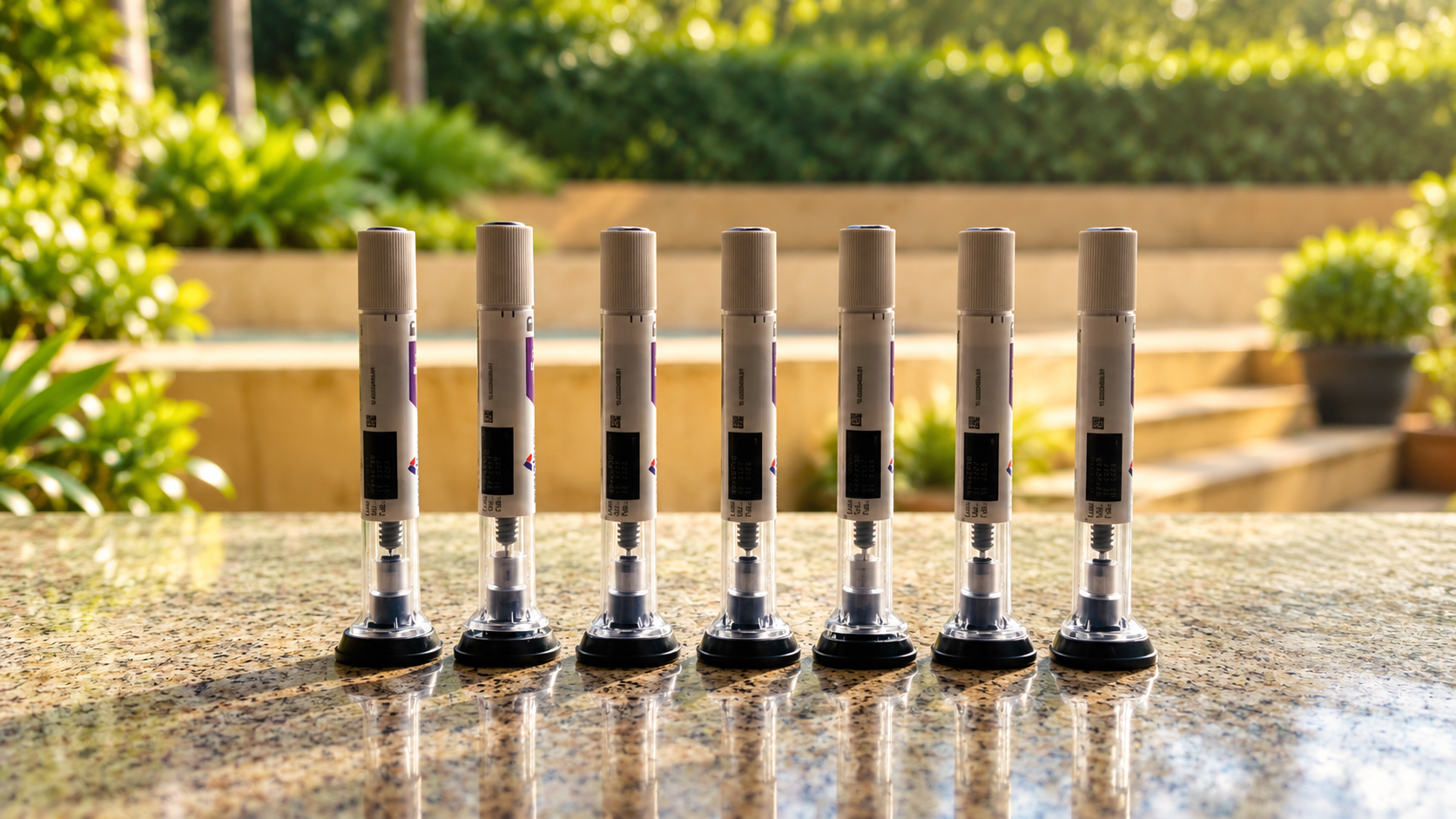
By Brazil Stock Guide — Brazil’s government estimates it could spend about R$1.5 billion ($280 million) a year to provide GLP-1 weight-loss drugs through SUS, the country’s universal public healthcare system, in an initiative that would make the government the country’s largest buyer of the treatments.
The Health Ministry says the scale of public procurement, combined with increased competition and domestic production, could allow it to secure the drugs at prices 80% to 90% below current levels. The plan has not yet been approved, however, and remains subject to an assessment by Conitec, the government body responsible for evaluating new drugs and medical technologies for inclusion in SUS.
The initiative has also taken on an electoral dimension. President Luiz Inácio Lula da Silva, who is running for reelection, pledged during a visit to Eurofarma’s industrial complex in Montes Claros, Minas Gerais, that weight-loss drugs would be provided free of charge through SUS to patients with obesity. The announcement turned into a campaign promise a policy that, according to the Health Ministry, had already been under consideration since 2025.
The government has since taken formal steps toward implementing the proposal. On September 24, the Health Ministry submitted a request to Conitec to assess the inclusion of the drugs in SUS. It has now provided the first indication of the program’s potential financial scale: approximately R$1.5 billion a year.
Key variables needed to determine the policy’s actual cost remain unclear, including how many patients would be eligible, which drugs would be purchased, how long treatment would last and what clinical criteria would determine access.
Competition drives prices lower
The government’s push comes as Brazil’s obesity-drug market undergoes rapid change.
According to the Health Ministry, retail prices for weight-loss injections have fallen by about 70% in less than a year, a decline it attributes to the arrival of new products, increased competition and expanding domestic production.
An initiative by the Health Ministry and health regulator Anvisa aimed at encouraging Brazilian and foreign manufacturers to enter the market has resulted in the registration of 16 new products in 2026 alone, including generic and similar drugs. At least four are manufactured in Brazil.
Use of the drugs has also risen rapidly. Anvisa data cited by the ministry show the number of monthly users increasing from roughly 400,000 to more than 750,000.
The government is betting that SUS can trigger a second round of price reductions by concentrating much greater demand through large-scale public procurement.
“When you think about the scale of SUS purchases, combined with local production, that gives us the possibility of reducing prices by 80% to 90%,” Health Minister Alexandre Padilha said.
Whether savings of that magnitude can be achieved in practice remains unclear. The government has not disclosed the per-dose or per-patient price underpinning its estimate, nor how many people could be treated within the R$1.5 billion annual budget.
A cost equation that did not work before
High prices have been one of the main obstacles to making GLP-1 therapies broadly available through Brazil’s public health system.
The government’s new request to Conitec argues that the economics have changed as prices have fallen, more suppliers have entered the market and domestic manufacturing has expanded. Conitec evaluates clinical evidence, cost-effectiveness and budget impact before recommending whether new technologies should be incorporated into SUS.
The government is also seeking to tie broader access to local production. Since 2025, the Health Ministry and Anvisa have been working to encourage Brazilian and international drugmakers to register additional GLP-1 products in the country.
The strategy puts the enormous purchasing power of Brazil’s public healthcare system at the center of the policy. Rather than buying the drugs at prices currently charged in the retail market, the government is betting that substantially larger volumes, competition among suppliers and domestic manufacturing will allow it to negotiate much lower prices.
If discounts approaching 90% can be achieved, the policy could also reshape the competitive dynamics of one of the fastest-growing segments of the pharmaceutical industry.
Not an open-ended giveaway
The Health Ministry says the potential inclusion of GLP-1 drugs in SUS would not mean making them broadly available for cosmetic weight loss or without medical supervision.
Instead, the government plans to establish a clinical protocol identifying patients for whom obesity treatment is likely to deliver significant health benefits and reduce the risk of future complications.
The approach is already being tested at Grupo Hospitalar Conceição, a federal hospital network in Porto Alegre, where 250 SUS patients with severe obesity or obesity-related health conditions are being monitored while receiving semaglutide.
One of the goals is to determine whether drug treatment can reduce the need for more complex procedures such as bariatric surgery, as well as lower the incidence of cardiovascular problems and other obesity-related complications.
The government’s economic argument is therefore that the fiscal impact should not be measured solely by the cost of the drugs themselves.
“We are not talking about incorporating an aesthetic miracle,” Padilha said. According to the minister, combining medication with proper nutrition, physical activity and medical supervision could reduce future spending on surgeries and hospitalizations.
Obesity affected 25.7% of Brazil’s population in 2024, up from 11.8% in 2006, according to figures cited by the Health Ministry.


Leave a Reply