
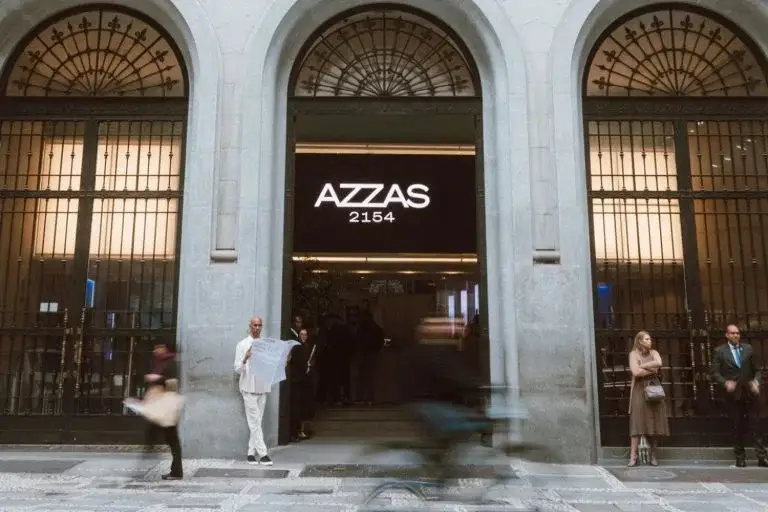
By Brazil Stock Guide – Brazilian fashion conglomerate Azzas 2154 (B3: AZZA3) reported a nearly 40% increase in third-quarter operating cash flow, supported by stronger margins and tighter working-capital management, even as revenue declined. The results, released on Wednesday, November 11, come as the owner of Arezzo, Schutz, Hering and FARM Rio prepares to split into two independently listed companies.
Operating cash flow climbed 39.6% to R$385.2 million, compared with R$275.9 million a year earlier, according to the company’s third-quarter 2026 earnings report. The improvement reflected lower inventory requirements, better payment terms with suppliers and a strategy emphasizing full-price sales over promotional discounts.
Gross revenue from continuing brands declined 3.6% to R$3.58 billion, a smaller contraction than the 7.8% decrease recorded in the previous quarter. Net revenue dropped 4.2% to R$2.84 billion.
Despite softer sales, the company’s recurring gross margin expanded by 2.1 percentage points to 56.8%. Recurring EBITDA reached R$466.4 million, down 2.2% from a year earlier, while the corresponding margin improved to 16.4% from 16.1%.
Reported net income increased to R$177.7 million from R$164.9 million in the third quarter of 2025. On a recurring basis, however, net profit fell 5.3% to R$190.6 million, reflecting persistent pressure on earnings.
Cash generation strengthens as leverage declines
Azzas reduced its adjusted working-capital cycle by 26 days compared with the same quarter last year, benefiting from inventory management and longer supplier payment periods.
Operating cash generation after capital expenditure reached R$273.4 million, compared with R$166.8 million a year earlier.
Net debt declined to R$2.06 billion at the end of September, down R$69.3 million from the previous quarter. The net debt-to-recurring EBITDA ratio, calculated before IFRS 16 adjustments, improved to 1.48 times from 1.52 times in June.
The group ended the quarter with R$1.11 billion in cash and cash equivalents under its managerial reporting framework, while approximately 85% of gross debt was classified as long-term.
For the first nine months of 2026, operating cash flow totaled R$889.5 million, compared with R$331.6 million during the corresponding period of 2025.
Hering turnaround boosts margins despite weaker sales
Hering emerged as one of the clearest examples of the group’s profitability-focused strategy.
The brand’s Basic business unit reported gross revenue of R$590.8 million, down 7.5% year over year. Nevertheless, gross profit increased 9.6% to R$185.8 million, while the gross margin expanded by 4.8 percentage points to 39.1%.
The improvement was supported by lower promotional activity, healthier inventories and changes to purchasing and production processes.
Hering generated R$236 million in free cash flow during the first nine months of 2026, reversing the R$43 million cash consumption recorded in the corresponding period of the previous year.
Its franchise channel posted 8.3% revenue growth in the quarter, although directly operated stores and e-commerce continued to face pressure from supply disruptions and reduced product availability.
Across the broader Azzas portfolio, franchise revenue increased 1.5%, while company-operated stores grew 0.8%.
E-commerce revenue declined 7.8%, reflecting management’s decision to scale back discounts. Sales through multibrand retailers fell 12.6%, amid more conservative purchasing behavior in Brazil’s high-interest-rate environment.
FARM Rio expands internationally as fashion businesses diverge
Performance across Azzas’ business units remained uneven.
Shoes & Bags, which includes Arezzo, Schutz, Anacapri and other footwear brands, reported gross revenue of R$1.10 billion, down 1.7% year over year.
Fashion Women, which currently includes FARM Rio, Animale, NV and Cris Barros, recorded revenue of R$1.46 billion, a decline of 0.6%.
Fashion Men, home to Reserva, Oficina and Foxton, experienced a sharper contraction, with revenue falling 11.8% to R$433.6 million. The segment continued reducing inventory exposure across its franchise and multibrand distribution networks.
FARM Rio’s international operation provided a stronger growth signal, with revenue increasing 10.7% in US$ terms compared with the third quarter of 2025.
The brand benefited from European expansion, including temporary retail locations in Marbella, Capri, Saint-Tropez and Ibiza.
In Brazilian currency, FARM Rio’s reported international revenue was broadly unchanged, partly because the stronger R$ reduced the value of overseas sales when translated into the group’s reporting currency.
The company’s broader international operations recorded 7.7% revenue growth in US$ terms, although reported revenue in R$ declined 1.7%.
Azzas advances separation into Arezzo&Co and Grupo SOMA
The quarterly results come during a major corporate restructuring announced on September 2.
Under the proposed transaction, Azzas 2154 will separate into Arezzo&Co and Grupo SOMA, two independent publicly traded companies with their own management teams, governance structures and access to capital markets.
Arezzo&Co will concentrate the group’s footwear, accessories and Hering businesses, including brands such as Arezzo, Schutz, Anacapri, Vans and Alexandre Birman.
Grupo SOMA will manage a portfolio of apparel brands, including Animale, NV, Cris Barros, Maria Filó, Reserva and Foxton.
FARM Rio will operate under a separate corporate structure controlled by Arezzo&Co, which will hold a 57.4% stake. Grupo SOMA will retain the remaining 42.6%.
The company’s unaudited pro forma figures showed third-quarter gross revenue of R$2.58 billion for the future Arezzo&Co structure and approximately R$1.00 billion for Grupo SOMA.
Azzas said the proposed separation is intended to give each business greater operational focus, clearer strategic priorities and more independent capital allocation.
Brazil’s antitrust authority, Cade, approved the transaction without restrictions, with the decision becoming final on November 4.
The restructuring remains subject to the necessary corporate and shareholder approvals, as well as other applicable conditions.
Nine-month earnings remain under pressure
Although third-quarter cash generation improved, Azzas’ financial performance over the first nine months of 2026 continued to reflect weaker demand and pressure on operating profitability.
Net revenue totaled R$7.99 billion, down 6.8% on a recurring basis compared with the same period of 2025.
Recurring EBITDA declined 18.4% to R$1.17 billion, with the corresponding margin narrowing to 14.7% from 16.8%.
Recurring net income fell 40.1% to R$361 million, compared with R$602.7 million a year earlier.
Capital expenditure decreased 13.2% to R$249.8 million during the nine-month period, reflecting tighter investment discipline.
The figures underscore the contrast between Azzas’ stronger third-quarter cash conversion and the earnings challenges that will accompany the group’s transition into two separately listed fashion companies.


Leave a Reply