
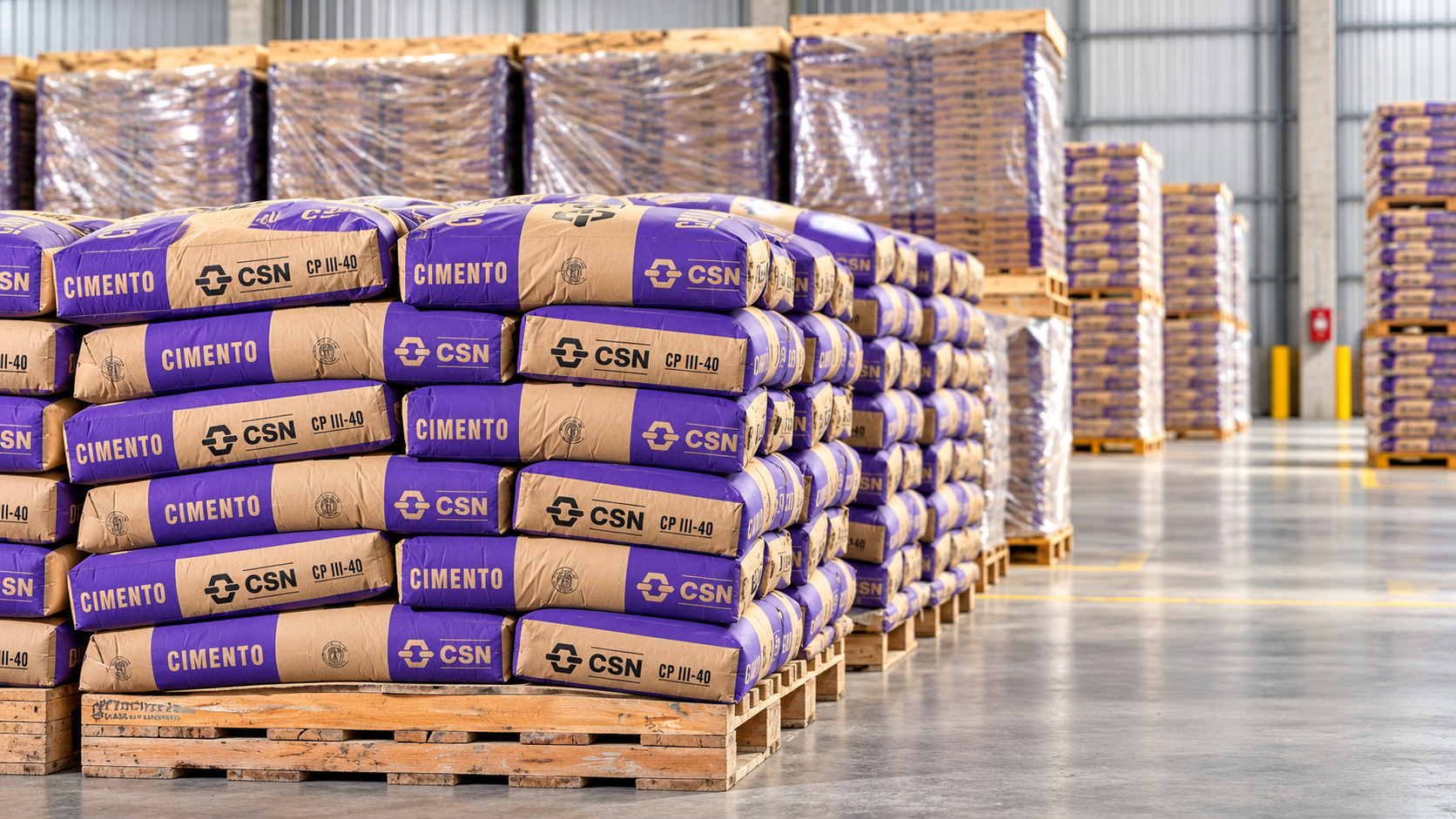
By Brazil Stock Guide — Brazilian steelmaker Companhia Siderúrgica Nacional (B3: CSNA3; NYSE: SID) could reduce its consolidated net debt by approximately 30%, from R$42.1 billion to R$29.4 billion, following the sale of its cement business to China’s Huaxin Building Materials Group, according to estimates by brokerage XP Investimentos. The transaction marks a major step in CSN’s efforts to restructure its balance sheet and ease the burden of high financing costs on earnings.
The agreement, signed on Saturday, November 7, values CSN Cimentos at R$12.7 billion ($2.31 billion) on an enterprise value basis. Of that amount, approximately R$9.03 billion ($1.64 billion) represents the estimated equity purchase price to be paid by Huaxin, while the remaining R$3.67 billion reflects the cement subsidiary’s reference net debt, according to information disclosed by the Chinese buyer.
How Much Will CSN Actually Receive?
CSN will not receive R$12.7 billion in cash. The estimated equity purchase price is R$9.03 billion, subject to customary closing adjustments. However, the removal of CSN Cimentos’ debt from the group’s consolidated balance sheet, combined with the cash proceeds, could result in an overall reduction in consolidated net debt close to the transaction’s enterprise value, according to XP’s assessment.
In its latest reported financial results, covering the second quarter of 2026, CSN had consolidated net debt of R$42.14 billion and a net debt-to-EBITDA ratio of 3.49 times. After accounting for the sale and the removal of the cement division’s operating contribution, estimated at approximately R$1.6 billion in EBITDA over the previous 12 months, XP calculates that leverage could decline to around 2.8 times, a reduction of approximately 0.7 turn.
How Much Cash Will Remain Available?
The sale is also expected to allow CSN to repay short- and medium-term financial obligations, particularly a bridge loan arranged with international banks in April 2026. Initially valued at $1.2 billion, with an option to increase it to $1.4 billion, the financing was structured as part of the steelmaker’s broader asset disposal program.
In a report published on October 30, XP estimated that between R$6 billion and R$6.5 billion of the proceeds could be used to repay the bridge loan ahead of schedule. At the time, the brokerage calculated that approximately R$3.3 billion could remain available in cash after accounting for financial commitments associated with the transaction.
The actual amount, however, remains uncertain. Based on the R$9.03 billion equity purchase price now disclosed by Huaxin and an estimated repayment of R$6 billion to R$6.5 billion, the remaining proceeds would range from approximately R$2.5 billion to R$3 billion, before contractual adjustments, transaction expenses and other potential uses of cash. This is an indicative calculation, not an official CSN forecast.
Lower debt levels could also help reduce future financing expenses. According to XP’s fixed-income research team, CSN may prioritize repurchasing at least $200 million of bonds due in 2030 that were issued in August 2026. Under a provision in the bond documentation, such a transaction would allow the coupon on the securities to decline from 11% to 10.5% annually.
Sale Could Meet Much of CSN’s Deleveraging Target
The transaction represents significant progress toward the asset disposal program announced by CSN in January 2026, when its board authorized a plan aimed at reducing indebtedness by R$15 billion to R$18 billion.
Based on the R$12.7 billion enterprise value and its potential impact on consolidated net debt, the sale of the cement division could account for approximately 71% to 85% of that original deleveraging target. The actual reduction will depend on closing adjustments and changes in the group’s financial position before the transaction is completed.
CSN’s longer-term strategy calls for doubling EBITDA over an eight-year period and bringing its net debt-to-EBITDA ratio closer to 1.0 times. To achieve those goals, the company plans to concentrate investment in businesses offering higher profitability and growth potential while improving its debt maturity profile.
Despite the substantial financial relief expected from the sale, challenges remain. CSN will still carry significant debt and will no longer consolidate the earnings of one of Brazil’s largest cement producers. Further deleveraging will therefore depend on additional cash generation, disciplined capital spending and improvements in the performance of its remaining businesses.
The transaction remains subject to approval by Brazil’s antitrust regulator, the Administrative Council for Economic Defense (Cade), prior consent from the Brazilian Electricity Regulatory Agency (Aneel), and the necessary Chinese regulatory approvals. CSN will receive the proceeds only after the transaction closes.
CSN is scheduled to report its third-quarter 2026 financial results on November 12, giving investors a fresh look at its debt position and the next steps in its balance-sheet restructuring strategy.


Leave a Reply