
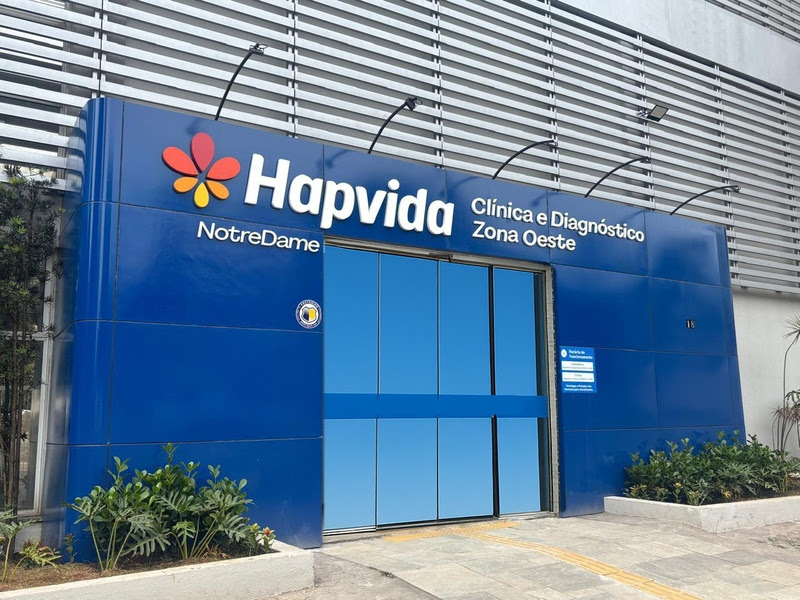
By Brazil Stock Guide — Hapvida (B3: HAPV3), Brazil’s largest private health plan operator, made further progress in its operational and commercial restructuring during the third quarter of 2026, reviewing contracts covering 245,000 health plan members as part of its efforts to improve profitability.
The company also announced on Wednesday (November 11) an agreement to sell the properties housing Octaviano Neves Hospital in Belo Horizonte, the capital of Minas Gerais state, for R$60 million, as part of a broader strategy to streamline assets and improve operating efficiency.
At the end of June, Hapvida had identified contracts covering approximately 947,000 members that required review, including those with inadequate profit margins or significant payment delinquencies. Of that total, contracts covering 226,000 members were terminated, while those covering another 19,000 were renewed on terms the company considered financially sustainable.
The restructuring accounted for most of the 235,000 net reduction in health plan members between July and September. Excluding the cancellations associated with the portfolio review, the normalized net decline was just 9,000 members, broadly in line with the previous quarter. Hapvida ended September with 8.433 million health plan members.
The operational overhaul also includes optimizing the company’s healthcare delivery network. In a separate regulatory filing, Hapvida said its subsidiary, Hapvida Assistência Médica, had signed an agreement to sell the properties occupied by Octaviano Neves Hospital to Fundação Educacional Lucas Machado (Feluma), a Brazilian educational foundation.
Under the agreement, the buyer will pay 20% of the purchase price, or R$12 million, upon signing, with the remaining R$48 million due at closing, expected in early 2027.
The transaction covers the real estate only, not the hospital business itself. Patient services previously provided at Octaviano Neves are being gradually transferred to other facilities within Hapvida’s own network in Belo Horizonte. The company said the transition is designed to ensure continuity of care and indicated that additional asset optimization measures could follow.
Reshaping the Membership Portfolio
Hapvida’s restructuring strategy is also beginning to change the composition of its membership base, with an increasing contribution from the small and medium-sized enterprise (SME) segment, which the company regards as particularly attractive because of its higher profit margins.
The metropolitan areas of São Paulo and Rio de Janeiro continue to report positive net membership additions in retail health plans, the company said.
Average monthly revenue per health plan member rose 7% from a year earlier to R$313.30 ($58), reflecting contract price increases, an improved product mix and the cancellation of unprofitable contracts with premiums below the company’s average.
Cash Generation and Operating Efficiency
On the financial front, Hapvida reduced net debt by R$100.9 million during the third quarter, ending September with R$5.3 billion in net borrowings.
The reduction was supported by debt repurchases at a discount and operating cash generation, helped by working capital initiatives, including changes to supplier payment terms.
Free cash flow totaled R$656.2 million in the first nine months of 2026. Third-quarter net revenue reached R$8.08 billion, up 3.9% from a year earlier, while revenue for the January-to-September period increased 4.3% to R$23.95 billion.
Hapvida also made progress in adjusting its cost structure. Cash administrative expenses fell 23.4% from the previous quarter to R$515.9 million, equivalent to 6.4% of net revenue, compared with 8.4% in the second quarter.
The reduction reflected cost-cutting initiatives, workforce adjustments and operational restructuring, alongside some one-off accounting effects.
“We are moving forward with a transformation agenda that requires discipline and consistency. We are already seeing positive signs in cash generation and debt reduction, but the recovery is gradual, and some of what we are doing has yet to show up in the numbers,” Chief Executive Luccas Augusto Adib said in a statement.
The company’s cash medical loss ratio, which measures the share of revenue absorbed by healthcare claims and medical expenses, rose to 77.2%, up 2 percentage points from both the previous quarter and a year earlier.
Hapvida attributed the increase to seasonal factors, higher civil litigation-related costs and temporary expenses associated with reorganizing its healthcare facilities.
The company reported a net loss of R$118.8 million for the quarter, compared with a R$57 million loss a year earlier. Adjusted net income, which excludes certain accounting items, remained positive at R$107 million.
Healthcare-related litigation remains a challenge for Hapvida and Brazil’s broader private health insurance industry. The company said it is reviewing how it manages legal disputes and working to contain their financial impact as part of its efforts to gradually restore profitability.
On service quality, Hapvida recorded a score of 49.4 on the General Complaints Index published by Brazil’s National Supplementary Health Agency (ANS), compared with an industry average of 59.6. Lower scores indicate fewer complaints relative to the regulator’s measurement criteria.
“We need to be obsessive about improving the customer experience, while respecting the differences between regions and products. Technology allows us to support each customer and take away the burden of navigating the system alone, from scheduling appointments to preventive care,” Adib added.


Leave a Reply