

The roughly 55% increase in jet fuel (QAV) prices starting April 1 highlights the structural vulnerability of Brazil’s aviation sector. Fuel accounts for more than 30% of airlines’ operating costs, meaning shocks are quickly reflected in margins and fares.
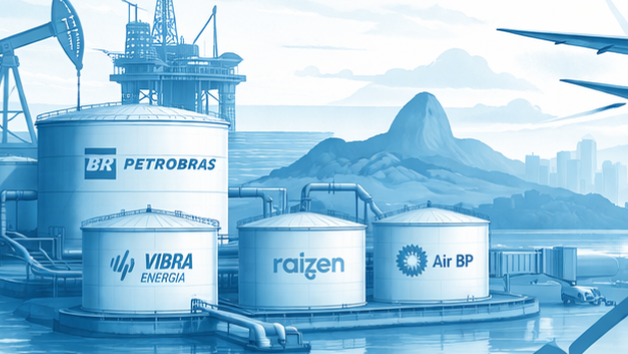
While driven by higher oil prices and FX, the magnitude of the pass-through reflects market structure. Petrobras accounts for about 86% of production, while distribution is concentrated in Vibra Energia, Raízen and Air BP, with roughly 99% market share. At airports, control over storage and fueling infrastructure effectively limits competition.
Regulation has moved in that direction. ANAC Resolution 717 (2023) introduced mandatory infrastructure sharing via the Terms of Access Agreement (TCA), but implementation remains uneven. Economic access is still constrained, keeping new entrants largely absent.
The result is asymmetric price transmission: increases are passed through quickly, while declines are slower. Jet fuel in Brazil often trades above international benchmarks, reflecting logistics, taxes and limited competitive pressure.
From a cost perspective, the impact is material. A 55% increase in fuel can translate into a high-single-digit rise in total operating costs (CASK), pressuring margins. In a price-sensitive market, full pass-through to fares is unlikely in the short term.
Implications are uneven across the value chain. Petrobras and distributors benefit from stronger pricing power, while airlines such as Gol and Azul face margin compression and slower recovery.
Looking ahead, oil and FX will remain key drivers, but structural constraints — concentration, infrastructure bottlenecks and limited import competition — suggest volatility will persist, with limited downside flexibility.
Brazil does not need to control fuel prices. It needs to improve market conditions. Today, external shocks pass through almost fully — because the system allows it.


Leave a Reply