By Rodrigo Uchoa, special for Brazil Stock Guide
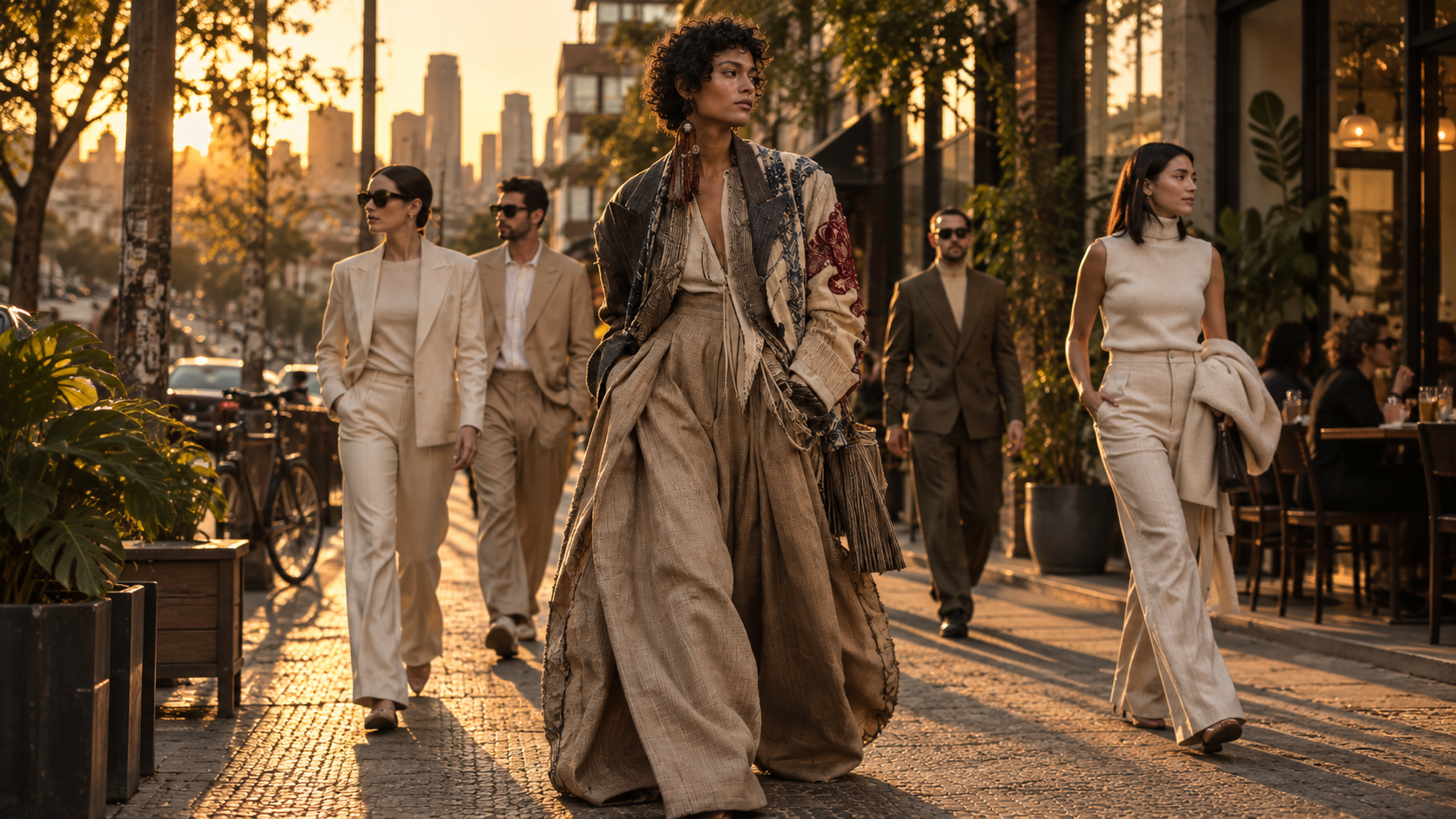
In September 2025, during Brazil’s The Town festival, Lauryn Hill chose DoD, a tailoring atelier housed in a townhouse in São Paulo’s Pinheiros district, to launch a limited-edition collection created with her sons, YG and Zion Marley. The event drew attention not only because of Hill’s presence, but because it seemed to capture a broader shift taking place across fashion: the return of clothes with volume, a strong visual identity and an evident appreciation for craftsmanship.
The collection reflected both Lauryn Hill’s style and DoD’s own aesthetic: wide-legged trousers, relaxed shoulders and meticulous tailoring. Founded in 2021 by former skateboarder Jubba Sam, the label emerged after years spent working in Brazilian fashion retail, including stints at Fórum, Zoomp, Ellus and Iódice. The name DoD may be a playful corruption of dude, but it also expands into Dapper or Dandy, a nod to the fine line between classical elegance and deliberate flamboyance.
The business bet paid off. By 2025, the company was estimating revenues of R$5.5 million, up 30 to 40 per cent on the previous year, with a clientele ranging from rapper Emicida to television actresses. “Once you’ve discovered comfort, it’s very difficult to submit to other impositions,” says Sam.
The scene in Pinheiros, thrust into the spotlight by Lauryn Hill on that sunny afternoon with DJs playing in the street, echoes a phenomenon that became increasingly visible in Milan earlier this year during the Autumn/Winter 2026-27 men’s collections. There was no triumphant declaration that tailoring had returned. The mood was more nuanced than that.

At Zegna, Alessandro Sartori presented what he described as a “family wardrobe”: garments spanning four generations, displayed as heirlooms; checks and pleats reinterpreted through recycled fabrics; reversible tailoring treated as something to be handed down rather than consumed and discarded. Trend forecasters distilled the mood into two concepts. One was power play, the rediscovery of the blazer as a statement of presence in a landscape long dominated by streetwear. The other was commutility, a hereditary wardrobe reimagined for everyday life.
To dismiss all this as merely another fashion cycle feels intellectually lazy. It is happening at a moment when the dominance of quiet luxury no longer appears quite so secure. For years, fashion’s prevailing codes promised to communicate wealth through silence: neutral cashmere, discreet cuts and hidden logos. It worked remarkably well.
Perhaps too well.
Once everyone learns the language of discretion, discretion ceases to function as a reliable marker of distinction. When understated dressing becomes widely understood, it can no longer separate those with cultural capital from those who have simply purchased the right pieces.
The dynamic could have come straight from a chapter of Pierre Bourdieu. Taste is, above all, a way of signalling belonging without saying anything at all. Once a code of distinction becomes popularised, it loses its social function and cultural elites migrate towards a different language.
Made-to-measure tailoring serves that purpose rather effectively. It is not necessarily more expensive than quietly luxurious designer clothing; sometimes it is cheaper. What it requires instead is something less easily acquired: a relationship with a tailor, fittings, alterations and patience. Inefficiency itself becomes a form of distinction.
Yet reducing the phenomenon to Bourdieu alone would be too simple. There is another force at work here: digital saturation.
After more than a decade in which fashion and personal identity have been shaped to perform on vertical screens, there is growing demand for objects that feel unmistakably real: vinyl records, fountain pens, notebooks, fabrics that invite touch. Alongside this comes a nostalgia for eras we never actually experienced, a phenomenon sometimes described as anemoia. The same consultancies discussing commutility have also begun promoting the idea of future heritage: visible stitching, small-scale production and unmistakable traces of human craftsmanship.
Whether this represents a seasonal fluctuation or a deeper structural change remains impossible to say with confidence. History requires distance. Quiet luxury remains highly influential, and brands such as Hermès and Loro Piana show little sign of commercial fatigue.

Yet it is equally difficult to ignore how many people have once again become fascinated by the very elements that quiet luxury sought to eliminate: excess, presence and individuality.
In Pinheiros, that fascination comes with a price tag. A pair of DoD trousers with a 30-centimetre hem opening costs R$1,690. There is also a waiting list.
It is hardly surprising that one of the most influential voices in American music chose the brand for her Brazilian tour. The dandy, a figure whom history has been trying to bury ever since Beau Brummell, is back once again.
Whether he is here to stay is another question entirely.


Leave a Reply