
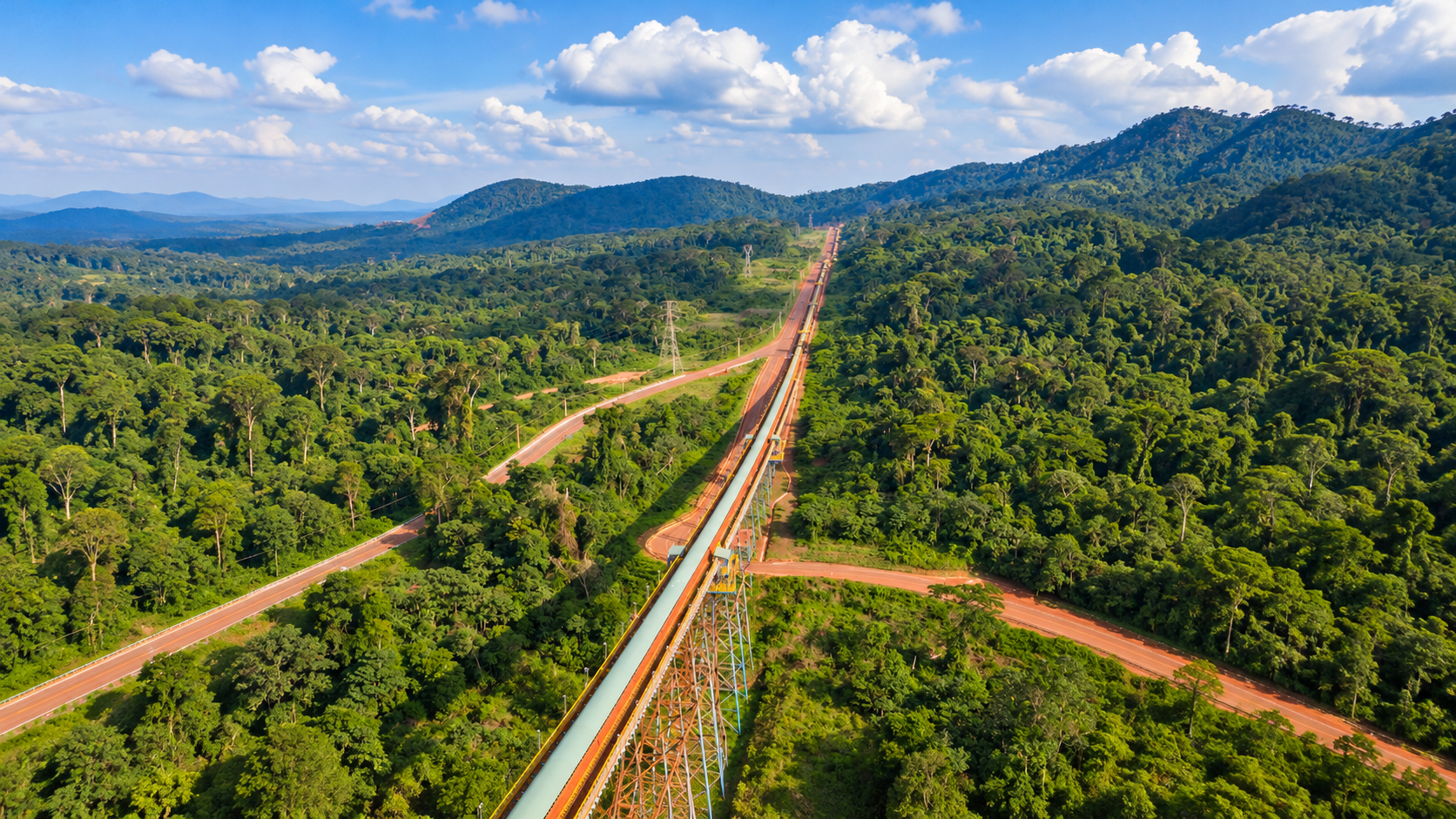
By Brazil Stock Guide — Vale is facing another setback in its efforts to develop the Apolo Project, a planned iron ore operation in Brazil’s Minas Gerais state with an annual production capacity of 14 million metric tons. On Tuesday (October 13), the federal government reinstated administrative decisions terminating, in whole or in part, the company’s rights under 25 mining titles, including at least two associated with the project.
The move follows an August 26 federal court ruling that upheld the administrative decisions and overturned a preliminary injunction Vale had secured in 2025. The order, published by Brazil’s Ministry of Mines and Energy, instructs the National Mining Agency (ANM) to take the steps necessary to enforce the ruling.
A review of official documents by Brazil Stock Guide found that two of the affected mining titles are associated with the Apolo Project, located between the municipalities of Caeté and Santa Bárbara in Minas Gerais’ Iron Quadrangle, one of Brazil’s most important iron ore-producing regions.
According to the Environmental Impact Assessment (EIA) submitted by Vale in 2021, 48.32% of the area covered by the first mining title and 87.78% of the second fell within the project’s Directly Affected Area (ADA).
Together, those figures represent approximately 341 hectares (843 acres) overlapping the project’s planned footprint as described in the 2021 assessment.
That does not mean the entire area has been stripped of its mining rights. It remains unclear whether the portions specifically affected by the forfeiture decisions overlap the planned open-pit mine or other infrastructure under the project’s current configuration.
An iron ore project 17 years in the making
Development of Apolo dates back to 2009, when Vale first proposed an iron ore mining operation in the Serra do Gandarela region. The project was designed to expand the company’s output in its Southeastern System, within a region that hosts some of Brazil’s largest iron ore deposits.
Over the years, the project has undergone several revisions and faced environmental scrutiny, particularly because of its proximity to native forests, freshwater springs and underground water reserves.
In 2021, Vale unveiled a redesigned version that reduced the project’s planned footprint by 32%, from approximately 2,000 hectares to 1,368 hectares.
The revised development includes an open-pit mine, an ore processing facility and an eight-kilometer railway spur connecting the operation to the Vitória-Minas Railway, a major freight corridor linking Minas Gerais to the Atlantic coast.
According to Vale, the operation would use dry processing technology, requiring no water for ore beneficiation and generating no tailings, eliminating the need for tailings dams.
The mine is designed to produce approximately 14 million metric tons of sinter feed annually — a type of iron ore used in steelmaking — over an estimated operating life of at least 29 years.
The project has yet to secure the environmental approvals required to proceed. Vale says Apolo remains at the preliminary environmental licensing stage, during which regulators assess whether a proposed development is environmentally viable.
A national park protecting water supplies and biodiversity
The dispute centers on the Serra do Gandarela National Park, established on October 13, 2014 — exactly 12 years before Tuesday’s government order.
Managed by Brazil’s Chico Mendes Institute for Biodiversity Conservation (ICMBio), the federally protected area covers approximately 31,300 hectares (77,300 acres) across eight municipalities in Minas Gerais, including Caeté, Santa Bárbara, Rio Acima, Ouro Preto and Nova Lima.
Located roughly 40 kilometers from Belo Horizonte, the state capital, the region contains extensive remnants of Brazil’s Atlantic Forest, high-altitude grasslands, waterfalls, caves and iron-rich rock formations known locally as cangas.
These formations are environmentally significant. Their porous structure helps rainwater seep underground, replenishing aquifers that feed rivers and springs supplying communities across the Belo Horizonte metropolitan area.
The preservation of cangas is also critical for biodiversity. Ironstone grasslands support rare, endemic and endangered plant species in ecosystems closely associated with the same geological formations that contain valuable iron ore deposits.
That overlap lies at the heart of the dispute: the geological formations that hold commercially valuable mineral resources also play an essential role in safeguarding water supplies and biodiversity.
The Serra do Gandarela National Park was established as a strictly protected conservation area, a designation that severely restricts the direct exploitation of natural resources within its boundaries.
Vale maintains that the current design of the Apolo Project does not encroach on the national park.
That distinction, however, has not resolved concerns over the development’s potential environmental impact.
In August 2025, ICMBio concluded that the project was incompatible with the park’s conservation objectives, according to information disclosed by Vale. The agency allowed the company to submit technical alternatives aimed at reconciling the development with the protection of the park and its surrounding buffer zone.
Vale has said in its reports that it is working on those alternatives.
In September 2025, Caeté’s Municipal Council for Environmental Protection and Development voted 10-4 in favor of the project. That municipal endorsement, however, does not replace the regulatory approvals required under Brazil’s environmental licensing process.
Court upholds restrictions but recognizes compensation rights
In its August ruling, the 2nd Federal Civil Court of the Federal District rejected Vale’s central argument that mining rights could not be extinguished before the government completed land expropriation procedures and paid compensation.
The judge found that the creation of the Serra do Gandarela National Park in 2014 imposed immediate environmental restrictions, regardless of whether the formal process of acquiring privately held land and rights within the protected area had been completed.
The ruling nevertheless recognized Vale’s right to compensation for investments already made in the affected areas that had not yet been recovered.
Crucially, the judge explicitly excluded the value of unmined mineral deposits and any potential future earnings from the compensation calculation.
The amount payable to Vale has yet to be determined.
The judgment is subject to mandatory review by Brazil’s Federal Regional Court of the 1st Region (TRF-1). Court records also show that motions seeking clarification of the ruling were filed on September 8, although their outcome was not established in the documents reviewed.
Tuesday’s government order adds another legal dimension to the environmental and regulatory challenges that have surrounded the Apolo Project since its inception.
It remains unclear whether the loss of mining rights will affect the project’s recoverable ore reserves, mine layout, development schedule or overall economic viability.
Vale did not immediately respond to a request for comment from Brazil Stock Guide.
Below is a corporate video produced by Vale outlining the Apolo Project.


Leave a Reply