
By Brazil Stock Guide – Brazil’s health regulator, the Agência Nacional de Saúde Suplementar (ANS), escalated its response on Wednesday (25), giving Unimed do Brasil until March 27 to present concrete measures to normalize care for beneficiaries in Rio de Janeiro, under threat of administrative sanctions. The move marks a clear tightening of oversight in a crisis that has already passed through multiple operators without effective resolution.
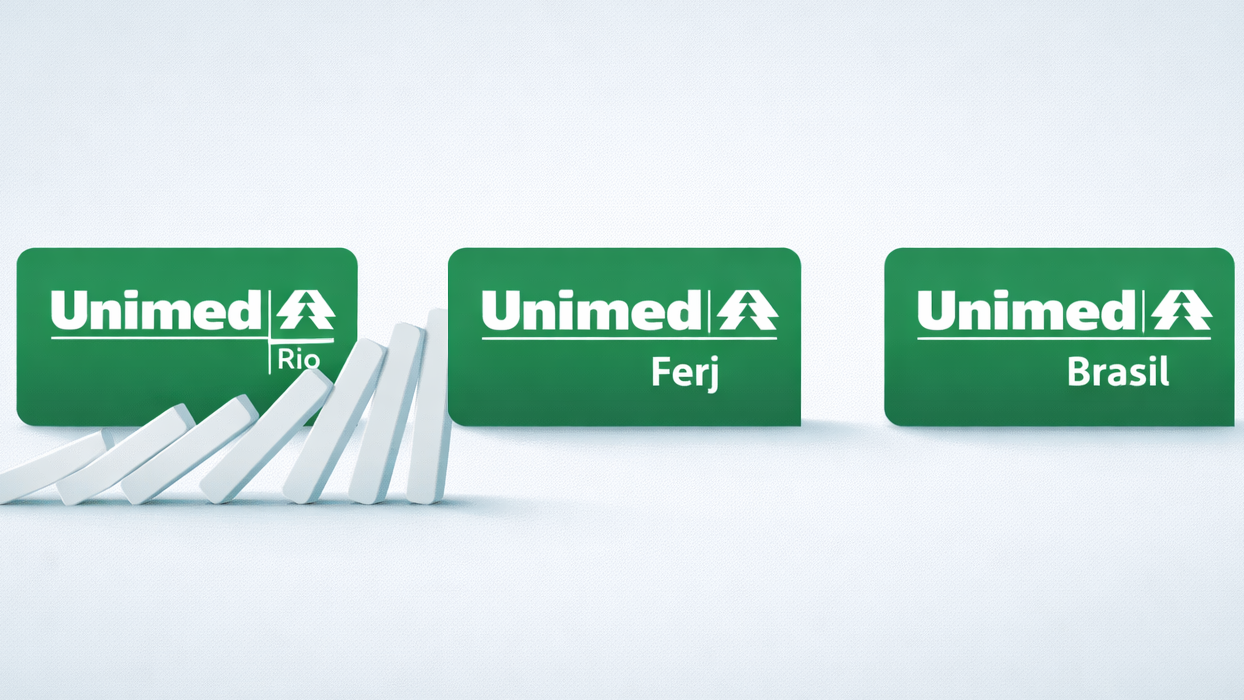
The problem originated in the collapse of Unimed-Rio, moved to Unimed Ferj and is now under the responsibility of Unimed do Brasil — while maintaining high levels of complaints and operational failures. Despite some incremental improvements, the ANS continues to flag recurring issues, including delays in authorizations, outdated provider networks and limited access to medical services.
“It is not acceptable for communication failures, misinformation about the accredited provider network, or difficulties in accessing care to persist. The responsible operator must adopt concrete and immediate measures to normalize the provision of services,” said Wadih Damous, presidente of the ANS.
Figures highlight the scale of the problem. ANS data show that Unimed Ferj covers 317,615 beneficiaries, based on a March 10, 2026 snapshot, and is listed as having no valid DIOPS submission, the mandatory financial reporting system for operators. This adds a new layer of risk: beyond deteriorating service levels, there are signs of weak financial transparency and organizational fragility.
At the consumer level, the deterioration is evident. Data from Reclame Aqui show that Unimed Ferj is rated “not recommended,” with an average score of 4.3/10 over the past six months. During the period, the company recorded 3,253 complaints, responded to only 56.7%, and left roughly 1,258 cases unanswered. Average response time exceeds 23 days, while only 51.8% of issues were resolved — reinforcing the decline in customer experience.
Broken promise
Current problems contrast sharply with the communication at the start of the transition. In a statement released on January 5, Unimed said that beneficiaries from Unimed Ferj would be served through the Unimed do Brasil provider network for consultations, exams and hospital care. Under the model, Ferj would retain contractual management, while Unimed do Brasil would handle care delivery, including authorizations.
At the time, the expectation was for greater agility and autonomy, supported by a new card and direct access to the national network, with no changes to contractual rights. Just over two months later, however, ANS data and user complaints suggest that the transition has failed to deliver the expected normalization, with significant operational issues persisting.
Transfer without cure
The timeline underscores the structural nature of the crisis. The collapse of Unimed-Rio triggered a sequence of transfers — first to Unimed Ferj and, since November 2025, to Unimed do Brasil — without any effective rebalancing of the portfolio. In less than two years, three different structures have taken over the operation, with the same issues persisting.
In practice, the portfolio behaves like a recurring liability. The lack of resolution, even after being absorbed by a larger national entity within the Unimed system, suggests that the imbalance goes beyond management and reflects underlying economic pressures, including high medical costs, a strained provider network and a potential mismatch between revenues and healthcare expenses.
While the crisis has remained concentrated within the Unimed system, its effects have spilled over into Rio’s broader healthcare market. Network disruption and loss of credibility have benefited competing operators, particularly Amil, but also SulAmérica and Bradesco Saúde, according to sector specialists.
Open question
After moving from Unimed-Rio to Unimed Ferj and now to Unimed do Brasil, the crisis remains unresolved. The case highlights a central dilemma in Brazil’s private healthcare sector: when a portfolio becomes structurally unbalanced, simply transferring it does not solve the problem — it only shifts it.
Unimed do Brasil, however, said in a statement sent at 11:30 a.m. on March 26 that it has responded to the ANS’s inquiries and is taking steps to normalize care. The company said it has been rebuilding its provider network, signing new contracts, resuming services with Unimed Rio physicians and continuously authorizing procedures, having served around 160,000 beneficiaries since January 2026. It also reiterated that the arrangement, in place since November 2025, covers 234,000 beneficiaries under a risk-sharing model, without a portfolio migration.





Leave a Reply