
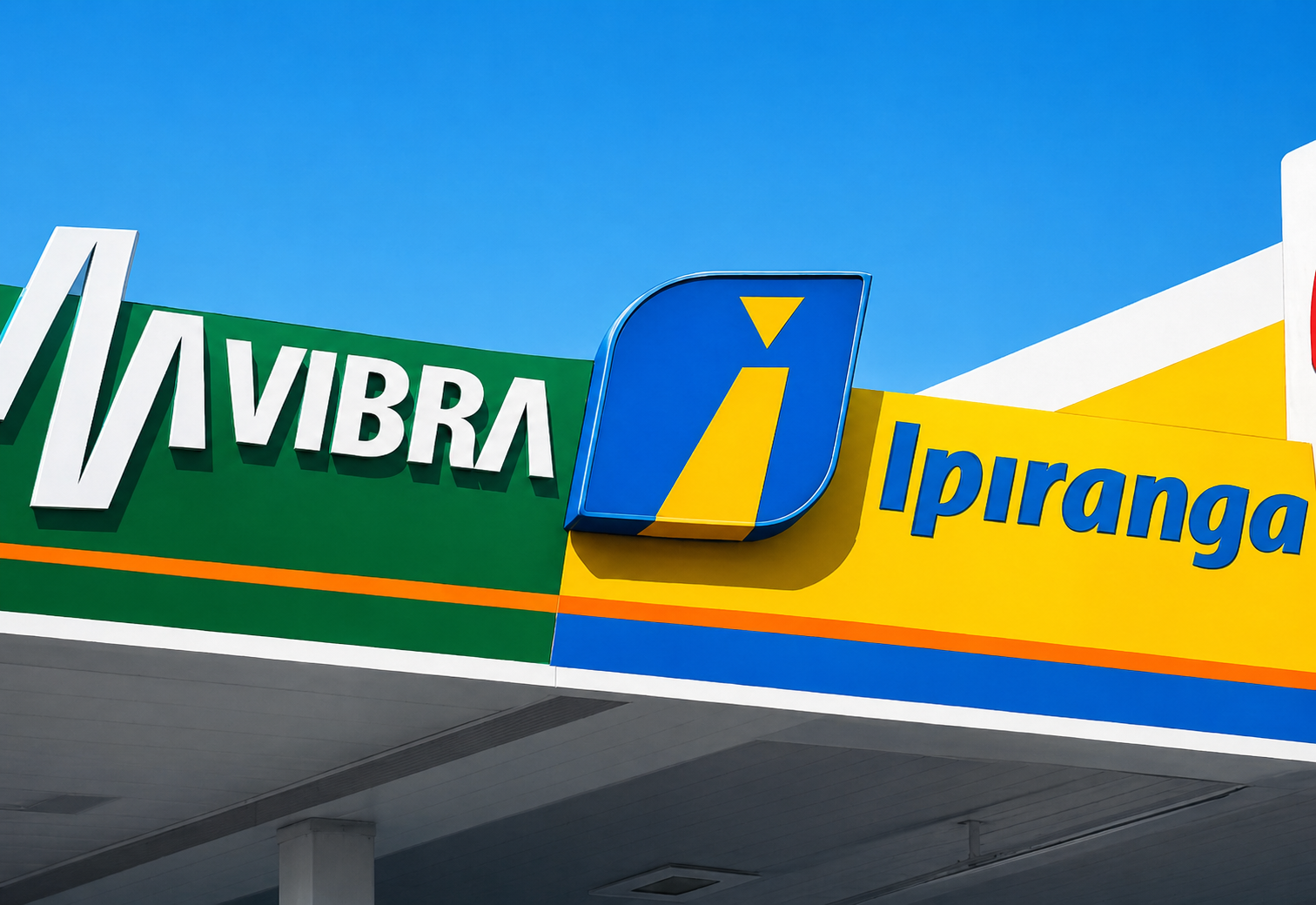
By Brazil Stock Guide – A tighter diesel market in Brazil should lift profits at private fuel distributors in 2026, according to BTG Pactual. The bank sees Vibra Energia (VBBR3) and Ultrapar (UGPA3), the owner of Ipiranga, entering a more favorable margin cycle, driven by greater access to Petrobras volumes and a more competitive sourcing structure.
The bank’s thesis is not simply that diesel has become more expensive. For fuel distributors, the key variable is margin per cubic meter sold. In a market with less slack between supply and demand, companies with scale, logistics capacity and better access to product can capture wider spreads.
For Vibra, which operates the BR-branded fuel station network formerly associated with Petrobras, BTG raised its estimates by about 20% to 30%. The bank expects an Ebitda margin of roughly R$255 per cubic meter in the first quarter of 2026 and sees room for further upside in the second quarter, as its high-frequency indicator pointed to margins between R$400 and R$500 per cubic meter in April.
Vibra is the more direct play on this cycle. BTG estimates revenue of R$229.5 billion in 2026, Ebitda of R$9 billion and net income of R$4.6 billion. Even after a roughly 30% rally in the stock this year, the bank sees the shares trading at 8.1 times expected 2026 earnings, with a 12.8% free cash flow to equity yield.
Ipiranga Gains Traction
At Ultrapar, the momentum comes mainly from Ipiranga. BTG projects Ebitda of about R$5.5 billion for the fuel distributor in 2026, with a margin of R$227 per cubic meter. For 2027, the estimate falls to R$4.8 billion, with a margin of R$189 per cubic meter, suggesting a stronger cycle in the near term.
Ultrapar’s investment case, however, is broader. Beyond Ipiranga’s improvement, the bank sees stable margins at Ultragaz, a gradual recovery at Ultracargo and a light balance sheet that gives the group room for inorganic growth. BTG estimates free cash flow to equity of R$2.2 billion in 2026 and R$2.7 billion in 2027.
Buy Ratings
BTG has buy ratings on both Vibra and Ultrapar. Its price target for Vibra is R$42, compared with R$33.30 in the report, implying 26.1% upside. For Ultrapar, the price target is R$39, compared with R$29.08, implying 34.1% upside and an estimated total return of 38.7% including dividends.
The main risk is that the same tighter diesel market that improves margins can also raise working capital needs. Higher fuel prices require more cash to finance inventories and sales. Still, BTG expects the Ebitda gains to offset that pressure.
The bank’s broader message is that fuel distribution in Brazil is regaining margin power. In a market with tighter supply, scale and access to product matter more. For Vibra and Ultrapar, that could mean higher profits, stronger cash generation and further room for stock re-rating.


Leave a Reply