

By Brazil Stock Guide – The company disclosed the results in its quarterly production and sales report on Thursday, April 30. The increase marks a 3.7% rise from the previous quarter and a 16.1% increase from the same period last year, fueled by ramp-up of FPSOs P-78, Alexandre de Gusmão, Anna Nery, and Anita Garibaldi across Búzios, Mero, Marlim, and Voador fields. Operational efficiency and reduced maintenance downtime also contributed to higher output. Ten new wells came online this quarter, seven in the Campos Basin and three in the Santos Basin.
Pre-salt records and FPSO milestones
Búzios field set a daily operated production record of 1.037 million barrels on March 20 and a gas export record of 12.4 million cubic meters on March 25. Mero field exceeded 700,000 barrels per day with a new well linked to the FPSO Alexandre de Gusmão.
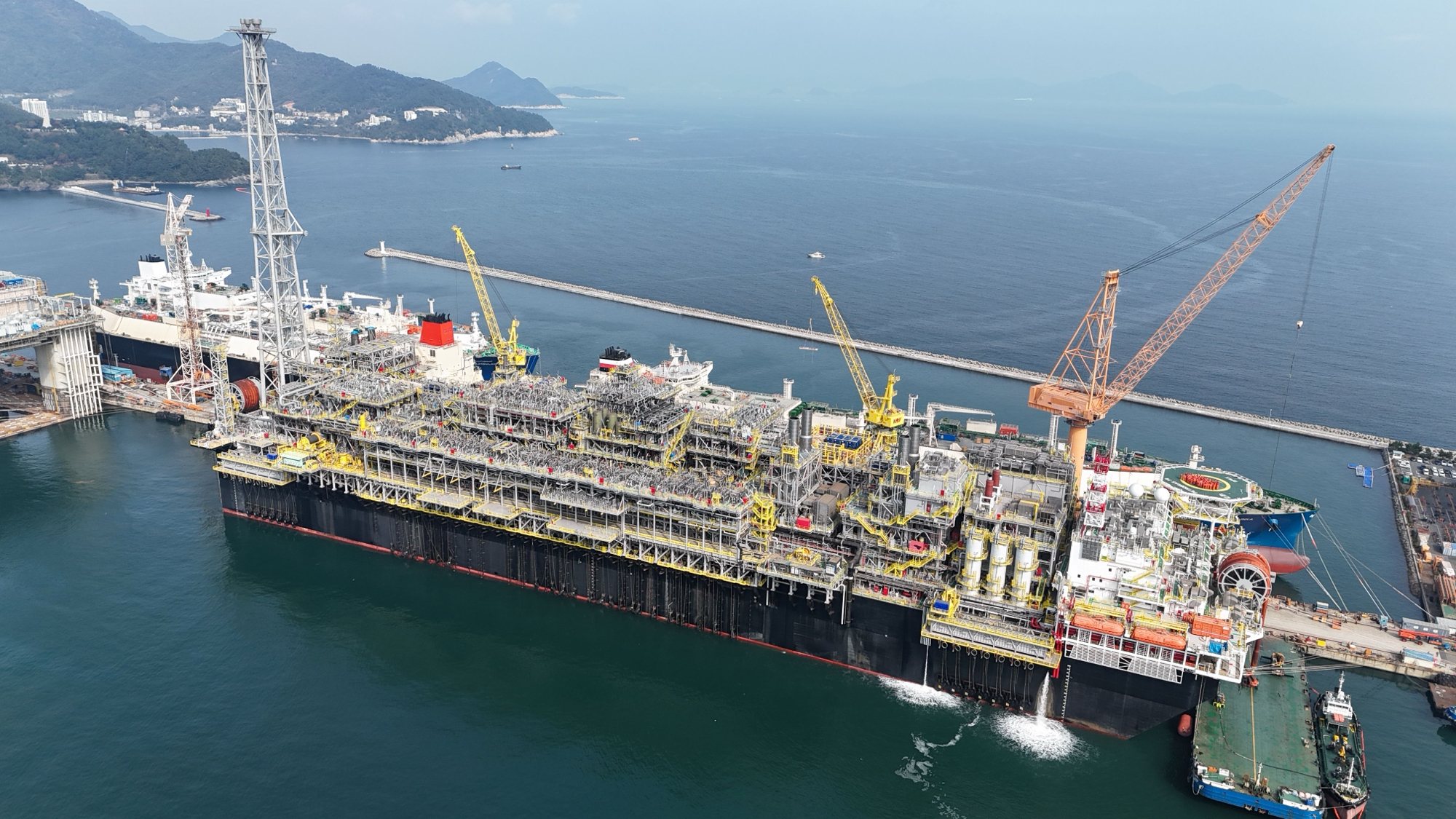
Santos Basin platforms achieved 44.8 million cubic meters of gas export in a single day on March 28. The P-78 FPSO in Búzios began gas injection on March 2, just 61 days after the start of production, the fastest commissioning among Petrobras’ own units. The P-78 now operates two wells, producing roughly 100,000 barrels per day.
The P-79 FPSO, the eighth unit at Búzios, completed mooring operations on February 21 in 12 days, a record among Petrobras’ platforms. Búzios 8 can process up to 180,000 barrels of oil per day and compress 7.2 million cubic meters of gas, with potential export of up to 3 million cubic meters per day via the Rota 3 pipeline.
Refining and derivatives
Total operated production reached 4.65 million boed, while Petrobras’ own output hit 3.23 million boed, both all-time highs. Pre-salt operated production totaled 4.01 million boed, and proprietary pre-salt production was 2.66 million boed.
Derivatives output rose 6.7% versus the previous quarter to 1,816 thousand barrels per day. Diesel and gasoline accounted for 68% of total derivatives production. Import volumes of liquefied petroleum gas (GLP) fell to 26 thousand barrels per day.
The refinery utilization factor (FUT) reached 95%, six percentage points above the prior quarter, with a peak of 97.4% in March, the highest since December 2014. Diesel S10 reached a monthly production record of 512 thousand barrels per day, and aviation kerosene (QAV) sales totaled 126 thousand barrels, up 9.6% year-over-year.
Logistics and partnerships
GLP throughput in Rio de Janeiro hit 75.8 thousand tons at the Terminal of Ilhas Comprida & Redonda. Diesel and gasoline movements via OSBRA totaled 756 thousand cubic meters, while Santos Terminal handled 879 thousand cubic meters of derivatives, including 402 thousand cubic meters of fuel oil, supporting full refinery operations in São Paulo.
Petrobras has also signed a contract with Vale to supply Diesel S10 blended with 15% biodiesel in Minas Gerais, expanding tests on low-carbon fuels. Magda Chambriard, Petrobras CEO, said:
“Establishing direct contact allows the company to better understand consumer needs and be more assertive in building solutions that generate value for clients and society. By offering high-performance fuels that also help decarbonization goals, we enhance logistics and production capabilities for globally relevant clients.”



Leave a Reply