By Rodrigo Uchoa, special for Brazil Stock Guide
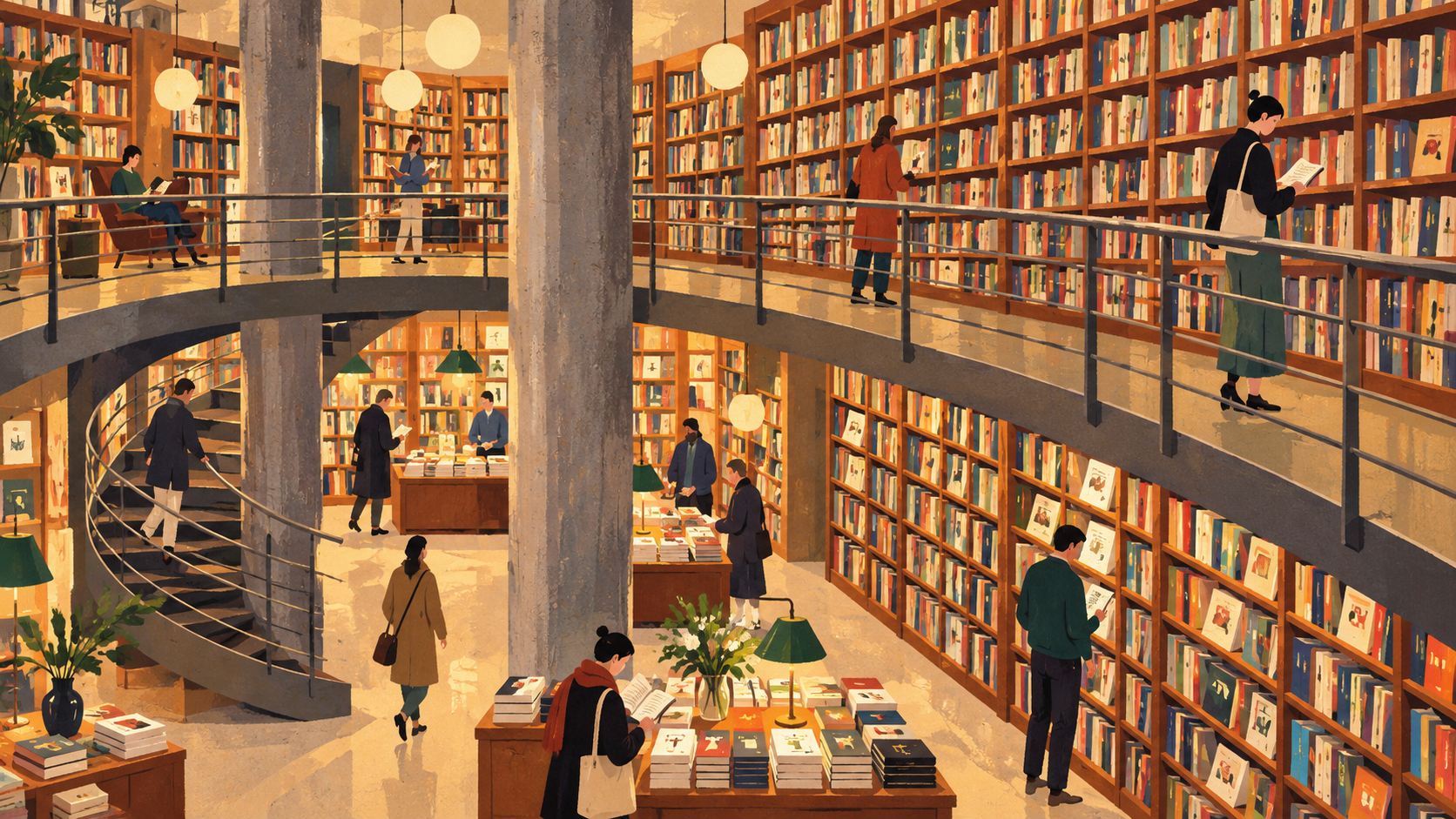
It takes a few minutes for the casual visitor to notice what is unusual about Gato sem Rabo. The tables are full, the shelves are full, and customers sit nursing coffee that has long gone cold beside piles of books that clearly will not fit into a carrier bag. So far, nothing remarkable. But a glance at the spines reveals an unexpected pattern: not a single male author.
Opened in 2021 by Johanna Stein in Vila Buarque, a neighbourhood in central São Paulo, the bookshop specialises in literature written from women’s perspectives and, more recently, by trans and queer authors. It began in a modest 65-square-metre premises opposite the city’s elevated Minhocão expressway. Today it occupies the ground floor of a 1956 modernist building designed by architect Oswaldo Bratke and recently restored on Rua Major Sertório, complete with café and bar.
The name comes from Virginia Woolf. In A Room of One’s Own (1929), the narrator sees a tailless cat crossing the lawn of an English university and finds herself reflecting on things that are incomplete, anomalous or somehow out of place. Stein turned the metaphor into a business model, something Woolf, who ran her own publishing house, would almost certainly have appreciated.

I have chosen three well-known bookshops here, one in São Paulo and two in London, without any pretence of statistical rigour. Yet together they illustrate a trend that is no longer novel. Specialist bookshops do not compete with Amazon on price or delivery speed. That battle was lost sometime around 1995. Instead, they compete on trust: the belief that somebody has already done the sifting, discarded the mediocre and selected something worth your attention, perhaps something you would never have found online.
In the process, the independent bookshop has recovered a status that seemed buried in the 1990s. It has once again become a place to meet, join a reading group, attend a discussion on a Tuesday evening, or simply spend time among like-minded people, a tendency that only strengthened after the pandemic.
At 4 Blenheim Crescent in Notting Hill, a fire-engine-red façade has housed Books for Cooks since 1983. The doorstep features a mosaic depicting a chef balancing a tureen on an open book. At the back of the shop, a test kitchen prepares a daily lunch from recipes found on the shelves. There are no reservations, and regulars begin hovering well before noon. A small sign politely asks visitors to seek permission before copying recipes. Eric Treuille, who has run the kitchen since 1994, says he is not entirely sure whether it helps sell books. I would wager that it does.
In Covent Garden, Stanfords has been selling maps since 1853 and remains stubbornly relevant in the age of GPS. Florence Nightingale, Ernest Shackleton and Robert Falcon Scott were customers. Arthur Conan Doyle even had Sherlock Holmes come here in search of a map of Dartmoor. In 2019, the company left Long Acre, where it had traded since 1901, for nearby Mercer Walk. The new premises feature globes of every conceivable size, a café and space for book launches. In 2020, with sales down to 30 per cent of normal levels, Stanfords appealed to customers for support through a crowdfunding campaign. It is still there.

The figures suggest that the decline of independent bookshops stabilised some time ago. In May, the Associated Press noted that, while the long-term market share losses remain real, the downward spiral itself largely ended years ago. In the United States, membership of the American Booksellers Association rose from 2,010 businesses in 2021 to 3,416 in 2025, an increase of 70 per cent. In Britain and Ireland, the number of independent bookshops climbed from a low of 867 in 2016 to 1,052 in 2024. Brazil has almost 3,000 bookshops, roughly one for every 72,000 inhabitants, and close to a hundred have opened since 2021.
There is, however, a caveat. Independent American booksellers accounted for roughly 30 per cent of the market when Amazon was founded. Today, they control only around 7 per cent.
The demise of the giants is well known. Borders collapsed in 2011. In Brazil, Saraiva, which once operated more than 100 stores and even maintained its own network for selling iPhones, eventually shut its final branches and entered bankruptcy. Livraria Cultura sought court protection from creditors in 2018, shortly after taking over the local operations of Fnac.
Those that survived borrowed lessons from the independents. James Daunt, founder of Daunt Books in London, revived Waterstones and later Barnes & Noble with a remarkably simple idea: let each shop choose its own stock. He abandoned the practice of selling prime display space to publishers, encouraged handwritten recommendations from staff and finished 2025 with 702 shops and more than 60 openings during the year. “I am, at heart, an independent bookseller,” he likes to say.
The Japanese have a word for what comes next: tsundoku, the habit of buying books and leaving them unread in ever-growing piles. A newspaper column from 1879 was already poking fun at a tsundoku sensei, a learned gentleman surrounded by books he never quite got round to reading.
Anyone leaving Gato sem Rabo with three volumes under one arm and a promise to tackle them during the holidays will recognise the condition. The independent bookshop survives on this optimistic arithmetic, selling not only a book you did not know you wanted, but also the conviction that, somehow, you will find the time to read it.
You rarely do.


Leave a Reply