
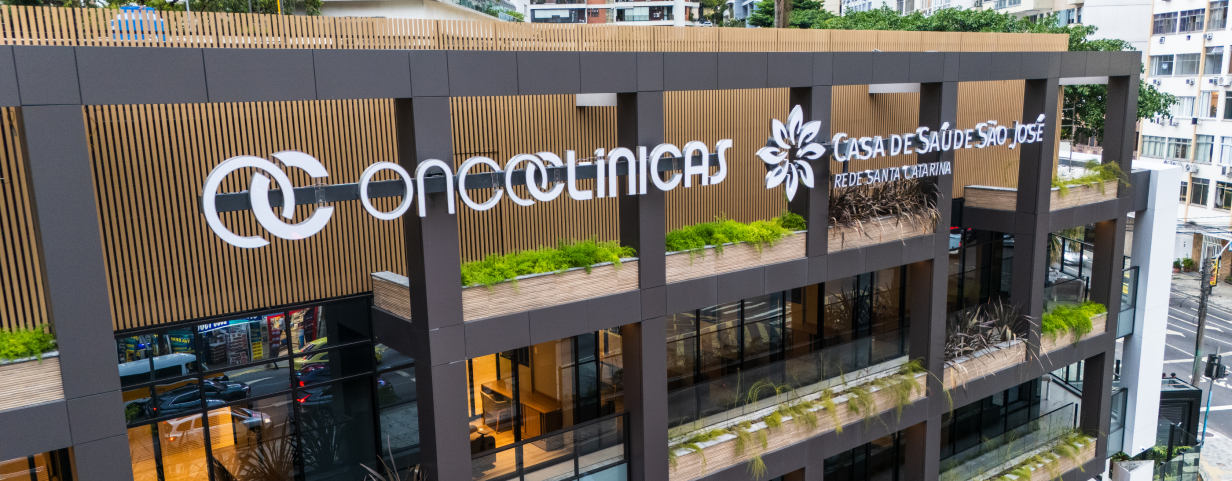
By Brazil Stock Guide – Oncoclínicas, one of Brazil’s largest cancer-care providers, is going through an out-of-court restructuring to renegotiate roughly R$5.1 billion in financial debt. In the middle of that process, however, another potentially multibillion-real bill has emerged.
Oncoclínicas will not be the one paying it.
Under the current ruling by Brazil’s Securities and Exchange Commission, the CVM, the obligation falls on Centaurus Capital and Josephina III, the investment vehicle through which the asset manager holds its stake in the company.
On Tuesday, the CVM unanimously ruled that a corporate reorganization carried out on November 4, 2024 triggered the poison-pill provision contained in Article 39 of Oncoclínicas’ bylaws. The regulator gave Centaurus until October 24, 2026 to conduct a public tender offer for the shares and ordered the purchase price to be adjusted by Brazil’s Selic benchmark interest rate.
The first question has therefore been settled at the administrative level: the tender offer is mandatory.
The second is only beginning: how much will Centaurus have to offer for each ONCO3 share?
The answer lies in a provision written into the company’s bylaws long before its current financial crisis. The mechanism establishes four different benchmarks for the minimum tender price and requires the highest of the four to prevail.
The criteria themselves are clear. What remains unsettled is precisely how they should be applied in this case — especially because the formulas use different lookback periods and the tender offer should have taken place almost two years ago.
That is where a corporate-law dispute can turn into a multibillion-real calculation.
The first benchmark is the company’s Fair Value, to be established through an independent valuation report, according to the CVM.
No such figure is yet publicly available. The appraisal may consider methodologies including discounted cash flow, book value, comparable-company multiples and market value. If the resulting figure exceeds the other three benchmarks, it will set the floor for the offer.
That makes Fair Value the only one of the four calculations that remains entirely open.
The second benchmark is more straightforward.
The bylaws call for 120% of the highest trading price for the shares during the 12 months preceding the tender offer. Using ONCO3’s recent high of roughly R$3.91, adding the required 20% premium would produce a price of about R$4.69 per share.
The math looks simple.
It is not.
CVM director João Accioly highlighted an unusual feature of the bylaws in his vote: the four criteria do not necessarily use the same reference date. The benchmarks based on the share price and the highest price paid by the acquirer look at the 12 months preceding the actual tender offer. Another benchmark, however, is tied to the 12 months preceding the date on which the offer first became mandatory.
As Accioly put it, much of the relevant window therefore “moves with the date of the offer.”
And the offer did not happen when it should have.
The CVM concluded that the obligation arose in November 2024. The bylaws gave the responsible shareholder 60 days to comply. Almost two years later, Oncoclínicas is worth only a fraction of what it was at the time.
That time gap is where the big numbers begin.
The third benchmark takes the calculation directly back to 2024 — and to an institution that would later become an important character in the company’s recent history: Banco Master.
In May of that year, Oncoclínicas approved a R$1.5 billion capital increase through the issuance of 115.4 million shares at R$13 apiece.
Quíron and Tessália, investment vehicles backed by Banco Master, committed to subscribe for as much as R$1 billion. Oncoclínicas founder Bruno Ferrari indicated his intention to invest another R$500 million.
The price immediately stands out. If the R$13 issuance price were plugged directly into the poison-pill formula and increased by the statutory 20% premium, the result would be R$15.60 per share.
But one word in the bylaws appears, on a plain reading, to exclude that transaction from the calculation: public.
The third benchmark refers to the issuance price of shares in a capital increase carried out through a public distribution during the 12 months preceding the moment the tender offer became mandatory.
The R$1.5 billion capital increase in 2024 was conducted through a private subscription.
In other words, a transaction completed squarely within the relevant period, at R$13 per share, and which marked Banco Master’s entry into the company apparently cannot be used under that formula.
In a tender offer of this size, a single word can be worth billions.
The fourth benchmark brings another major player into the story: Goldman Sachs, which for years shared a co-investment structure in Oncoclínicas with Centaurus.
In March 2025, Centaurus’ Josephina III acquired 102.9 million Oncoclínicas shares, representing 15.79% of the company, from Goldman-linked Josephina I. The transaction increased Centaurus’ direct stake to 31.83% and was accompanied by a total return swap between the two groups.
In the opinion written by CVM Chairman Otto Lobo, the transaction is described as part of a broader move in which Goldman reduced its direct and indirect exposure to Oncoclínicas while Centaurus consolidated the position under its own management.
The deal matters because the fourth poison-pill benchmark is 120% of the highest price paid by the acquirer for the shares.
But there is a timing problem.
Even under the earliest realistic timetable, the tender offer will occur more than 12 months after the March 2025 transaction, placing that acquisition outside the statutory lookback period.
So far, Brazil Stock Guide has not identified in the public information reviewed any subsequent purchase capable of establishing a higher floor under this fourth criterion.
Under the most mechanical reading of the four formulas, therefore, the dispute could ultimately come down to the still-unknown Fair Value and the roughly R$4.69 produced by the recent market-price benchmark.
But the CVM’s own decision makes that conclusion far less straightforward.
In a material fact notice released Thursday, Oncoclínicas said the CVM board established November 4, 2024 as the date on which the share purchase price should be calculated, followed by monetary adjustment using the Selic rate.
Exactly how that instruction applies to each of the four statutory benchmarks is now one of the central questions surrounding implementation of the ruling.
CVM Chairman Otto Lobo went further. His opinion calls for the full adjustment of the price from the triggering event through settlement of the tender offer in order to preserve the economic value of the obligation.
Director Igor Muniz adopted the same reasoning. In his view, the passage of time since 2024 should not benefit a party that failed to comply with the obligation within the original deadline.
That is where the much larger estimates come from.
JPMorgan analysts calculated that, using prices from before November 2024 as the reference, the tender price could be in the region of R$16 per share.
Another market calculation starts at roughly R$12, adds the statutory 20% premium to reach R$14.40, and then applies the accumulated Selic rate since November 2024. The result comes to approximately R$18.27 per share.
Neither figure has been endorsed or approved by the CVM.
That distinction is crucial: there is still no official tender-offer price.
The calculations merely illustrate the scale of the debate now opening over how the regulator’s decision should be implemented.
A Multibillion-Real Bill
The differences become clearer when the per-share figures are multiplied by the number of shares potentially eligible for the offer.
Oncoclínicas currently has approximately 1.135 billion shares outstanding. Josephina III owns roughly 112.5 million, while another 11.9 million are held in treasury.
Excluding those positions leaves slightly more than 1 billion shares potentially held by other investors.
The CVM ruled that shareholders registered as eligible up to the day before the tender auction will be allowed to participate.
At R$4.69 per share, full participation would imply a theoretical cash outlay of roughly R$4.7 billion.
At R$16, the bill would rise to about R$16 billion.
At R$18.27, it could approach R$18.5 billion.
These are maximum scenarios. No shareholder is required to tender shares, and the actual cash outlay will depend on participation.
Even so, the scale is striking.
At the high end, the potential obligation would be more than three times the R$5.1 billion in financial debt that pushed Oncoclínicas itself into an out-of-court restructuring.
The stock price offers another measure of the gap.
ONCO3 closed Thursday at R$1.38, down 28% for the session. Even after that plunge, the shares are still up roughly 126% over the past 30 days.
At that price, the entire company is worth approximately R$1.57 billion on the stock market.
A theoretical R$18.5 billion tender offer would therefore be worth almost 12 times Oncoclínicas’ current market capitalization.
That contrast is what makes the situation so unusual: a company undergoing an out-of-court restructuring, valued by the market at just over R$1.5 billion, has a provision embedded in its bylaws capable of forcing one shareholder to launch a tender worth many billions.
Another Front in the Battle
And another dispute is already running in parallel.
Even before the CVM ruling, Josephina III initiated arbitration proceedings against Latache before B3’s Market Arbitration Chamber.
Latache was one of the asset managers that challenged the CVM staff’s earlier conclusion that no tender offer was required and helped bring the matter before the regulator’s full board.
The arbitration creates a second front in the fight over how the poison pill should be interpreted.
It does not, however, automatically suspend the CVM’s decision.
The regulator addressed that issue directly, concluding that the arbitration clause may govern private disputes between shareholders but does not strip the CVM of its regulatory authority.
According to the regulator’s technical staff, the two proceedings can operate in parallel, and a private arbitration award would not bind the CVM in the exercise of its supervisory powers.
That does not mean the arbitration is irrelevant. It could still produce further developments, including additional disputes over the interpretation of the bylaws and the contractual rights of the parties involved.
There may also be a third front.
In Chairman Otto Lobo’s opinion, he raises the possibility of a future discussion over whether entities linked to Goldman Sachs could bear joint liability.
Goldman had not been formally served in the CVM proceeding, meaning the board could not impose such liability at that stage.
Lobo stressed, however, that the issue neither postpones nor conditions the obligation already recognized against Centaurus and Josephina III.
For now, then, the order is clear: Centaurus and Josephina III must conduct the tender offer.
The question is the size of the check.
Who Is Centaurus?
Centaurus Capital is not a Brazilian asset manager. It is a privately held investment partnership based in Houston, Texas, with investments across several asset classes, including energy, private equity, credit and debt.
The firm is associated with American investor John D. Arnold, who became known as a natural-gas trader at Enron before building his own fortune in energy markets.
Allen Gibson is one of the key executives involved in Centaurus’ investment activities and previously served on Oncoclínicas’ board of directors.
In Brazil, the investment in ONCO3 was not held directly by Centaurus Capital LP but through a chain of investment vehicles.
In November 2024, the portion attributed to Centaurus was segregated into Josephina III, whose sole investor became Centaurus Brazil Holdings, itself wholly owned by Centaurus.
Josephina III then directly held 16.05% of Oncoclínicas.
It was precisely that reorganization that the CVM now considers to have triggered the poison pill.
Almost two years later, whether the obligation exists is no longer the main question. The market now has to determine how much a poison pill that should have been triggered in 2024 is worth in 2026, with the company itself undergoing an out-of-court restructuring.


Leave a Reply