
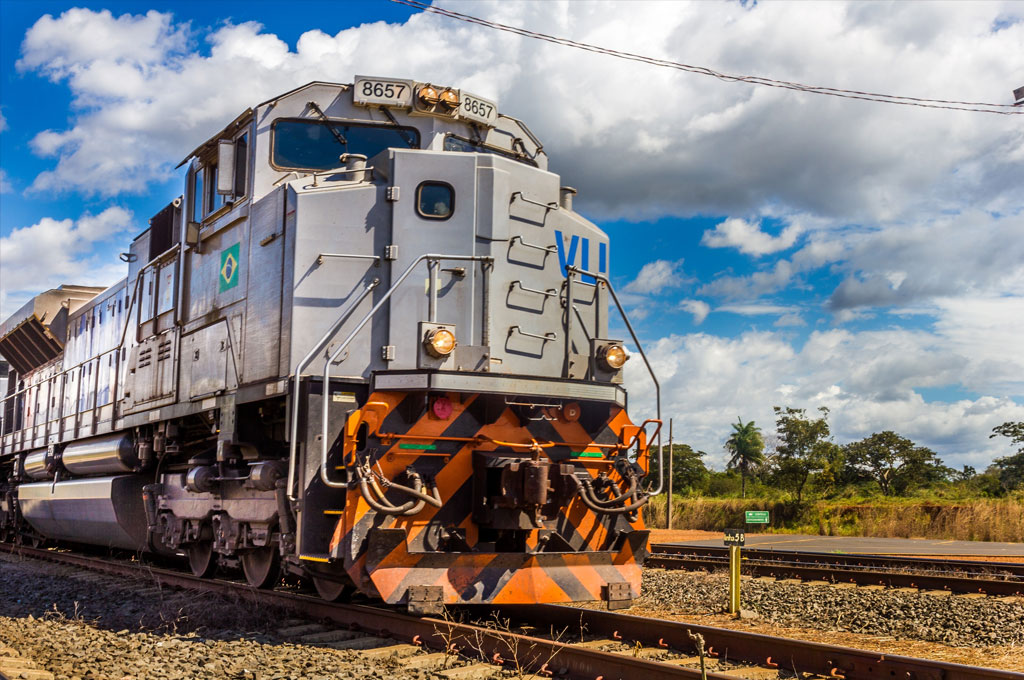
Brazil Stock Guide — Brazil is preparing its first test of a new model for reviving abandoned or underused railways, and the project has exposed a central challenge: how to attract private investors with existing freight demand without allowing them to focus only on the profitable parts of the network.
The 733-kilometer Minas-Rio corridor combines railway sections being returned by Ferrovia Centro-Atlântica, or FCA, controlled by VLI. Instead of a traditional concession, the assets will be offered under a 99-year private authorization, with the operator assuming the commercial risks of the business.
The economic imbalance is clearest in Lot 1. A roughly 495-kilometer line between Iguatama in Minas Gerais and Barra Mansa in Rio de Janeiro is already operating and in good technical condition, with steelmaker Companhia Siderúrgica Nacional, or CSN, classified as a dependent user. The same lot also contains the roughly 131-kilometer Varginha-Lavras line, which is currently out of service.
That creates an obvious incentive problem. A new operator would inherit a railway section with an established industrial customer and existing freight flows while also being required to spend money restoring tracks that currently generate no revenue.
Brazil’s federal audit court, the TCU, identified that risk when reviewing the tender. Its technical staff found that the investment schedule was based on minimum numbers of kilometers rehabilitated within each lot, rather than requiring specific dormant sections to be restored at particular stages. Under the original structure, the operator could meet early targets without carrying out any work on Varginha-Lavras.
The court explicitly examined a scenario in which the winner kept operating Iguatama-Barra Mansa, where the dependent customer is located, while failing to reactivate Varginha-Lavras. It concluded that the original contract did not clearly allow the authorization to be revoked in such a case.
The TCU therefore recommended that regulator ANTT add a specific termination clause tied to deadlines for restoring individual sections of the railway. The measure is intended to prevent the winner from effectively cherry-picking the most attractive part of the package while postponing investment in the assets the government is trying to bring back into service.
The issue goes well beyond CSN or the Minas-Rio corridor. The government is looking for new uses for roughly 10,000 kilometers of underused or returned railway lines from networks including FCA, Rumo’s Malha Sul and Ferrovia Transnordestina Logística. Around 30 projects have been identified as having greater potential for freight, passenger or tourism operations.
That makes Minas-Rio a test of whether Brazil can use established freight demand as an anchor for a much broader railway-recycling program. The challenge is to design contracts in which revenue from viable sections helps attract capital without allowing private operators to neglect the less profitable stretches bundled with them.
The TCU cleared the Minas-Rio process to move forward but required several changes before the tender is published. The court described the project as a precedent for future railway authorizations and said the lessons from the case should inform the treatment of idle lines, public assets, interoperability and investment obligations in subsequent tenders.
The court also ordered ANTT to produce economic studies supporting the proposed minimum authorization payment of just R$1. The symbolic price can still be maintained, but only if the government demonstrates that the economic value of the lots is negative after taking into account rehabilitation costs, operating expenses and expected freight demand.
For Brazil’s new railway model, however, the more fundamental test may come after the auction: whether an operating line anchored by a major industrial customer such as CSN can help finance the revival of unwanted tracks — without becoming the only part of the network the new operator has an incentive to run.


Leave a Reply