
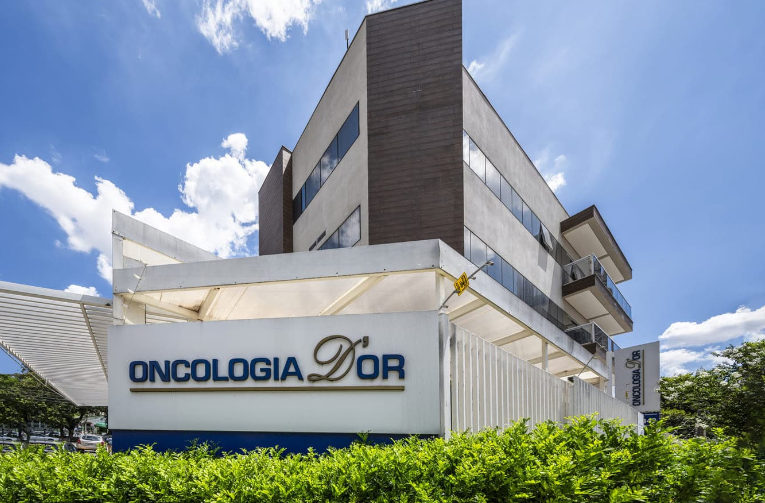
By Brazil Stock Guide – Rede D’Or São Luiz (B3: RDOR3) is increasingly positioning oncology as one of its main growth engines, with cancer-care revenue expanding at more than twice the pace of its core hospital business in the second quarter.
Revenue from oncology, infusions and therapies rose 22.3% from a year earlier to R$1.15 billion, driven by a 15.2% increase in volumes and a 6.1% rise in average ticket. In the first half, oncology revenue reached R$2.22 billion, up 23%.
The pace compares with a 9.9% increase in gross hospital-services revenue in the quarter, highlighting the growing contribution of cancer care to Rede D’Or’s expansion.
“We continue to see oncology as an important growth runway, a major opportunity ahead of us to continue growing strongly,” President Paulo Moll said during the company’s second-quarter earnings call.
While oncology remains substantially smaller than Rede D’Or’s hospital operation — which generated R$9.87 billion in gross revenue during the quarter — it has become one of the group’s fastest-growing healthcare businesses.
Integrated care is the main advantage
Rede D’Or argues that its competitive advantage in cancer care comes from combining oncology services with its nationwide hospital infrastructure.
Patients can move through diagnosis, chemotherapy, radiotherapy, surgery and interventional radiology within the same healthcare ecosystem, an integration that management says is difficult for standalone providers to replicate.
“That integration, we would say, is the major differentiation that we are able to offer physicians and, above all, patients,” Moll said.
He also highlighted the oncology team led by physician Paulo Hoff, saying the group has built strong credibility with insurers around clinical quality and treatment protocols.
“We have an oncology team here that is fantastic,” Moll said. “There is a very high degree of trust from insurers in the type of service, the seriousness, the quality and also the effectiveness of the protocols that we recommend.”
The model also allows Rede D’Or to capture more complex procedures inside its hospitals, supporting both oncology revenue and the broader shift toward higher-acuity care.
Oncoclínicas weakness enters the investor debate
The competitive landscape came into focus during the call when Morgan Stanley analyst Maurício Cepeda asked whether the weakening of rival Oncoclínicas (B3: ONCO3) was allowing Rede D’Or to capture additional cancer-care volumes.
Moll did not endorse that interpretation directly.
Instead, he said most of Rede D’Or’s oncology growth is expected to come from deeper relationships with insurers already connected to the group rather than from a major shift in market share from any single competitor.
“The majority of our growth will come from the portfolio of insurers with which we already have relationships,” Moll said. He acknowledged that new insurers could enter Rede D’Or’s network, but described that as a secondary source of expansion.
Rede D’Or is not presenting its oncology strategy as a bet on a competitor’s difficulties. Management’s thesis is that its existing hospital footprint and payer relationships provide enough room to grow organically.
Rede D’Or rejects actuarial risk
Moll also drew a clear boundary around how far the company is willing to go in alternative payment models. Asked whether Rede D’Or could adopt revenue-sharing or risk-sharing arrangements to expand oncology into lower-cost health plans, the executive said the group is open to different commercial relationships with insurers but does not intend to assume the actuarial risk of cancer treatment.
“If you ask whether we, as a service provider, are going to take the actuarial risk of oncology, the answer is no,” Moll said. “We understand that actuarial risk is not the kind of risk that a healthcare service operation should take.”
Instead, Rede D’Or plans to work with insurers on pricing, treatment protocols and other commercial structures while keeping insurance risk with the payer.
Growth comes with higher complexity
The expansion of oncology also fits into a broader change in Rede D’Or’s hospital mix. The company said surgical volumes rose more than 10% in the second quarter, with elective surgeries increasing more than 11%.
That higher level of complexity is helping lift revenue per patient. Hospital average ticket increased 11.2% year over year, even though management said price increases charged to insurers remain only modestly above inflation.
“We are seeing the ticket move higher, but it is not because of double-digit price increases,” Moll said. “It is much more related to mix. We are doing more surgeries, more complex surgeries.”
Oncology reinforces that dynamic. Cancer treatments typically require a combination of drugs, diagnostics, procedures and hospital infrastructure, making the business an increasingly important component of Rede D’Or’s higher-complexity strategy.
For Rede D’Or, the opportunity is therefore less about turning oncology into a standalone insurance-style business and more about using its existing hospital network to capture a larger share of the cancer-care journey.
With oncology revenue already exceeding R$1 billion per quarter and growing above 20%, that strategy is becoming increasingly material to the group’s overall growth profile.


Leave a Reply