
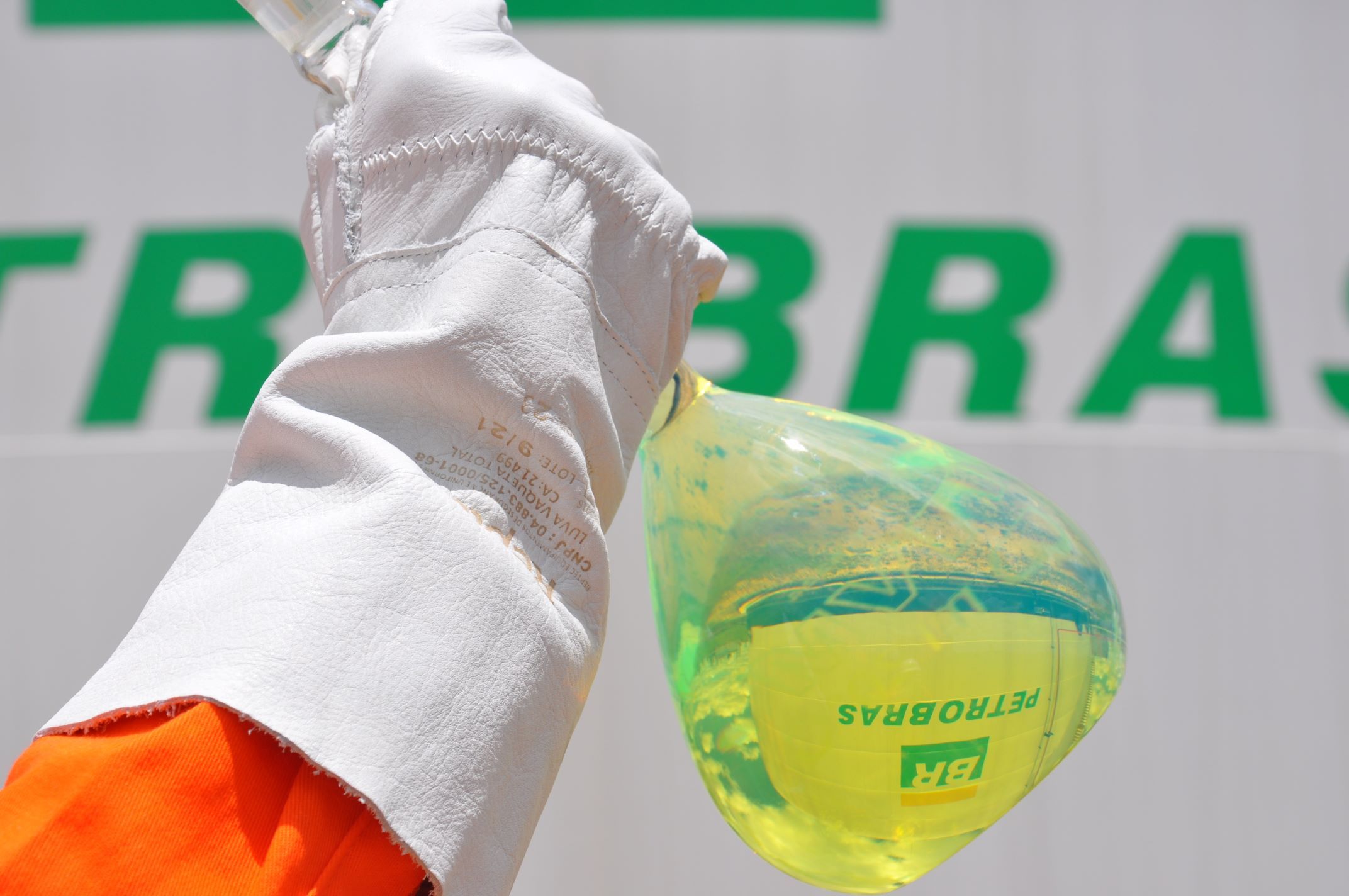
By Brazil Stock Guide — Brazil’s state-controlled oil company Petrobras (B3: PETR3, PETR4) reported a net profit of 39.75 billion reais ($R39.75 billion) in the third quarter of 2026, up 21.5% from a year earlier, as record oil and gas production and higher international crude prices lifted earnings. Profit fell 24.2% from the previous quarter, however, reflecting weaker Brent prices and the impact of exceptional charges, the company said on Tuesday (November 10).
Revenue rose 32.4% year-on-year to 169.35 billion reais, while adjusted earnings before interest, taxes, depreciation and amortization (EBITDA) increased 34.3% to 85.82 billion reais. Excluding one-off items, net income attributable to shareholders reached 47.88 billion reais, up 67.9% from a year earlier, while adjusted EBITDA excluding exceptional items climbed 45.1% to 94.52 billion reais.
The results underscore a period of rapid operational expansion at Petrobras, driven by the deployment of new offshore production units and productivity gains at its deepwater pre-salt fields. Average oil, natural gas liquids and natural gas production reached a record 3.512 million barrels of oil equivalent per day (boe/d). Earnings also benefited from an average Brent crude price of $97 a barrel, 40.4% higher than in the third quarter of 2025.
Alongside its earnings release, Petrobras significantly raised its production guidance for 2026. The company now expects total oil and gas output of between 3.3 million and 3.4 million boe/d, up from its previous forecast of 3.1 million boe/d. Its oil and natural gas liquids production forecast was increased to between 2.7 million and 2.8 million barrels per day, compared with an earlier estimate of 2.5 million. The revisions reflect operational efficiency gains, accelerated project execution and faster production ramp-ups at existing platforms.
Petrobras Chief Executive Magda Chambriard attributed the stronger performance to the company’s ability to maximize output from existing assets while bringing new projects online. The company also reported record diesel production of 769,000 barrels per day and an average refinery utilization rate of 99% during the quarter.
The improved operational outlook prompted Petrobras to raise its full-year operating cash flow forecast to between $45 billion and $50 billion, from $35 billion previously. The revision reflects higher oil prices and increased production of crude and refined products, strengthening the company’s ability to finance capital expenditure and shareholder distributions.
Petrobras also raised its 2026 capital expenditure guidance for projects under implementation to between $24 billion and $25.5 billion, from $19.4 billion. Its cash investment forecast increased to between $21 billion and $22 billion, compared with $16.9 billion previously. The company said the revisions do not represent an increase in total project costs, but primarily reflect currency effects and faster-than-planned project execution.
Capital expenditure totaled $6.42 billion in the third quarter, up 21.2% from the previous three months and 16.6% year-on-year. During the first nine months of 2026, investment on an accrual basis reached $16.83 billion, a 20.2% increase from the same period in 2025. Most spending was directed toward exploration and production, particularly the development of the Búzios, Atapu and Sépia fields in Brazil’s pre-salt region, where large oil reservoirs lie beneath thick layers of salt deep below the Atlantic seabed.
Among the major projects underway are the P-80 and P-82 floating production units, both destined for the Búzios field in the Santos Basin. The two platforms departed Singapore in September and October and are scheduled to begin production in 2027. Each will have the capacity to produce 225,000 barrels of oil per day and process 12 million cubic meters of natural gas daily. Petrobras also highlighted progress on other offshore units and increased drilling-rig availability for well development and connections.
Despite strong annual growth, third-quarter earnings were weaker than those recorded between April and June. Adjusted EBITDA excluding exceptional items declined 6.1% sequentially, mainly because average Brent prices fell 7.2%, from $104.52 to $97 a barrel. Results were also affected by the timing of export revenue recognition, as some crude shipments remained in transit at the end of September.
According to Petrobras, approximately 140,000 barrels per day of crude were associated with export shipments still underway at the end of the quarter, with the corresponding volumes expected to be recognized in the fourth quarter. Those effects were partially offset by a 6.4% increase in refined-product sales, including a 14.4% rise in diesel sales.
The exploration and production division, Petrobras’ main earnings contributor, reported net income attributable to shareholders of 31.2 billion reais, up 10.8% year-on-year but down 25% from the second quarter. Adjusted EBITDA for the segment totaled 65.19 billion reais, while operating profit reached 47.06 billion reais. The sequential decline primarily reflected lower oil prices, despite higher production volumes.
Production growth also helped reduce unit extraction costs. Petrobras’ lifting cost, excluding chartering expenses and government participation payments, fell to $6.12 per barrel of oil equivalent, its lowest level since the third quarter of 2024. The metric declined 3.4% quarter-on-quarter and 2.8% from a year earlier. In the pre-salt region, which accounted for 85% of Petrobras’ Brazilian production, lifting costs stood at $4.48 per barrel of oil equivalent.
Stronger refining operations helped offset weaker sequential performance in exploration and production. Petrobras’ Refining, Transportation and Marketing division reported net income of 17.48 billion reais, up 80.8% from the second quarter and 451.8% year-on-year. Adjusted EBITDA reached 30.23 billion reais, a 68.5% increase from the previous quarter. Results benefited from higher domestic sales volumes, increased fuel oil export revenue and stronger margins on crude oil exports.
Domestic refined-product sales reached 1.855 million barrels per day, a record for Petrobras’ current refining portfolio. Gross profit in the segment rose to 39.16 billion reais from 26.13 billion reais in the previous quarter. Excluding inventory valuation effects, Petrobras said refining gross profit would have increased from 17.8 billion reais to 42.7 billion reais between the two periods, highlighting the improvement in the division’s underlying performance.
The Gas and Low-Carbon Energy division, meanwhile, posted a net loss of 1.02 billion reais, reversing a profit of 957 million reais in the second quarter. The result was primarily affected by a charge of approximately 3.6 billion reais related to Petrobras’ 2019 sale of Transportadora Associada de Gás (TAG), a major Brazilian natural gas pipeline operator. The obligation stems from contractual provisions linked to regulatory assumptions governing gas transportation tariffs, which were reviewed by Brazil’s oil and gas regulator, ANP, in October.
Beyond the TAG-related expense, consolidated earnings were affected by other exceptional charges. Petrobras recognized 4.46 billion reais in expenses associated with export taxes on crude oil and diesel, along with 4.21 billion reais in losses related to legal contingencies. These and other adjustments contributed to reported net income being 8.13 billion reais below the company’s profit excluding exceptional items, after accounting for the related tax effects.
Cash generation remained strong despite higher investment spending. Operating cash flow reached 61.79 billion reais in the third quarter, up 15.2% from the same period in 2025. Free cash flow totaled 34.01 billion reais, an increase of 25.9% year-on-year, although it declined 11.9% from the second quarter, largely reflecting higher capital expenditure.
Operating cash flow was partly constrained by a 12.7 billion-real working capital outflow, primarily reflecting increases in receivables and inventories. Petrobras said the inventory buildup was mainly associated with higher production and crude export shipments still in progress at the end of the quarter. The increase in receivables also included amounts related to Brazil’s fuel subsidy program.
Petrobras ended September with gross debt of $69.97 billion, down 1.2% from the end of June. Net debt declined 4.2% to $57.85 billion, while the ratio of net debt to adjusted EBITDA over the previous 12 months fell to 1.0 times from 1.14 times. Financial debt, excluding lease liabilities, stood at $25.64 billion. The average borrowing cost edged down to 6.7% annually from 6.8%.
During the quarter, Petrobras allocated 27.2 billion reais to cash investments, repaid 13.7 billion reais in lease liabilities and made 10.6 billion reais in payments related to financing obligations. The company also paid 8.1 billion reais in previously approved dividends. At the end of September, cash and cash equivalents totaled 35.57 billion reais, while adjusted liquidity, including certain financial investments, reached 62.81 billion reais.
Petrobras’ board also approved 15.3 billion reais in shareholder remuneration related to third-quarter earnings. The company said it paid 90.4 billion reais in taxes and government contributions to Brazil’s federal, state and municipal authorities during the period, reflecting the scale of its operations and higher revenue in a stronger oil-price environment.
In addition to raising its production, investment and cash flow forecasts, Petrobras increased its guidance for controllable operating expenses in 2026 to between $24.2 billion and $25.5 billion, from $20.2 billion previously. The company attributed the revision mainly to currency effects, higher production, the accelerated start-up of new operations and increased logistics costs, particularly exceptionally high international freight rates. Despite the higher spending forecast, Petrobras expects controllable operating costs per barrel produced to decline by 2% compared with 2025.
The company’s forecast for lease-related cash outflows was also increased to between $11 billion and $11.5 billion, from $10 billion, reflecting greater use of drilling rigs, offshore support vessels and crude export tankers. The revisions indicate that faster production growth is bringing higher capital requirements and operating expenses, even as Petrobras expects further efficiency gains on a per-barrel basis.
For the first nine months of 2026, Petrobras reported cumulative net income attributable to shareholders of 124.86 billion reais, up 32% from the same period a year earlier. Revenue reached 462.57 billion reais, an increase of 25%, while adjusted EBITDA rose 35% to 239.31 billion reais. Free cash flow totaled 92.7 billion reais, up 28.2%.
The results highlight how Petrobras is benefiting from a combination of rising output and higher year-on-year oil prices, while remaining exposed to Brent volatility and the impact of exceptional charges on reported earnings. The upgraded 2026 forecasts point to stronger cash generation and faster development of Brazil’s deepwater oil resources, but also to higher investment commitments and operating expenses through the remainder of the year.


Leave a Reply