
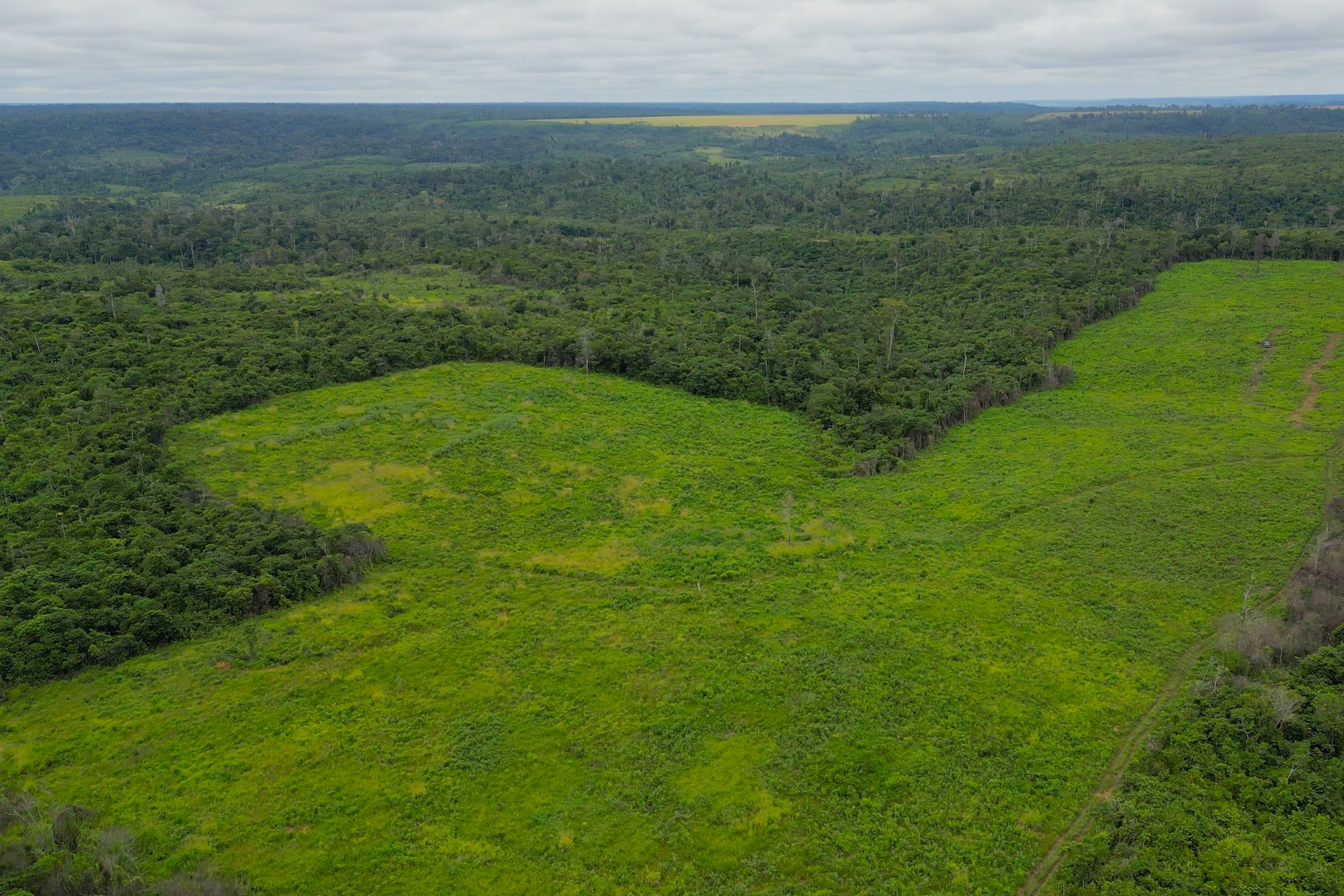
By Brazil Stock Guide – Brazilian carbon-removal company Mombak is trying to prove that restoring the Amazon can be more than an environmental project. It can become an investable business at scale.
The company said on Monday that it had secured the first close of its second reforestation fund, the Amazon Reforestation Fund II, which is targeting $150 million to finance restoration projects in the Brazilian Amazon. The fund will also have access to a R$200 million credit line from Brazil’s Climate Fund, operated by state development bank BNDES.
At the same time, Mombak signed a multiyear carbon-removal offtake agreement with Salesforce, adding the U.S. software company to a buyer roster that already includes Google, Microsoft and McLaren Racing. The size of the commitment and the price paid per ton were not disclosed.
Taken together, the transactions are more interesting than another startup fundraising announcement. Mombak is gradually building for reforestation something resembling the financing structure used for infrastructure: institutional capital funds the asset, debt lowers the cost of capital and long-term contracts provide visibility over future revenue.
Except that instead of financing a power plant, toll road or transmission line, the underlying asset is a forest.
Founded in 2021 by Peter Fernandez, the former chief executive of Brazilian ride-hailing company 99, and Gabriel Silva, a former CFO of Nubank, Mombak sits at the intersection of technology, finance and forestry. Regulatory documents identify Fernandez and Silva, alongside Mombak LLC, as controllers of the group’s Brazilian structure.
The company has also attracted prominent financial backers. A $30 million Series A round in 2025 was led by Union Square Ventures, with participation from existing investors including Kaszek, Bain Capital and AXA IM Alts, as well as Lowercarbon Capital and Copa Investimentos.
Its first Amazon Reforestation Fund raised $120 million from investors including an AXA fund, CPP Investments and Bain Capital. The money financed restoration projects across 15 Amazon properties, where Mombak says it has planted nearly 15 million native trees.
The company has now moved from promising future removals to issuing carbon credits. It expects its next issuance to total roughly 80,000 metric tons by the end of 2026.
Carbon markets have spent years struggling with credibility. Some projects have been criticized for claiming emissions benefits that are difficult to measure, depend on questionable assumptions or may not last. Mombak is betting that large-scale native reforestation, combined with measurable carbon removal, can command a premium over lower-quality credits.
There is also a new force behind demand. Technology companies have emerged as some of the world’s largest buyers of carbon removal just as the artificial-intelligence boom increases the electricity requirements of their data centers. The more computing infrastructure they build, the harder it can become to meet their own climate commitments.
That creates an unusual economic loop: the AI boom increases energy demand, higher energy consumption makes corporate climate targets harder to reach, and those targets help finance the restoration of degraded land in the Amazon.
But Mombak’s bigger test will be whether the market can expand beyond Big Tech.
Chief Executive Gabriel Silva told Reuters that productivity gains and better reforestation techniques are reducing costs and should eventually make high-quality removal credits affordable to a wider group of corporate buyers.
BNDES sees signs that this is beginning to happen. Tereza Campello, the bank’s socio-environmental director, said interest in carbon credits has been increasing among companies in sectors including oil, mining and steelmaking — industries where eliminating emissions entirely can be particularly expensive or technologically difficult.
If that demand materializes, the economics of the business could change significantly. Companies such as Google and Microsoft have effectively acted as anchor buyers for an emerging industry, willing to sign long-term agreements for high-quality carbon removals. For reforestation to become a genuine asset class, however, demand will eventually have to extend beyond a relatively small group of global companies with large climate budgets.
And one crucial number remains missing: the carbon price. Mombak has not disclosed how much Salesforce will pay per ton removed, the size of the contract, the target return of its new fund or the effective cost of the BNDES-backed financing.
Without those numbers, it is still difficult to know whether large-scale Amazon restoration is already economically competitive or remains dependent on buyers willing to pay a substantial premium for high-quality removals.
That is ultimately the financial question behind Brazil’s reforestation opportunity. Across large parts of the Amazon, restoring degraded land competes economically with other uses, particularly cattle ranching. For private capital to finance restoration at scale, the present value of future carbon-credit revenue must cover land, planting and maintenance costs, wildfire and tree-mortality risks, decades of monitoring — and still provide investors with an adequate return.
Mombak’s second fund will be an important test of that equation. If institutional equity, development-bank financing and long-term corporate contracts can produce competitive returns, keeping or restoring forests will no longer depend solely on the argument that they are worth more standing. They will have something capital markets understand particularly well: cash flow.


Leave a Reply