
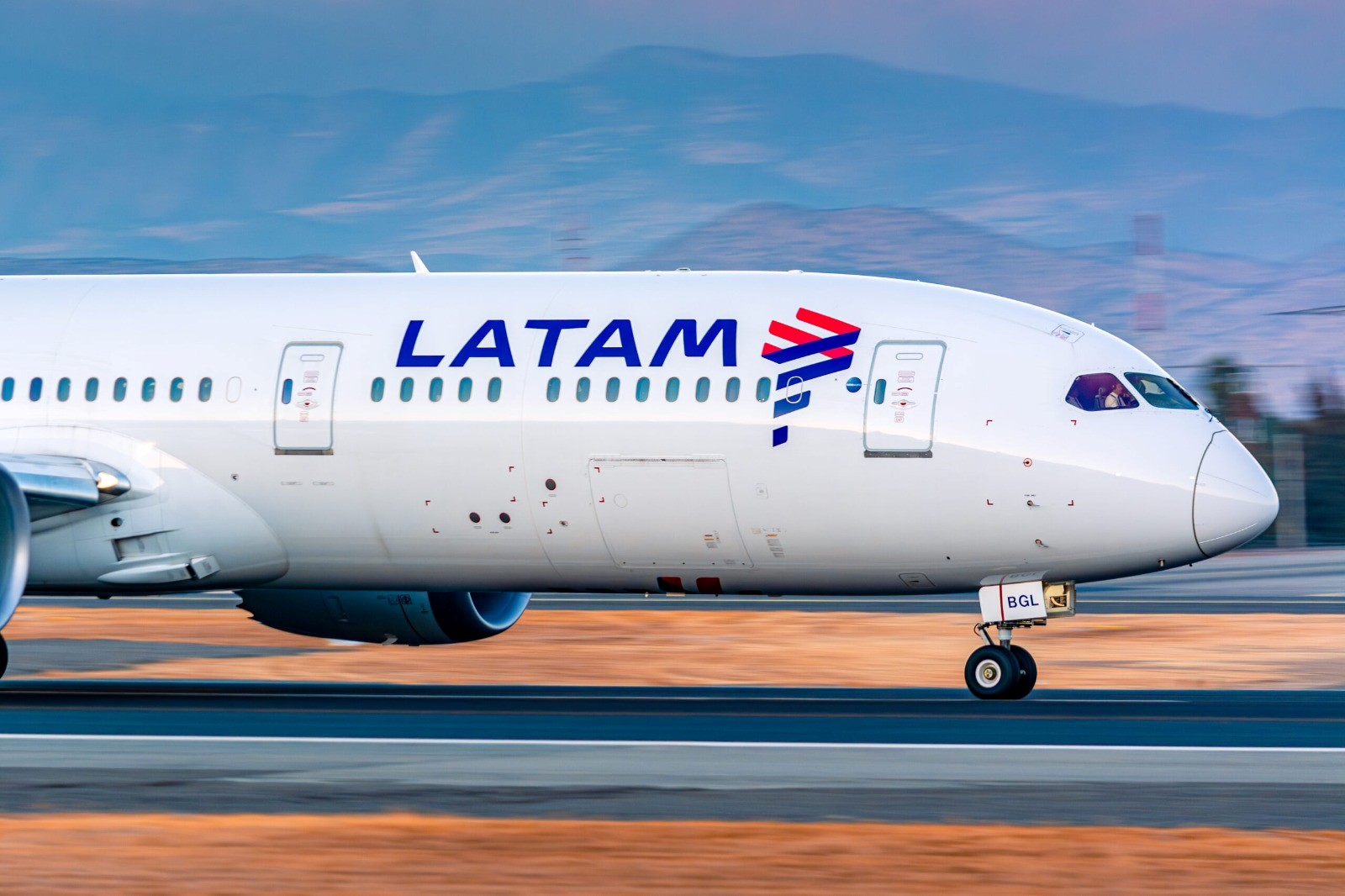
By Brazil Stock Guide – LATAM Airlines Group SA (NYSE: LTM) is preparing for disciplined growth in Brazil while cautioning that proposed tax changes could significantly affect demand for air travel in Latin America’s largest aviation market.
According to Aviation Week Network, LATAM Brazil Chief Executive Officer Jerome Cadier outlined the carrier’s strategy during Routes Americas 2026 in Rio de Janeiro, highlighting both fleet expansion plans and concerns about Brazil’s ongoing tax reform debate.
The airline expects to take delivery of its first Embraer SA (NYSE: ERJ) E2 aircraft in the fourth quarter of this year. Between 12 and 14 jets from the model family are scheduled to arrive through 2027, forming part of a broader fleet strategy aimed at optimizing capacity across the domestic market.
Cadier said the aircraft will initially operate mainly on domestic routes. “In the beginning, it’s mainly domestic,” he said. “The aircraft fits perfectly in Brazil.”
The smaller E2 jets are expected to give the carrier greater flexibility to increase frequencies and serve thinner routes that cannot sustain Airbus SE (EPA: AIR) A320-family aircraft. LATAM ordered 24 E2 aircraft in September 2025 and has indicated that they will likely be based at key hubs including São Paulo Guarulhos, Brasília and Fortaleza.
The fleet strategy comes as the airline maintains annual growth of roughly 8% to 10%. Cadier said the pace reflects demand fundamentals rather than competitive pressure.
“We have to make sure that growth is a profitable one,” he said.
Brazil’s domestic aviation sector has become more stable after years of volatility and restructuring among the country’s main airlines, including Gol Linhas Aéreas Inteligentes SA (NYSE: GOL) and Azul SA (NYSE: AZUL).
“The main characteristic of the Brazilian market is a more rational capacity,” Cadier said. “After everybody tastes what Chapter 11 feels like, you become a bit more rational and cautious around overcommitting to growth.”
Beyond domestic adjustments, LATAM is also strengthening São Paulo’s Guarulhos airport as its primary international gateway, concentrating domestic connections to support its broader South American network.
In November, the airline announced seven new routes scheduled to launch in 2026. The additions include long-haul services to Amsterdam, Brussels and Cape Town, as well as new domestic routes to Caldas Novas, Campina Grande, Juiz de Fora and Uberaba.
Cadier also warned that structural challenges could limit future demand growth, particularly potential tax increases under Brazil’s proposed fiscal reform.
“When we tax the ticket, we make the trip less likely,” he said.
Industry groups such as the International Air Transport Association (IATA) have previously warned that higher levies on airline tickets could reduce air travel demand in Brazil by as much as 30%, as higher fares discourage passengers.





Leave a Reply