
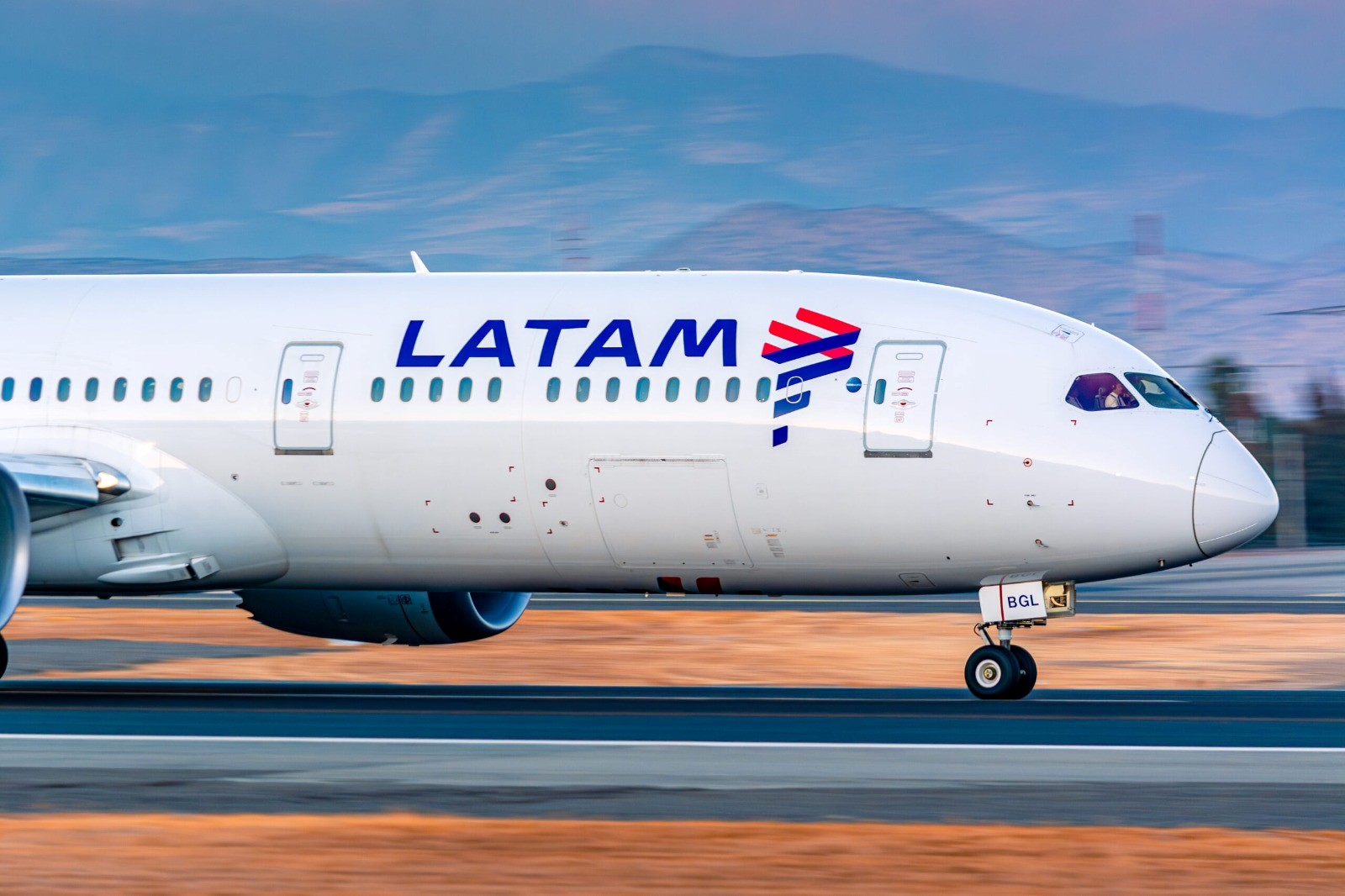
By Brazil Stock Guide – Latam Airlines Group S.A. (B3: LTM; NYSE: LTM) views decarbonization as the airline industry’s central challenge for the coming decades. CEO Roberto Alvo said that the shift toward sustainable aviation fuel (SAF) will be crucial to the sector’s survival as global carriers race to reach net-zero carbon emissions by 2050. He spoke during the Latin American and Caribbean Air Transport Association (ALTA) meeting held this week in Lima, Peru.
Brazil on the sustainable-fuel map
According to Alvo, Latin America still lacks SAF production capacity, leaving the region behind in the global energy transition. “We don’t have a single drop being produced in Latin America today,” he told Valor Econômico. Brazil, however, is seen as a natural frontrunner given its long experience with ethanol and biofuels.
Among the projects underway is one by Petrobras S.A. (B3: PETR4; NYSE: PBR), which plans to launch a jet fuel produced through co-processing of vegetable oils, inspired by the country’s ethanol-gasoline blend model. Vibra Energia S.A. (B3: VBBR3) has begun offering SAF imported from Europe, while Latam itself pledged in 2022 that 5% of its fuel consumption will come from SAF by 2030.
Infrastructure pressure, optimism in Brazil
Beyond decarbonization, Latam is closely watching Brazil’s strained airport infrastructure, especially São Paulo’s Congonhas Airport, where modernization works are expected to exacerbate congestion by 2026.
Even so, Alvo remains upbeat. “The outlook for Brazil’s domestic market is positive. We’re very pleased with our investment in Embraer aircraft, which will allow us to reach new cities,” he said.
Latam has ordered up to 74 Embraer E195-E2 jets from Embraer S.A. (B3: EMBR3; NYSE: ERJ), including 24 firm orders valued at US$2.1 billion (R$12 billion). The plan is to open 35 new routes, most of them in Brazil, connecting São Paulo, Rio de Janeiro, Brasília, Fortaleza, and Porto Alegre.
Passenger demand surges, profits climb
According to the International Air Transport Association (IATA), passenger demand in Brazil rose 12.7% in August, the highest growth rate among all markets tracked by the organization.
The strong traffic translated into solid earnings. Latam reported net income of US$242 million in the second quarter of 2025, up 66% year-on-year, driven by a 7.6% increase in passengers carried to 20.6 million.


Leave a Reply