
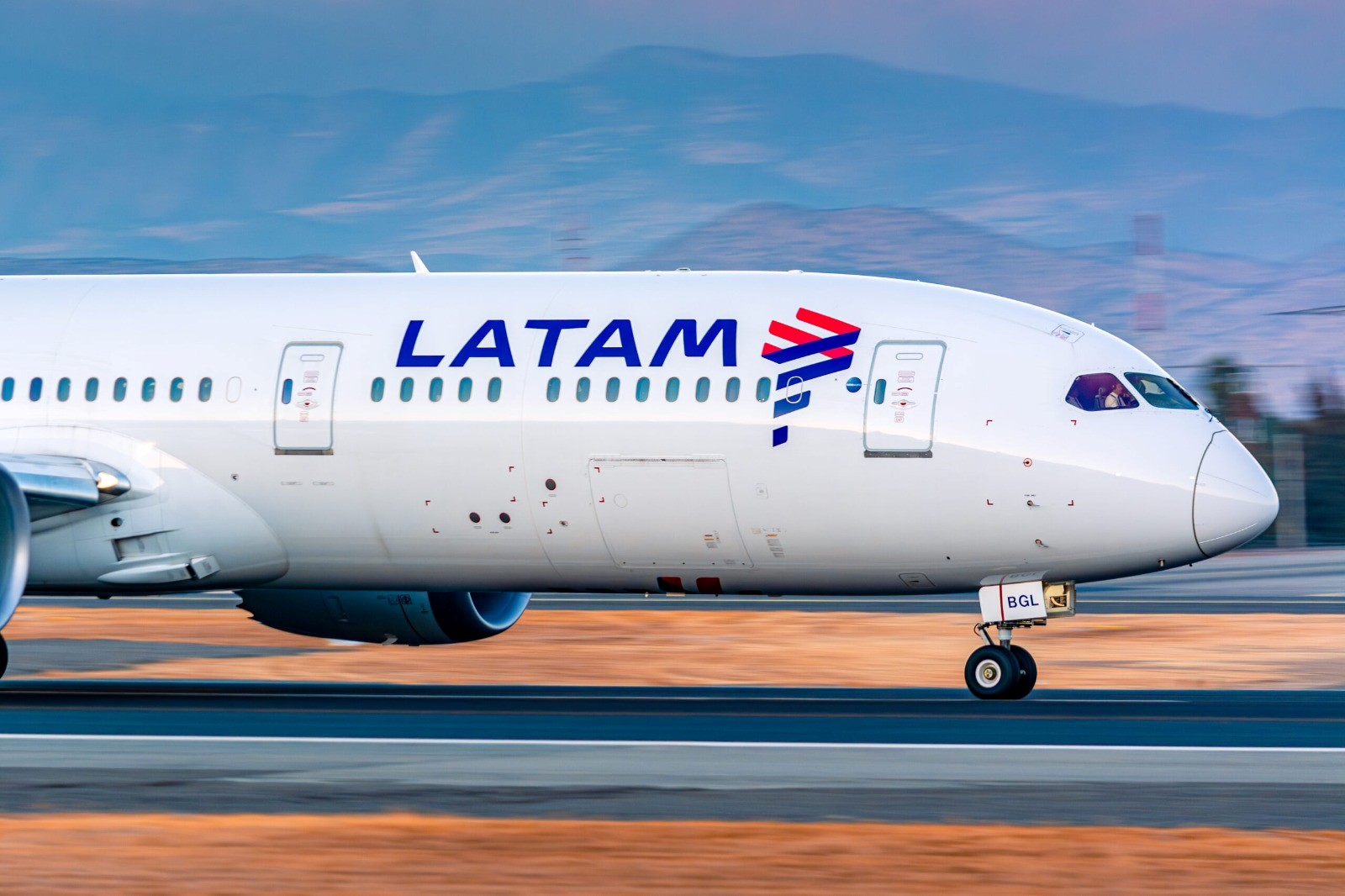
By Brazil Stock Guide – LATAM Airlines Group (NYSE: LTM) gained momentum in January after its unit LATAM Airlines Brasil posted 12% growth in domestic traffic (RPK) year on year. Domestic capacity in Brazil rose 11% in available seat kilometers (ASK). Demand exceeded supply, lifting Brazil’s load factor to 83%, up 0.8 percentage point.
At the group level, LATAM carried 8.2 million passengers in January, up 9% from a year earlier. Consolidated capacity increased 11.1%, while traffic climbed 13.3%. As a result, the load factor reached 86.4%, up 1.7 percentage points. The company released the figures in São Paulo on Feb. 13, 2026.
According to operational data disclosed by the airline, the performance reflects route additions and frequency increases implemented across Brazil during 2025.
Brazil Drives Growth
Brazil’s domestic aviation market is one of the world’s largest by passenger volume, with most routes under 2,000 kilometers (1,242 miles). By expanding capacity while raising load factors, LATAM improves fixed-cost dilution. That supports yield discipline in a sector exposed to jet fuel prices and currency swings.
Demand growth above capacity reduces fare pressure. Meanwhile, competitors face tighter credit conditions in Brazil, where interest rates remain elevated. Airlines with pre-positioned fleets and established slots may capture demand with lower execution risk.
In cargo, the group reported 746 million available ton-kilometers (ATK), up 6.4%. It transported 83,000 metric tons, equivalent to 83 million kilograms or 183 million pounds. Cargo revenues, largely denominated in U.S. dollars, provide a natural hedge against Brazilian real volatility.
January’s data set the tone for 2026. Sustained domestic demand in the first quarter will test whether LATAM can maintain high load factors while expanding capacity. Fuel costs and foreign exchange remain the key variables for investors.


Leave a Reply