
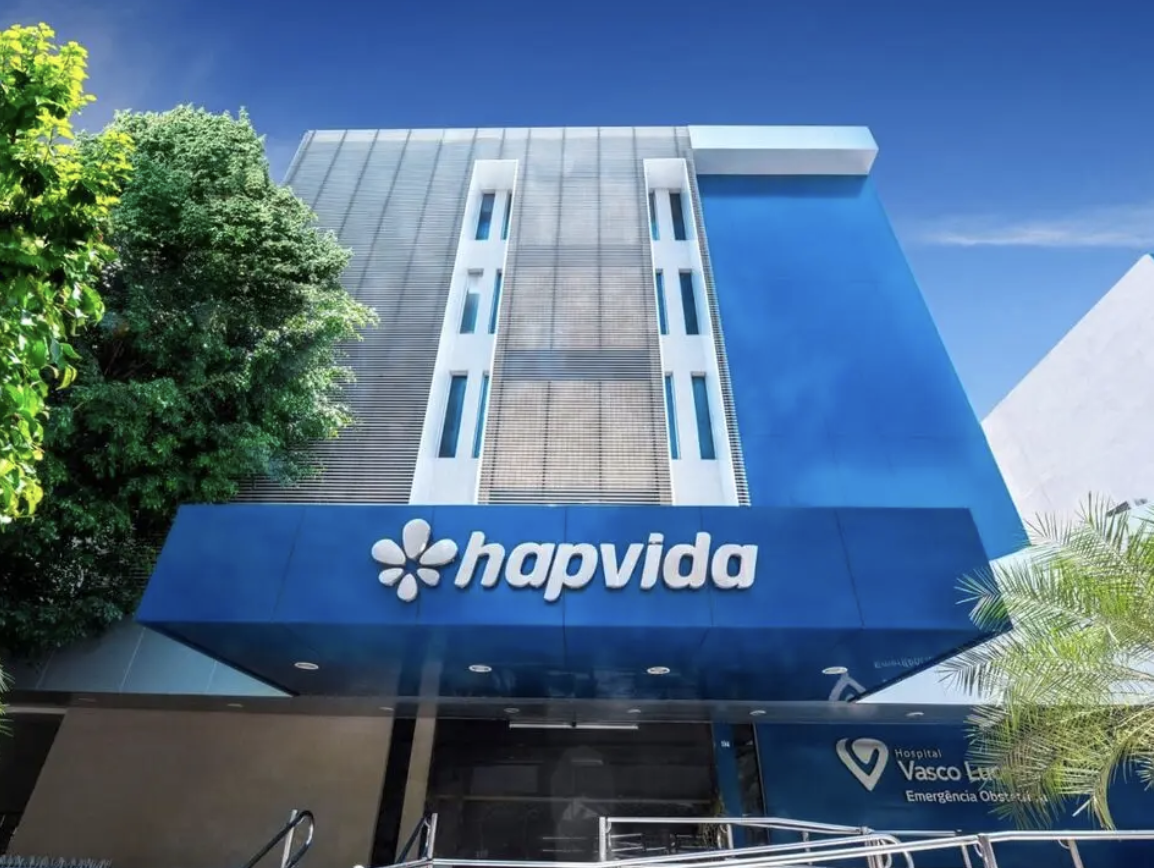
By Brazil Stock Guide – Hapvida (B3: HAPV3) says it is still in the early stages of an operational restructuring designed to rebuild margins, strengthen cash generation and reduce leverage. Its second-quarter results show why that reset has become the central issue for investors.
The clearest sign of this new phase is a review of approximately 947,000 health-plan members, equivalent to 11% of the company’s medical membership. Hapvida is reassessing contracts that may be loss-making and applying stricter criteria to delinquent customers.
During upcoming renewal cycles, the company plans to seek price increases sufficient to restore the economics of those contracts, recover overdue payments or discontinue some of the memberships.
If all 947,000 members were removed, Hapvida’s medical membership would decline from 8.67 million to 7.72 million. Even under that scenario, the company would remain Brazil’s largest private health-plan operator. Hapvida stressed, however, that the calculation is a sensitivity analysis rather than a forecast of cancellations.
The strategy marks a shift in priorities: Hapvida is willing to trade volume for better economics. According to the company, either a successful renegotiation or the exit of loss-making contracts should support margins and cash generation.
New Management Inherits the Turnaround
The second quarter coincided with the arrival of a new management team at Hapvida. Luccas Augusto Adib formally took over as chief executive officer on April 30, while Lucas Garrido became chief financial officer and other executives joined the senior leadership team.
The results therefore represent less of a verdict on the new administration than an initial view of the challenges it has inherited.
Adjusted EBITDA fell 44.3% to R$504.4 million from R$905.4 million a year earlier. The adjusted EBITDA margin narrowed to 6.3% from 11.8%.
Adjusted net income fell 95.8% to just R$12.5 million, equivalent to a margin of 0.2%, from R$299.5 million a year earlier. On a reported basis, Hapvida posted a net loss of R$217.1 million, 5.5% wider than the R$205.8 million loss recorded in the second quarter of 2025.
Revenue continued to grow despite the earnings deterioration. Net revenue rose 3.9% to R$7.97 billion and increased 1% from the first quarter.
Health-plan revenue advanced 3.6% to R$7.79 billion, mainly reflecting contract price increases. Average monthly revenue per medical member rose 5.7% to R$305.90.
Higher prices offset a smaller membership base. Hapvida ended June with 8.67 million medical members, down 16,000 from the previous quarter and 188,000 from a year earlier.
The company said it is already seeing early signs of improvement from its commercial repositioning in small and midsize business plans and individual plans in the greater São Paulo area. The initiatives are expected to be expanded during the third quarter to other parts of São Paulo state, Rio de Janeiro, southern Brazil and Minas Gerais, as well as to the large corporate segment.
Hapvida also recently revived the NotreDame brand for the launch of a premium health plan.
Medical Loss Ratio Rises
Cash medical costs increased 5.7% to R$6 billion, outpacing revenue growth. As a result, the cash medical loss ratio rose to 75.2%, from 73.9% a year earlier and 72.2% in the first quarter.
Some of the sequential deterioration had been expected because the second quarter is seasonally heavier for medical utilization. The period also captures a large share of the annual contract price increases across Brazil’s private health-plan market.
Hapvida is pursuing efficiency measures across both its owned healthcare network and third-party providers, although it expects the more significant benefits for medical costs to emerge over the course of next year.
Cash administrative expenses rose to R$673.5 million from R$425.6 million a year earlier. As a percentage of revenue, they increased to 8.4% from 5.5%.
Expenses related to legal contingencies and taxes nearly tripled to R$237.7 million, mainly because of higher provisions for civil claims.
Selling expenses increased 17.9% to R$676.5 million, driven primarily by a 25.2% rise in commissions. Combined cash administrative and selling expenses consumed 16.9% of revenue, up from 13% in the second quarter of 2025.
Net financial expense improved to R$343.7 million from R$417.2 million a year earlier, a decline of 17.6%.
Cash Generation and Deleveraging Move to Center Stage
Net debt reached R$5.4 billion, up 34.4% over 12 months and 4.6% from the first quarter. Under the company’s covenant definition, leverage increased to 1.61 times last-12-month EBITDA, from 0.95 times a year earlier.
Net debt rose even as gross debt declined 2.9% to R$13.45 billion. The main factor was an 18.2% reduction in cash and financial investments, which ended June at R$8.05 billion.
Cash available after regulatory requirements fell to R$5.33 billion from R$7.31 billion a year earlier.
Hapvida generated R$448.6 million in free cash flow during the first half of 2026 after R$363.2 million in capital expenditure.
The results suggest that Hapvida’s restructuring will remain a key focus for analysts over the coming quarters. The recovery now hinges on improving revenue quality and rebuilding profitability — objectives that the new management team has explicitly placed at the center of its strategy.


Leave a Reply