
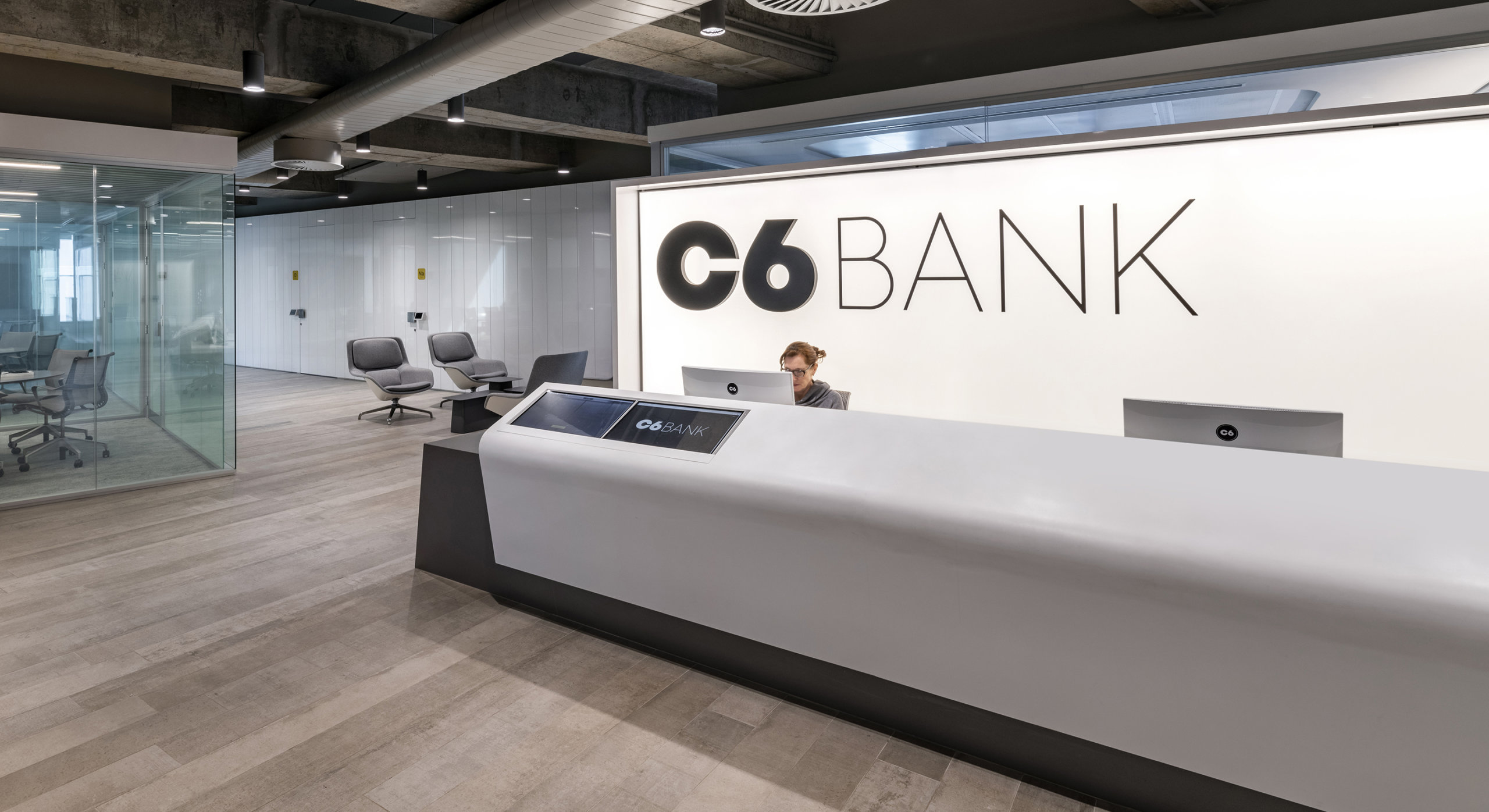
By Brazil Stock Guide – C6 Bank, the Brazilian lender in which JPMorganChase holds a stake, reported a 20% increase in first-half net profit as strong revenue and loan growth helped improve operating efficiency, although credit-loss provisions more than doubled and pre-tax earnings were little changed from a year earlier.
The bank posted net profit of R$1.26 billion ($235 million) in the first half of 2026, up from R$1.05 billion a year earlier. Net revenue rose 48% to R$6.27 billion, while its expanded loan portfolio increased 38% to R$99.8 billion. The increase in bottom-line profit, however, was largely supported by a sharp decline in income-tax and social-contribution expenses.
Pre-tax profit was R$1.286 billion, compared with R$1.273 billion in the first half of 2025, an increase of about 1%. Tax expenses fell to R$28.4 million from R$223.3 million, helping net income rise to R$1.257 billion from R$1.049 billion.
In its press release, C6 highlighted the 20% rise in profit, record revenue and rapid loan growth, which it said was driven in part by vehicle financing and payroll-deductible lending.
Credit costs, however, rose sharply. Provisions for expected credit losses increased to R$2.37 billion from R$996 million a year earlier, a rise of about 138%. C6 said the increase mainly reflected growth in its private-sector payroll-deductible loan portfolio, which requires higher provisioning.
The bank’s ratio of loans more than 90 days past due also worsened, rising to 3.6% in June from 3.2% a year earlier. C6 said the headline figure was affected by Brazil’s CMN Resolution 4,966, which changed the criteria for writing off delinquent loans. Excluding the regulatory effect, the NPL ratio would have been 2.6% in June.
Even on that adjusted basis, however, the ratio rose from 2.1% in June 2025, according to the bank’s earnings presentation.
C6’s rapid expansion has increasingly been concentrated in secured or payroll-linked lending. Loans classified as secured represented 82% of the expanded credit portfolio in June.
Payroll-deductible loans to public- and private-sector workers accounted for 45% of the total portfolio, vehicle financing for 30%, other consumer loans for 13%, corporate lending for 11% and home-equity loans for 1%.
The strong revenue growth nevertheless delivered operating leverage. C6’s efficiency ratio improved to 42% from 46% a year earlier, even as operating expenses increased to R$2.61 billion from R$1.97 billion.
Total funding reached R$125.6 billion in June, up 34% year on year, with term funding rising 36%.
The bank ended June with about R$170.4 billion in assets and was reclassified by Brazil’s central bank into the S2 segment, which includes financial institutions of greater size and systemic relevance.
Its capital ratios, however, weakened from a year earlier. C6’s Basel capital ratio fell to 12.6% from 13.7% in June 2025, while its Tier 1 capital ratio declined to 9.3% from 10.0%.
Chief Executive Marcelo Kalim said the bank’s expansion remained supported by a lending strategy focused on secured products, which he said provided greater protection as C6 continued to grow in a challenging macroeconomic environment.
JPMorganChase, which holds a stake in C6 Bank, also highlighted the lender’s performance. Mark O’Donovan, CEO of International Consumer Banking at JPMorganChase, praised the bank’s “solid results and growth” and attributed the performance to disciplined execution.
C6 said the figures in its adjusted income statement are based on audited results from the C6 prudential conglomerate and Carbon Asset Management, but are presented in a management format that is not directly comparable with statutory financial statements and is not based on BRGAAP, IFRS or another accounting framework.


Leave a Reply