
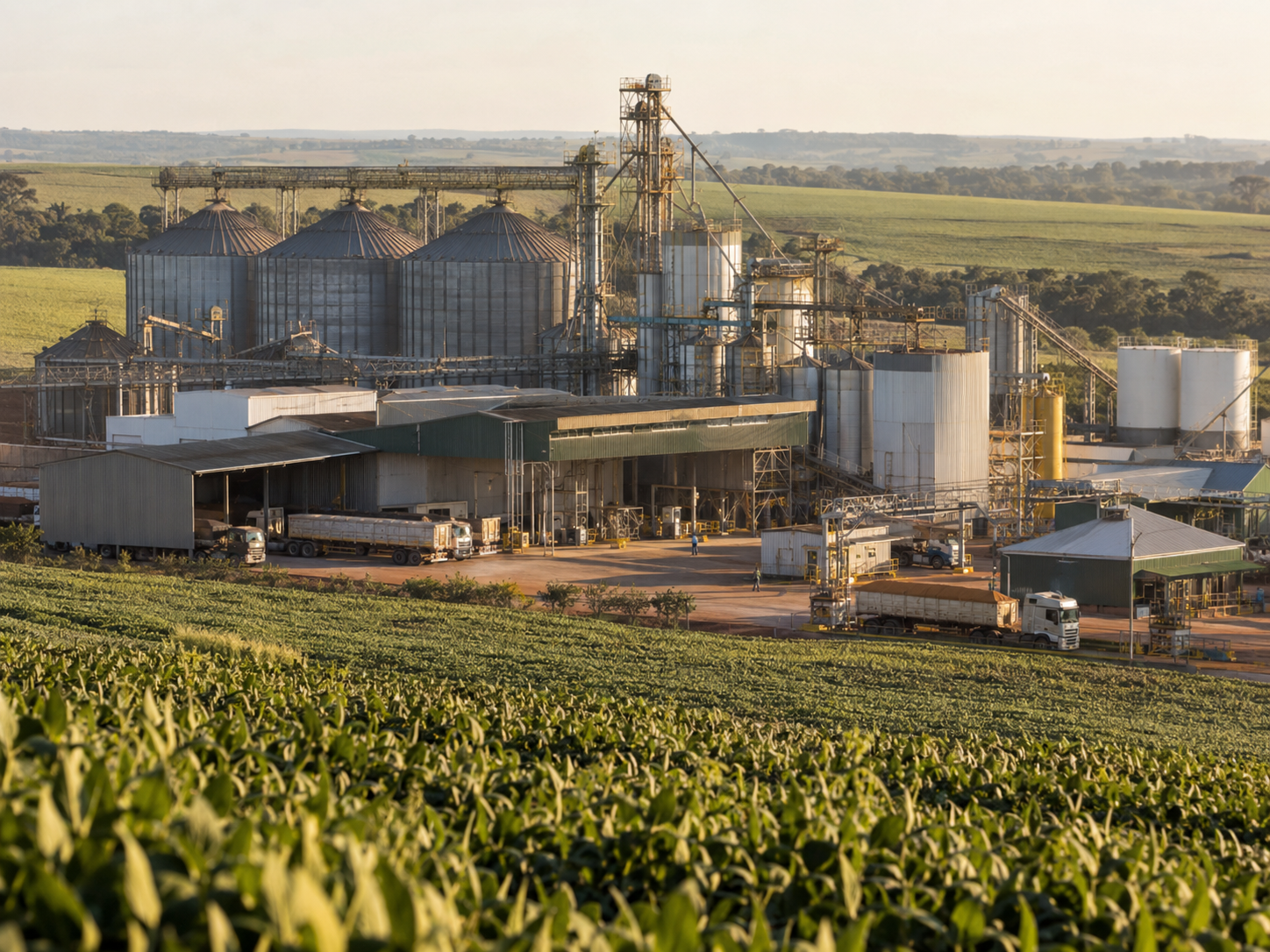
By Brazil Stock Guide – Brazil’s soybean processing industry is expanding capacity faster than demand for crushing, leaving plants increasingly underutilized even as the country produces record volumes of the oilseed, according to a BTG Pactual report.
Utilization of active processing capacity has fallen from 87.9% in 2022 to an estimated 80.4% in 2026 as new capacity has outpaced growth in actual soybean crushing volumes. The decline is also weighing on profitability: with the same fixed-cost base, the drop in utilization implies roughly a 9% increase in fixed costs per ton, according to BTG.
The buildout is continuing. Brazil’s installed oilseed processing capacity rose from 65.5 million metric tons a year in 2022 to an estimated 82.6 million tons in 2026, an increase of about 26%. The number of active processing plants climbed to 127 from 95 between 2022 and 2025, while planned investments for 2026 total R$5.9 billion, with the potential to add another 18,900 tons of daily capacity.
Part of the mismatch reflects the slower-than-expected increase in Brazil’s mandatory biodiesel blend. The B16 mandate, which would raise the biodiesel content in diesel to 16% from 15%, had been expected to take effect in March 2026 but was not implemented on schedule.
BTG estimates that each additional percentage point in the biodiesel mandate would generate around 690 million liters of incremental biodiesel demand, equivalent to roughly 460,000 tons of soybean oil and about 2.4 million tons of soybean crushing demand. Had B16 been introduced as planned, industry utilization would be closer to 83%, the bank estimates.
The excess capacity comes despite Brazil’s enormous soybean supply. The country is expected to produce close to 180 million tons of soybeans in 2026, yet only about one-third of the crop is processed domestically. Just over two decades ago, roughly 62% of Brazil’s soybean output was crushed at home. Today, that share is closer to 34%.
Much of the difference has been absorbed by exports. China accounts for nearly 80% of Brazil’s soybean shipments, giving farmers a large alternative outlet for their crop. In practice, that means Brazilian crushers compete for beans not only with one another, but also with exporters selling into the global market.
That competition also limits the benefit that abundant soybean supplies provide to domestic processors. According to BTG, local bean prices remain anchored to export parity, reflecting global benchmarks, exchange rates, export premiums and logistics costs. A larger crop therefore increases physical availability, but does not necessarily translate into cheap feedstock for crushers.
The result is an industry that continues to add capacity in anticipation of stronger demand for soybean products — particularly soybean oil and biodiesel — while a growing portion of its plants operate below utilization levels seen only a few years ago.
That matters because crushing is a relatively thin-margin business that is highly sensitive to plant utilization. Crushers buy soybeans and sell primarily soybean meal and soybean oil, meaning relatively small changes in the price relationship among the three commodities can produce large swings in profitability.
Another factor to watch is the resumption of Chinese soybean purchases from the United States after a prolonged lull. China, the destination for nearly 80% of Brazilian soybean exports, has again been booking meaningful volumes from U.S. suppliers. A more substantial shift back toward U.S. beans could ease export pressure on Brazilian soybeans and weaken domestic premiums.
For Brazilian farmers and exporters, that would mean tougher competition. For crushers, however, it could improve soybean availability and lower origination costs.
That alone would not solve the industry’s utilization problem. Filling Brazil’s new crushing capacity will ultimately require enough demand for the products that come out of the plants — soybean meal, soybean oil and biodiesel.


Leave a Reply