
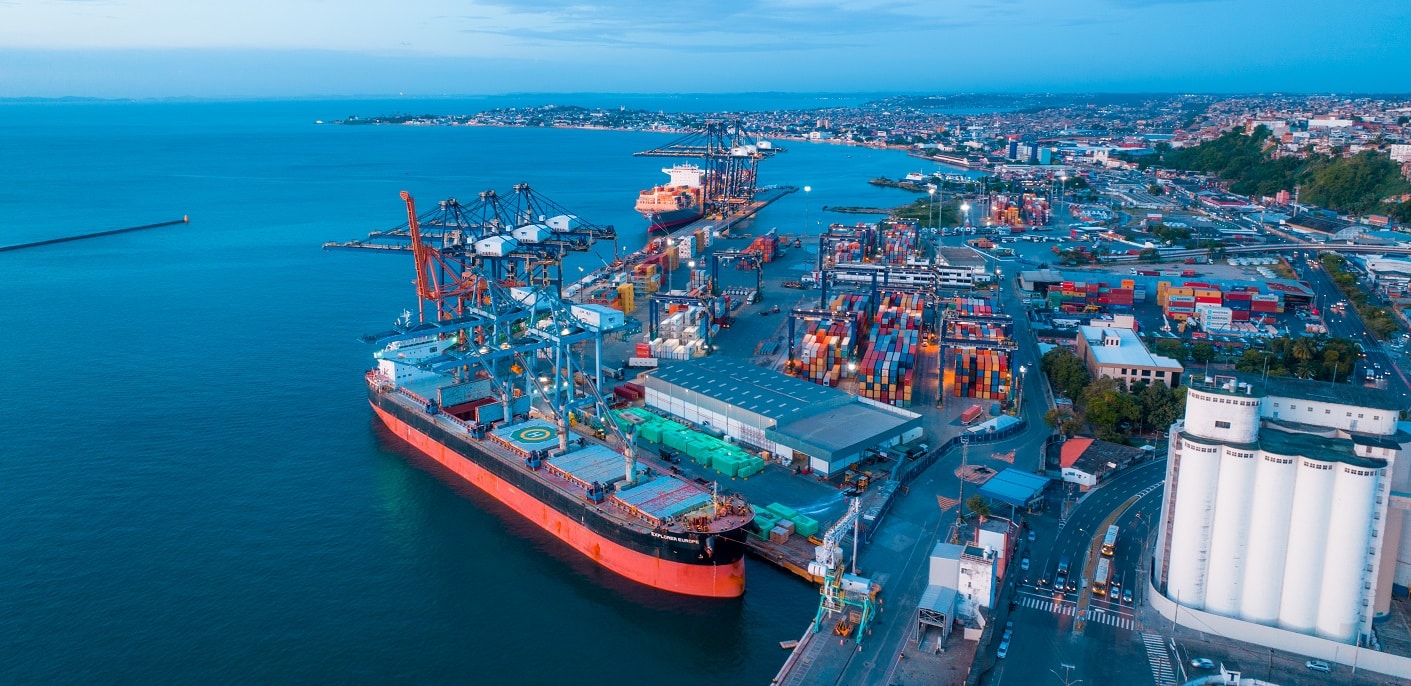
By Brazil Stock Guide – Associations and representatives from Brazil’s agribusiness, manufacturing, logistics and port industries are stepping up pressure on the government to decide on the Tecon-10 auction at the Port of Santos. The group sent a letter Tuesday night to Chief of Staff Miriam Belchior calling for regulatory certainty and a swift conclusion to the process.
The signatories asked the government to preserve the competitive framework prepared by Brazil’s waterway transport regulator, known as Antaq, and reviewed by the Federal Audit Court, or TCU. They said further delays would raise logistics costs, weaken exporters and increase the risk of investment being redirected abroad.
“The definition of the bidding model resulted from extensive technical review within Antaq, was submitted to TCU scrutiny, and preserving it honors legal certainty, regulatory predictability and respect for the technical authority of regulatory agencies,” the entities said.
The initiative brings together industries that rely on the Port of Santos to import supplies, move raw materials and ship Brazilian goods overseas. The groups said additional container capacity is needed to prevent bottlenecks at the country’s largest port complex.
The letter was signed by the Agricultural Parliamentary Front, known as FPA, and 16 business organizations, including the Brazilian Food Industry Association, Aprosoja Brasil, the Brazilian Association of Port Terminals and trucking group NTC & Logística.
Other signatories represent the beverage, fertilizer, animal protein, steel, animal feed and agricultural-input industries. The Brazilian Rural Society, the Brazilian Institute for Competition Ethics and the Brazilian Development Association also joined the initiative.
The broad coalition underscores the potential impact of the project beyond companies operating at Santos. Manufacturers, farmers and exporters across Brazil depend on the port’s capacity and efficiency to remain competitive in international markets.
Delays threaten trade competitiveness
The organizations said Tecon-10 is essential to expand cargo-handling capacity and ease infrastructure constraints at Santos. They also warned that delays could affect employment, tax revenue and private investment.
“Each day of delay represents rising costs for Brazilian importers and exporters, a loss of competitiveness in international trade, pressure on employment in sectors dependent on port efficiency, reduced tax collection, as well as the risk that private investments will be redirected to other countries.”
The letter backs a two-stage auction without an outright exclusion of shipping companies. The participation of ocean carriers is one of the most contentious elements of the project because of concerns over vertical integration in the container market.
In December 2025, the TCU upheld the two-stage structure developed by Antaq but recommended stronger safeguards against concentration. The court proposed barring shipping companies from the first stage instead of restricting only operators that already control terminals at Santos.
Under the original framework, incumbent terminal operators would be excluded from the opening round. If that stage failed to produce a winner, the auction would move to a second phase with broader participation.
The debate pits the need to attract bidders and maximize investment against concerns that shipping groups could expand their control over terminals and reduce competition during the 25-year lease.
Project calls for 6.45 billion reais of investment
Tecon-10 is planned for the Saboó area on the right bank of the Port of Santos and is designed to become the complex’s largest container terminal. The project covers 621,975 square meters and calls for an estimated 6.45 billion reais ($1.2 billion) of investment.
The lease has an estimated total contract value of 43.65 billion reais and would run for 25 years. The terminal is expected to increase Santos’ container-handling capacity by about 50%, with annual throughput of more than 3 million twenty-foot equivalent units, or TEUs.
The site is currently used by Ecoporto Santos and companies operating under temporary agreements. Ecoporto is a unit of highway and logistics operator EcoRodovias Infraestrutura e Logística SA (ECOR3 BZ). A transition agreement signed in May allows Ecoporto to continue operating for 12 months from May 31 while the auction remains pending. EcoRodovias disclosed the agreement in a regulatory filing.
The project is also expected to generate about 44,000 direct and indirect jobs. Plans include an internal rail yard capable of handling at least 900 TEUs a day, reducing pressure on highways serving the port.
Santos handles about 30% of Brazil’s foreign trade flows. Its expansion is linked to other infrastructure projects, including deeper navigation channels, improved road and rail access and the planned tunnel connecting Santos and Guarujá.
The letter to the Chief of Staff increases pressure on the federal government to finalize the auction terms and publish the tender documents.


Leave a Reply