
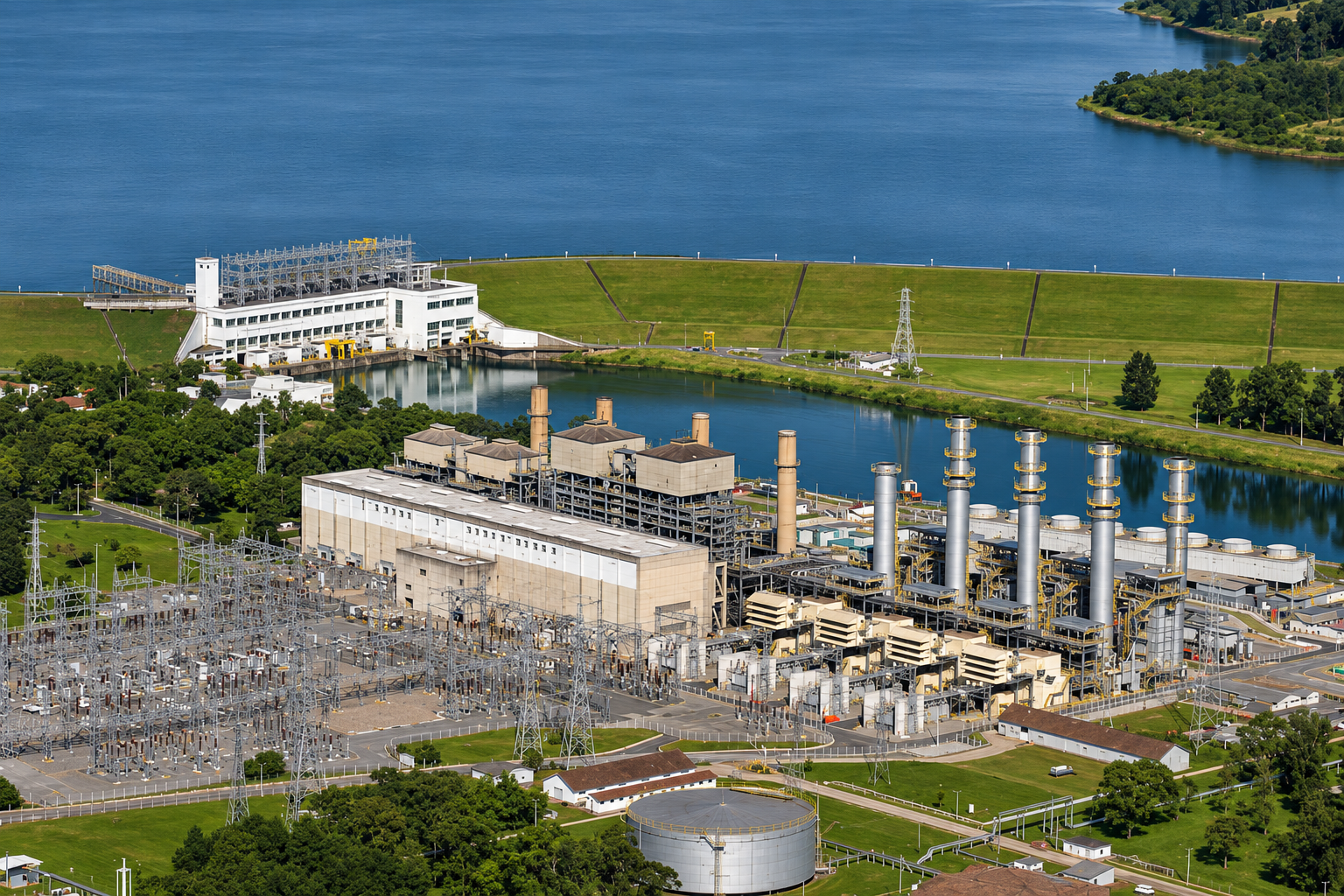
By Brazil Stock Guide — Brazil’s Ministry of Mines and Energy formally terminated the concession for the Piratininga thermal power plant in São Paulo on Wednesday (November 11), closing a 75-year chapter in the country’s energy history that began under President Getúlio Vargas.
The plant helped power São Paulo’s industrial expansion during the second half of the 20th century. Its operating concession was held by Baixada Santista Energia (BSE), a subsidiary of state-controlled oil company Petrobras, while the physical assets belong to Empresa Metropolitana de Águas e Energia (EMAE), an energy company now controlled by Brazilian water and sanitation utility Sabesp. The decision was published in Brazil’s Federal Official Gazette.
The plant’s origins date back to May 7, 1951, when Vargas signed Decree No. 29,535, authorizing Canadian-owned The São Paulo Tramway, Light and Power Company, Limited, commonly known as São Paulo Light, to build a thermal power station with an initial planned capacity of 160 megawatts (MW).
At the time, São Paulo’s rapid industrialization was placing mounting pressure on an electricity system heavily dependent on hydroelectric generation and vulnerable to droughts. The new plant was designed to expand generating capacity and reduce the risk of power shortages.
Inaugurated on November 15, 1954, during celebrations marking the 400th anniversary of São Paulo’s founding, Piratininga became an important supplementary source of electricity for the city. It entered service as manufacturing activity accelerated and electricity shortages threatened industrial growth.
The facility was expanded over the following decades and played a role in maintaining electricity supply during periods of low rainfall. According to Wednesday’s government order, the plant had a registered installed capacity of 390 MW.
Over its lifetime, the concession reflected successive transformations of Brazil’s electricity sector. Originally granted to São Paulo Light, it was transferred to Eletropaulo in 1982 and to EMAE in 1998.
In 2007, EMAE leased the plant’s assets to Petrobras, which integrated them into operations associated with the nearby Nova Piratininga thermal power plant, a separate facility developed by the oil company.
The following year, the concession was transferred to BSE. The lease ended in April 2024, when EMAE regained full possession of the original plant’s facilities, which were already no longer operating commercially.
Although the concession had expired in July 2015, its formal termination remained pending federal government approval.
In August 2025, Brazil’s electricity regulator, Aneel, recommended that the ministry formally extinguish the concession and waive the requirement to transfer the associated assets to the government, arguing that the equipment was no longer suitable for electricity generation.
Wednesday’s order releases the assets and facilities from concession-related obligations without requiring their transfer to the federal government. It also establishes that the termination will impose no costs on the federal government or Aneel.
The decision does not represent the shutdown of an operating power plant or a transfer of ownership from Petrobras to EMAE. Rather, it formally closes a historic concession established at a time when expanding electricity supply was essential to São Paulo’s transformation into Brazil’s leading industrial center.


Leave a Reply