
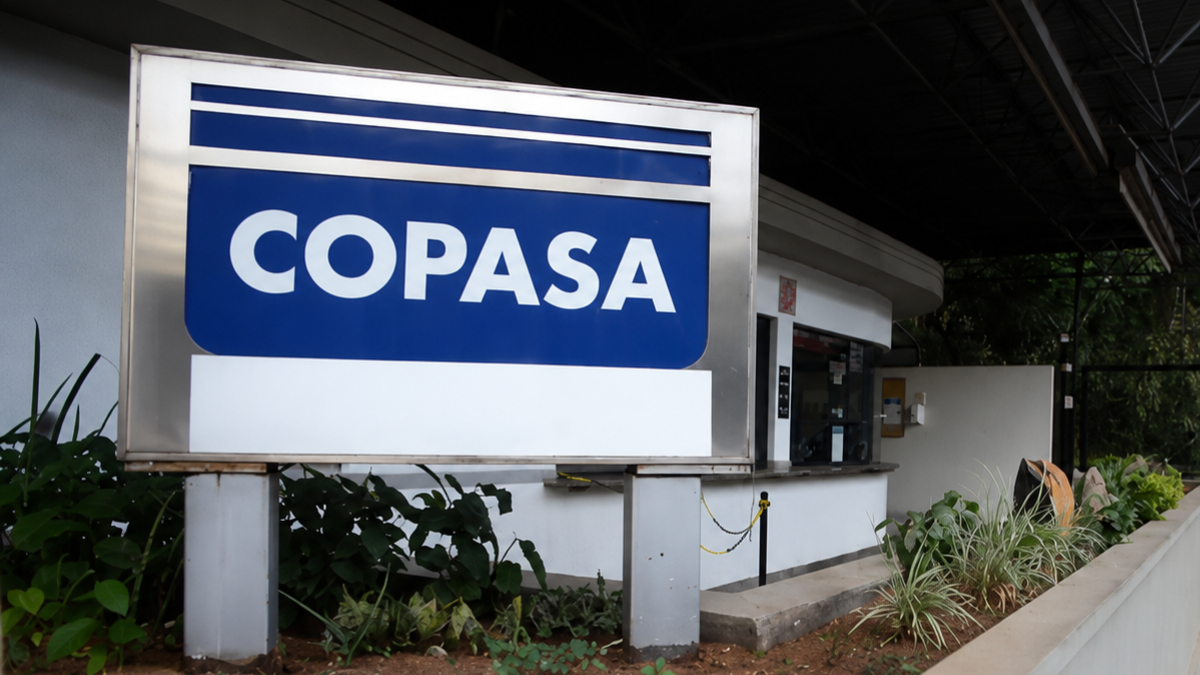
By Brazil Stock Guide – Brazil’s Administrative Council for Economic Defense, or CADE, unconditionally approved Equatorial’s acquisition of a 30% stake in Companhia de Saneamento de Minas Gerais, or Copasa (B3: CSMG3), on Wednesday, Aug. 5. The transaction is part of the Minas Gerais water utility’s privatization process.
The buyer is Gerais Saneamento S.A., an Equatorial group company. Equatorial Energia S.A. (B3: EQTL3) is the group’s publicly traded parent company.
CADE’s General Superintendence had previously cleared the transaction under a fast-track review. The regulator’s tribunal subsequently examined the deal after Sindágua-MG, the union representing water and wastewater workers in Minas Gerais, appealed the initial decision.
Union Challenges Sector Consolidation
Sindágua-MG argued that the acquisition should be assessed alongside other recent consolidation moves in Brazil’s sanitation industry.
The union cited Equatorial’s 15% minority stake in Companhia de Saneamento Básico do Estado de São Paulo, or Sabesp (B3: SBSP3; NYSE: SBS), as well as Perfin’s investments in Copasa and Companhia Riograndense de Saneamento, or Corsan.
According to the appeal, the combined investments could reduce competition in future sanitation auctions, weaken benchmark-based regulation, create conglomerate effects and raise data-governance risks.
The union asked CADE to move the transaction from its fast-track procedure to a standard review, conduct additional inquiries or, alternatively, impose antitrust remedies.
Competition Within and for the Market
José Levi Mello do Amaral Júnior, the CADE council member overseeing the case, assessed competition in the sanitation industry from two perspectives.
The first was competition within the market, defined at the municipal level because water and wastewater concessions generally cover specific geographic areas. The second was competition for the market, involving nationwide disputes for concessions, auctions and privatization processes.
At the municipal level, CADE found no horizontal overlap between Copasa and Equatorial’s existing sanitation operations because they serve different geographic areas.
At the national level, the regulator acknowledged an overlap in the companies’ ability to bid for future concessions, auctions and privatizations. The tribunal, however, found no vertical relationship between their operations.
Equatorial’s Sabesp Stake
The tribunal also reviewed Equatorial’s 15% holding in Sabesp, which CADE approved in 2024 as a noncontrolling minority investment.
CADE adopted a conservative scenario that included Sabesp in its assessment of the Copasa transaction, even though Sabesp is not formally part of Equatorial’s economic group for antitrust purposes.
The presence of common minority shareholders across sanitation companies was also deemed insufficient to establish common control, unified management or coordination involving Equatorial, Perfin and the companies in which they invest.
CADE found no shareholder agreements, governance rights or other mechanisms that would allow the investors to jointly influence the companies’ competitive conduct.
Antitrust Risks Dismissed
The tribunal examined four groups of risks raised by Sindágua-MG: reduced rivalry in auctions, harm to benchmark-based regulation, conglomerate effects associated with portfolio power and the use of data to create or reinforce market power.
CADE found no evidence that the Copasa transaction would materially reduce competition in future sanitation auctions. It also identified no concrete harm to regulatory comparisons among concessionaires.
The tribunal dismissed the portfolio-power and data-governance arguments, concluding that the appeal failed to demonstrate how the transaction could create or strengthen market power.
CADE also found that the antitrust precedents cited by the union involved materially different circumstances and did not support the conclusion that the Copasa transaction would produce similar competitive effects.


Leave a Reply