
By Brazil Stock Guide – Brazil’s development bank BNDES has signed financing agreements totaling R$5.6 billion ($1.1 billion) to support major rail and metro expansion projects in São Paulo state, reinforcing infrastructure investment under the federal government’s growth program.
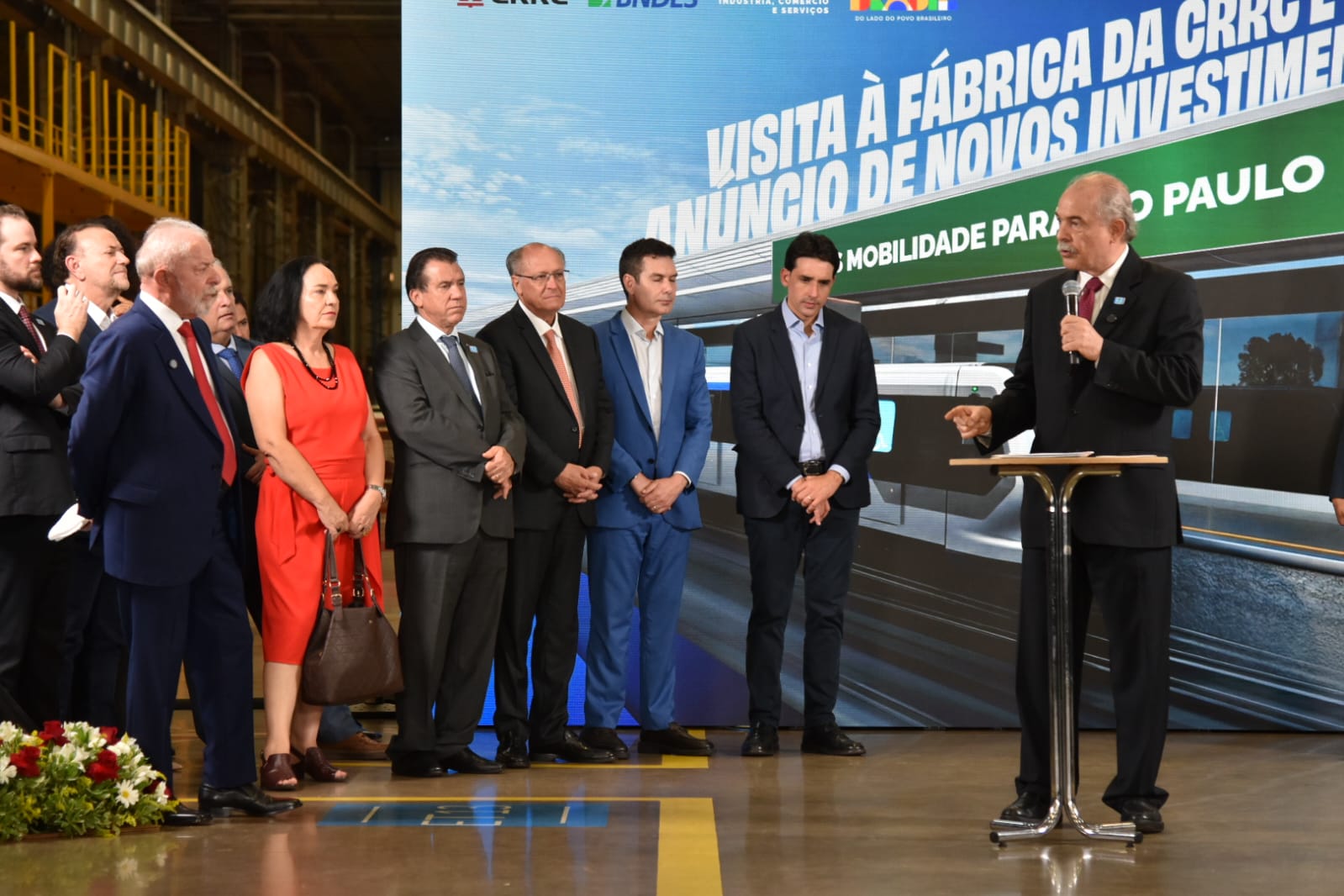
According to the bank’s official news agency, the agreements were signed Wednesday (25) in Araraquara, with President Luiz Inácio Lula da Silva in attendance.
The package includes 3.2 billion reais for the second tranche of the Intercity Train (TIC) North Axis, a medium-speed rail project linking São Paulo to Campinas, and 2.4 billion reais for the expansion of Line 2 (Green) of São Paulo’s metro system.
The projects are part of Brazil’s New Growth Acceleration Program (PAC) and fall within a broader 10 billion reais financing plan previously approved by BNDES. Earlier funding rounds included 3.2 billion reais for the first tranche of the TIC and 3.6 billion reais for the acquisition of 44 trains, to be produced by CRRC Sifang.
Speaking at the event, Lula highlighted the bank’s role in economic development. “BNDES is one of the most important development banks in the world. In our administration, we have put BNDES to work, which is why we are lending four times more than in the previous administration,” he said. “Without BNDES, there would be no New Industry Brazil program and many development projects that require financing.”
BNDES President Aloizio Mercadante said lending approvals in São Paulo have more than doubled under the current government. “In four years of the previous administration, BNDES approved 65.6 billion reais. In three years, the Lula administration has already reached 152.6 billion reais,” he said. “In industry, the difference is even greater, more than threefold.”
The metro expansion will extend Line 2 by 8.3 kilometers between Vila Prudente and Penha, adding eight new stations and benefiting an estimated 320,000 passengers per weekday. The Penha station will connect with Line 3-Red and Line 11-Coral commuter rail services.
The project is expected to generate about 7,000 direct jobs and 4,800 indirect jobs, according to the bank.
The TIC North Axis will span 101 kilometers between São Paulo and Campinas, with additional stopping services between Jundiaí and Campinas and integration with the existing Line 7-Rubi commuter rail.
Vice President and Development Minister Geraldo Alckmin said the financing structure encourages domestic production. “What is imported and not produced locally is taxed. Now BNDES finances and requires local content, so factories are set up in Brazil to manufacture the trains,” he said.


Leave a Reply