

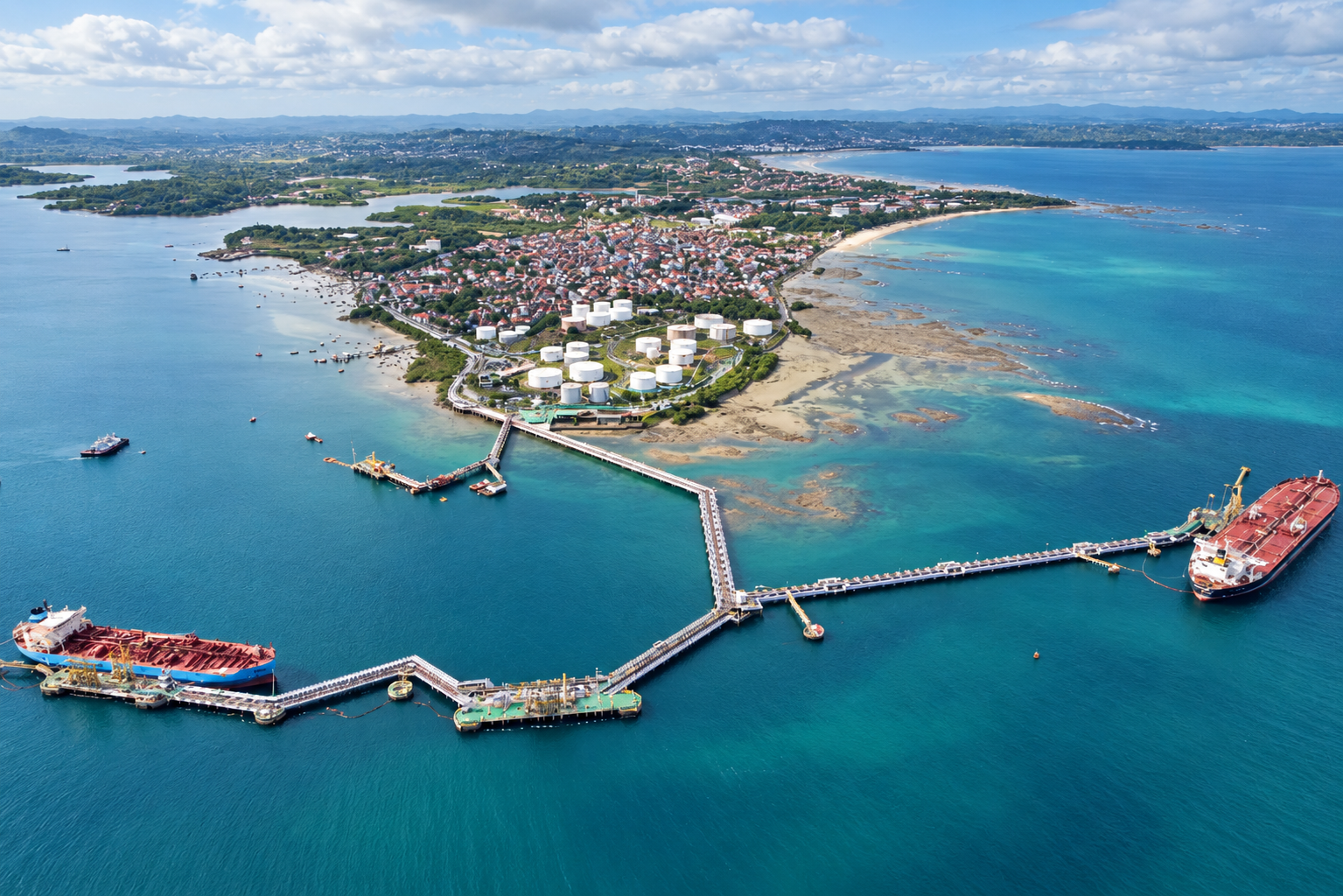
Petrobras’ new 2027–2031 strategic plan leaves financial room for a potential buyback of the Mataripe refinery in Brazil’s northeastern state of Bahia, which was sold to Abu Dhabi’s Mubadala in 2021 for approximately $1.8 billion. In a report published Tuesday (24), BTG Pactual analysts Rodrigo Almeida and Gustavo Cunha identified Mataripe as the most likely target should the state-controlled oil company pursue a refinery acquisition.
According to BTG, the plan earmarks $5 billion for inorganic investments, excluding expenditures related to the Atapu and Mero oilfield auctions and Brazil’s October 2026 permanent oil and gas licensing round. The announced acquisitions of stakes in corn ethanol producer Neomille and logistics operator Logum account for only part of that amount.
Petrobras plans to increase its refining capacity to approximately 2.2 million barrels per day by 2031, from 1.8 million currently, through expansions and upgrades at existing facilities. The strategy aims to bring Brazil closer to diesel self-sufficiency without relying on new refineries or acquisitions.
BTG, however, views a potential Mataripe buyback as a less attractive use of capital than upstream investments. The new strategic plan projects nominal internal rates of return of 20% for exploration and production projects, compared with 16% for refining, transportation and marketing.
An acquisition would also come at a time of reduced financial flexibility, with Petrobras projecting an increase in net debt from $54 billion at the end of 2026 to $58 billion in 2028.
Mubadala’s Investments
Established in 2021 by Mubadala Capital, the asset management arm of Abu Dhabi’s sovereign wealth fund Mubadala Investment Company, Acelen operates the former Landulpho Alves Refinery (RLAM) in São Francisco do Conde, Bahia. With an installed capacity of 302,000 barrels per day, Mataripe is Brazil’s second-largest refinery.
In 2025, the facility processed 95.1 million barrels of crude oil, its highest volume since privatization. Its product portfolio includes diesel, gasoline, jet fuel and petrochemical feedstocks.
Since taking over operations, Acelen has invested approximately R$4 billion in modernization, safety and operational efficiency. For 2026, the company announced R$736 million in investments, including projects to increase diesel production capacity by 10%. It has also installed a 161 MWp solar power plant at a cost of R$530 million.
Separately, Mubadala Capital is developing an integrated renewable fuels project worth more than $3 billion through Acelen Renováveis, including a R$7 billion biorefinery adjacent to Mataripe.
Scheduled to begin operations in 2029, the facility will have an annual production capacity of one billion liters of sustainable aviation fuel (SAF) and renewable diesel (HVO), using feedstocks such as soybean oil and, increasingly, macauba palm oil. While they share the same controlling shareholder, Acelen and Acelen Renováveis operate as separate companies.
A potential buyback of Mataripe would therefore involve a modernized asset that forms part of Abu Dhabi’s broader investment strategy in Brazil’s energy sector. BTG’s report, however, provides no indication that negotiations are underway or that Mubadala is actively seeking to sell the refinery.


Leave a Reply