

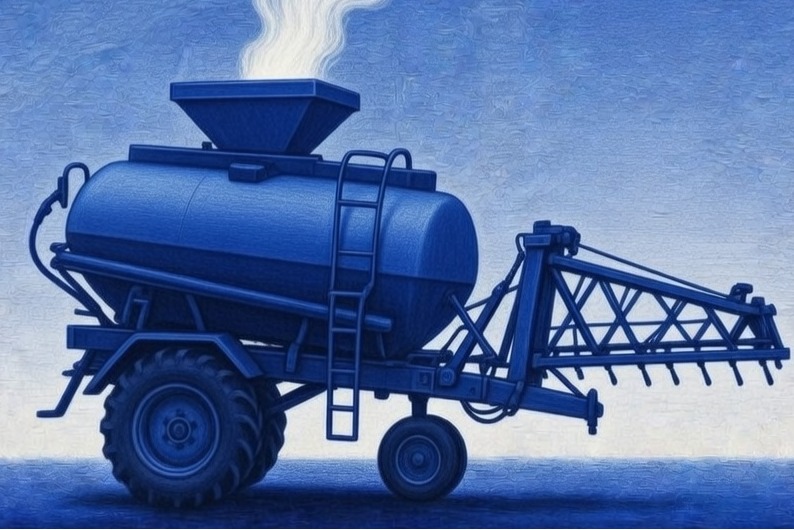
Brazil’s Cerrado — the vast tropical savanna that anchors the country’s soy production — lies thousands of kilometers from the Strait of Hormuz. Yet tensions between the U.S. and Iran could feed directly into Brazil’s agricultural costs. While oil has climbed by nearly double digits, natural gas prices in Europe and Asia have surged by as much as 50%, reflecting how much more sensitive gas markets are to maritime bottlenecks.
Roughly one-fifth of global oil trade passes through Hormuz. In gas, the relevant metric is trade, not consumption: close to 20% of globally traded seaborne LNG transits the strait. That LNG represents marginal supply for major importing hubs, where prices adjust first. Because ammonia and urea are globally traded commodities, fertilizer benchmarks reprice off those marginal gas costs.
Nitrogen fertilizers depend heavily on natural gas. Producing ammonia — the base for urea — requires roughly 46 gigajoules of energy per ton, making costs acutely sensitive to gas benchmarks. Even without physical disruption, tighter shipping conditions raise insurance premiums, freight costs and risk premia embedded in cargoes. In concentrated markets, risk alone can reprice the curve.
The Ukraine shock offers a precedent. Brazil did not face an immediate supply cut, yet European gas benchmarks surged and global fertilizer prices jumped more than 120% between 2021 and 2022. The episode showed how geopolitical stress can lift farm input costs before shortages materialize — and amplify food inflation.
Brazil’s exposure is structural. The country imports about 90% of its fertilizers, including most nitrogen-based products, which account for roughly a quarter of per-hectare costs in key crops such as soybeans, corn and cotton.
Even without a physical disruption, the bill could mount quickly. A 20% move in LNG benchmarks — easily triggered by sustained tension in Hormuz — could add roughly R$2 billion to Brazil’s annual fertilizer import costs. In a stress scenario resembling 2022, the extra burden could approach R$4 billion. The economy would not derail, but farm margins would compress, food prices would feel the pressure and inflation expectations could re-enter the policy debate.
Even if flows through Hormuz continue, persistent tension embeds a risk premium in LNG and fertilizer markets. In a disruption scenario, price spikes would likely be sharper and more disorderly. For a global agricultural powerhouse dependent on imported inputs, the chokepoint is not regional — it helps determine the cost base of its food system.


Leave a Reply