
Many were startled by the numbers. Mercado Libre plans to invest R$57 billion in Brazil in 2026, as announced in March. Amazon says it has invested R$75 billion in the country since 2011, including R$19 billion in 2025 alone.
In nominal terms, Mercado Libre is promising to spend in one year the equivalent of 76% of what Amazon says it invested in Brazil over 15. The comparison suggests a dramatic shift in the scale of investment across the sector.
It also suggests that the figures are not measuring the same thing.
Using Mercado Libre’s own currency conversion, R$57 billion is worth roughly US$10 billion. That exceeds the combined US$7.6 billion in 2025 capital spending by Vale and JBS. It is also close to half of Petrobras’s US$20.3 billion.
Yet Mercado Libre’s announcement says the resources “correspond to operating costs and expenses associated with the development of business priorities.” The plan covers logistics expansion, investment in the marketplace and technology, and further growth at Mercado Pago, including credit.
There is no breakdown showing how much will be used to build or acquire assets, how much will finance current operations and how much relates to the financial-services business.
The financial statements show the difference. MercadoLibre’s consolidated accounting capex totaled US$1.33 billion in 2025. In the same year, the company said it had invested US$6.5 billion, or R$38 billion, in Brazil alone.
That does not make the Brazilian figure false. It means the figure is not capex. It is a company-defined, much broader measure of the resources deployed across the operation.
Amazon uses an equally expansive definition. Its R$75 billion includes infrastructure, logistics, technology, cloud services, professional training and support for entrepreneurship. The company does not provide a reconciliation between that total and investments recorded in its financial statements.
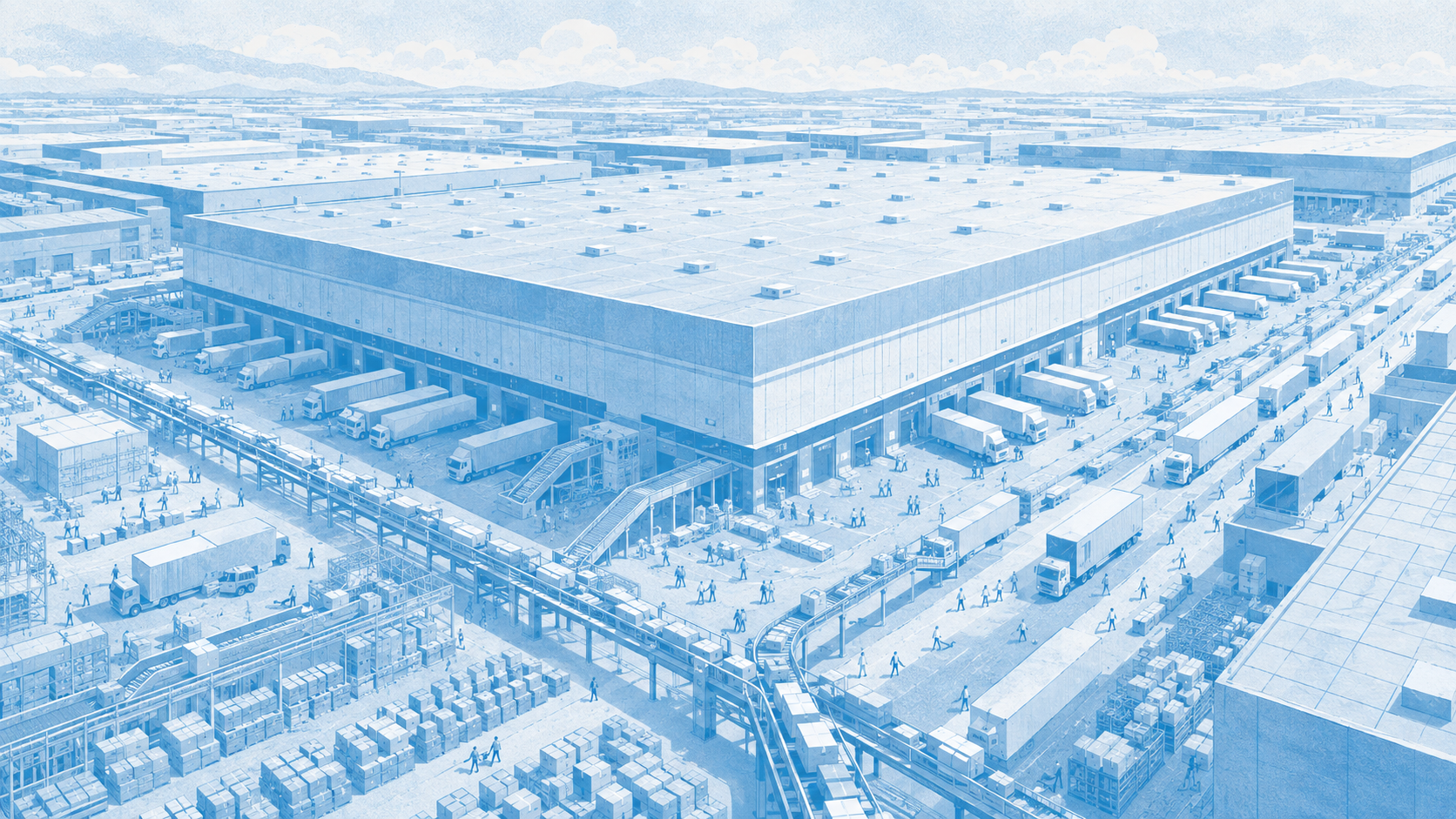
A meaningful share of the money has clearly materialized in infrastructure. Amazon says it has more than 300 logistics sites — yes, 300 — operating with its technology in Brazil and that its businesses support more than 55,000 direct and indirect jobs. AWS also requires substantial investment in equipment, networks and data centers.
The Brazilian figure, however, does not distinguish between physical assets, operating expenses, services and training programs.
Nor was the R$75 billion figure a new disclosure in Amazon’s second-quarter results. It had already been released in June and does not appear as a separate line in the company’s global financial reporting. It was folded into communications around record quarterly global sales of US$200.6 billion to reinforce Brazil’s strategic importance.
Both groups operate substantial businesses. Mercado Libre plans to open 14 fulfillment centers and create 10,000 jobs in Brazil in 2026. Amazon and Mercado Libre have increased competition, shortened delivery times and allowed small merchants to reach customers across the country.
The platforms have also reshaped payments, advertising and credit. They have lowered transaction costs and built infrastructure that no small retailer could replicate independently.
That transformation, however, differs from the impact of a new mine, an offshore oil platform or a manufacturing plant. A marketplace primarily reorganizes the distribution of goods, rather than expanding the economy’s capacity to produce them.
It also concentrates power. The platform controls search results, determines product placement, charges fees, manages logistics, processes payments and provides credit. Sellers gain access to a much larger market but become dependent on the intermediary’s rules and algorithms.
The inflation of corporate metrics does not end with investment. Mercado Libre says 5.8 million small businesses generated R$381 billion in transactions through its ecosystem in 2024, an amount it described as “comparable to 3.2% of Brazil’s GDP.”
The comparison is flawed. Gross transaction value captures the full price of the goods sold. GDP measures only the value added at each stage of the economy. They are different concepts.
Amazon, for its part, says R$65 billion of its investment contributed directly to Brazilian GDP, based on an estimate by consulting firm Keystone. An economic-impact study can estimate value added, but the announcement does not disclose the methodology.
The figures describe large companies, expanding operations and growing influence over the Brazilian economy. They do not support direct comparisons with the capex of industrial companies — or even between the platforms themselves.
The relevant question is how much of each announcement represents capex, operating expenses, credit or economic-impact estimates. Without that breakdown, the figures are better measures of ecosystem size and corporate ambition than of capital formation.
In e-commerce, what is inflated is not necessarily the investment. It is what the word has come to mean.


Leave a Reply