

The dispute between Brazil’s auto manufacturers’ association, Anfavea, and Chinese electric-vehicle maker BYD over import quotas appears, at first glance, to be a debate about tariffs. It is not.
On one side, automakers with long-established manufacturing operations in Brazil argue that the government is favoring imports of semi-knocked-down and completely knocked-down vehicle kits, a policy that primarily benefits BYD. On the other, the Chinese company says such flexibility is necessary to consolidate its manufacturing operation in Camaçari, in the northeastern state of Bahia.
Both sides have their reasons. But neither answers the more important question. What exactly does Brazil expect to buy with the tax incentives it grants?
Brazil has always been a large enough market to attract global automakers. But being a large consumer market is not the same as being an industrial leader.
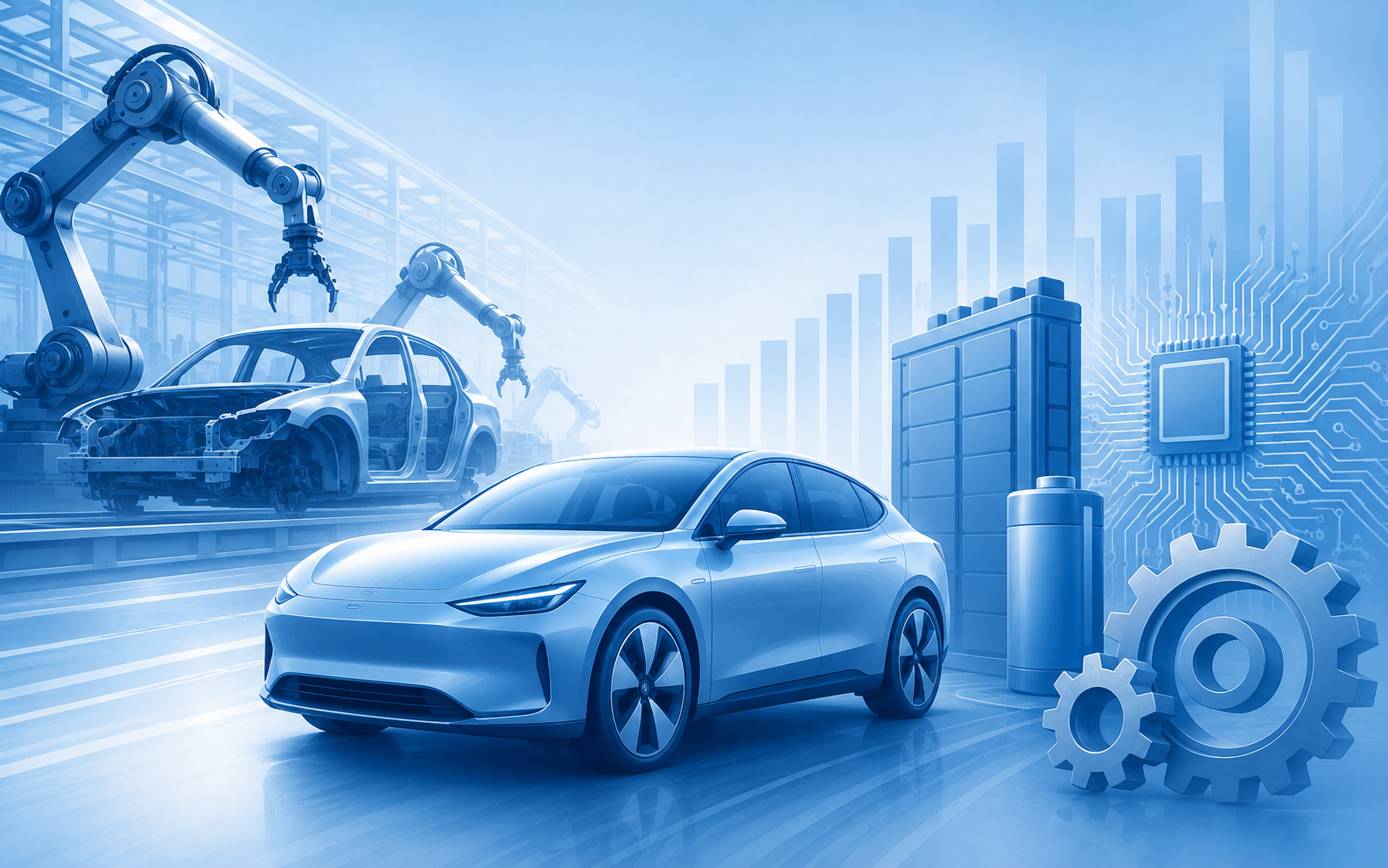
The transition to electric vehicles makes that distinction even clearer. The value of tomorrow’s automobile lies less in final assembly and increasingly in batteries, software, semiconductors, power electronics and intellectual property. Those are precisely the areas where BYD has built its competitive advantage.
The question, therefore, is not whether BYD should manufacture in Brazil. It should. The real question is whether it will bring more than assembly lines. Will Brazil also gain engineering, product development, local suppliers, research centers and technological capabilities?
China asked itself that question more than two decades ago. It opened its market, subsidized investment, but demanded industrial commitments in return. It leveraged the scale of its domestic market to develop local suppliers, train engineers, master battery technology and create companies capable of competing globally. Brazil should be asking the same question.
The country has already taken some steps in that direction. The federal government’s Mover program ties tax incentives to investments in research and development, engineering, energy efficiency and decarbonization. That is meaningful progress. But the next challenge is more ambitious. It is no longer enough to measure how much companies spend on innovation; Brazil also needs to measure how much technology actually stays in the country. Patents, global engineering centers, advanced suppliers, software development, intellectual property and the ability to export knowledge should matter as much as the amount invested.
The same scrutiny should also apply to traditional automakers. General Motors, Volkswagen, Stellantis, Toyota and Renault already operate factories, employ thousands of workers and maintain engineering activities in Brazil. General Motors has just announced an additional R$3.5 billion in investments, bringing its total commitment in the country to R$10.5 billion through 2028.
That is welcome news. But will those investments bring next-generation technologies to Brazil, or simply expand production of platforms developed elsewhere? That question should apply equally to everyone.
It would be a mistake to portray BYD as an enemy of Brazil’s auto industry. It would be an even bigger mistake to assume that every investment announcement automatically amounts to industrial policy.
A factory is not an industry. Factories assemble products, create jobs and generate tax revenue. Industries develop technology, integrate supply chains, export knowledge and build capabilities.
Balance is essential. An open market benefits consumers. Excessive protection benefits incumbents and can perpetuate inefficiency. The right approach lies somewhere in between: competition backed by meaningful industrial commitments.
The Mover program already requires investments in innovation and efficiency. But any company seeking to sell vehicles, manufacture locally or receive public incentives should be expected to answer more strategic questions. How much production will be localized? Which technologies will remain in Brazil? How many local suppliers will be developed? What engineering capabilities will stay in the country? Will Brazil gain intellectual property—or simply greater assembly capacity?
Without those answers, industrial policy risks becoming little more than a negotiation over quotas, tariffs and lobbying. Brazil has already shown, through Embraer, that it is capable of building companies that master engineering, product design and systems integration while working with global suppliers.
The automotive sector followed a different path. Brazil built a substantial manufacturing base, but never became a global center for automotive technology. Electrification offers an opportunity to move up the value chain—but that outcome is far from guaranteed.
Brazil may never create its own BYD. Nor should that necessarily be the objective. The smarter strategy may lie in competitive niches such as electric buses, flex-fuel hybrids, battery recycling, embedded software, tropicalized engineering, advanced auto parts and the integration of electrification with biofuels.
A choice now has to be made. The dispute between BYD and Anfavea should not end with a debate over import quotas. It should end with a much broader question: will Brazil remain simply one of the world’s largest automotive markets, or will it finally use the strength of that market to move up the global automotive value chain?
That challenge ultimately belongs to the state. Its role is not merely to grant incentives, but to ensure those incentives translate into technology, knowledge and lasting industrial capability.


Leave a Reply