
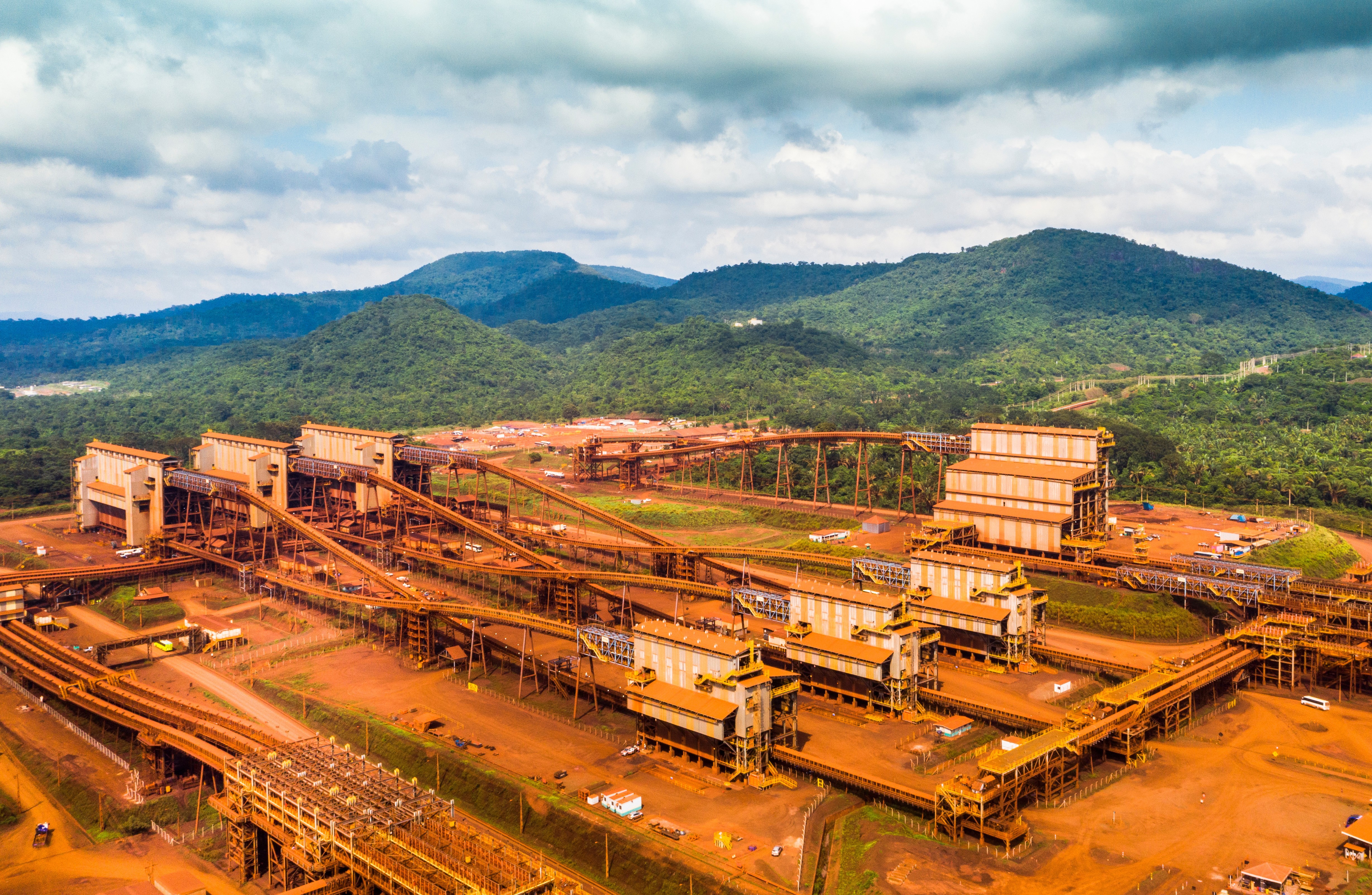
By Brazil Stock Guide – Vale (VALE3) started 2026 with attributable net income of US$1.893 billion in the first quarter, up 36% from a year earlier, as stronger realized prices, higher sales volumes and a sharp recovery in base metals helped offset cost pressure from a stronger Brazilian real. Pro forma EBITDA rose 21% year over year to US$3.895 billion, while net revenue increased 14% to US$9.258 billion.
The headline number was solid. The more important message was broader. Vale is still overwhelmingly an iron ore company, but the first quarter showed a portfolio with more than one earnings lever. Sales improved across all major businesses: iron ore volumes rose 4%, copper sales increased 11% and nickel sales advanced 15% from a year earlier. Realized prices also moved in Vale’s favor, with iron ore fines at US$95.8 per ton, copper at US$13,143 per ton and nickel at US$17,015 per ton.
Base metals shift
The clearest change came from Vale Base Metals. EBITDA in the division more than doubled to US$1.197 billion, up 116% from a year earlier. Copper EBITDA rose 74% to US$949 million, supported by higher copper and gold prices. Nickel, long a weaker point in Vale’s portfolio, posted EBITDA of US$277 million, compared with just US$41 million a year earlier, helped by lower costs, stronger by-product revenues and operational improvements at assets including Sudbury, Voisey’s Bay and Long Harbour.
That matters because base metals have often looked more like a strategic promise than a consistent earnings driver for Vale. In the first quarter, they became a real contributor. Copper benefited not only from the market price of the metal, but also from gold by-products. Nickel benefited from the same polimetallic logic, with precious metals and copper by-products helping bring down the effective cost base.
“We delivered a solid start to 2026, reflecting our disciplined execution, operational excellence and the continued development of strategic projects across our portfolio,” CEO Gustavo Pimenta said in the earnings release. He said Vale achieved production records across multiple assets and continued to pursue cost efficiency while facing persistent external pressures.
Iron ore discipline
Iron ore remained the core business and the main source of cash. The Iron Ore Solutions division generated EBITDA of US$2.906 billion, slightly above the year-earlier level. Fines EBITDA rose 5% to US$2.441 billion, supported by higher realized prices and stronger sales volumes. Pellets were weaker, with EBITDA down 11% to US$479 million, reflecting lower realized prices and the impact of a stronger Brazilian currency.
The business was solid rather than spectacular. Total iron ore sales reached 68.7 million metric tons, up 4% from the first quarter of 2025. But higher costs absorbed part of the benefit from prices and volumes. Vale’s C1 cash cost for iron ore rose 12% year over year to US$23.6 per ton, mainly because of the appreciation of the Brazilian real, inventory effects and costs related to the deconsolidation of Aliança Energia. All-in iron ore costs reached US$55.4 per ton, up 8% from a year earlier.
Cost pressure remains
The cost line is the main caution in an otherwise strong quarter. Vale said its 2026 cost trend is moving toward the upper end of its previously disclosed guidance ranges, assuming market consensus of an average BRL/USD exchange rate of 5.25 and Brent at US$90 per barrel. The company also disclosed that every BRL 0.10 move in the exchange rate has an estimated impact of about US$0.25 per ton on C1 cash costs and US$0.40 per ton on all-in costs.
There was some protection on logistics. Vale’s average maritime freight cost was US$18.1 per ton, broadly stable from the previous quarter and US$6.7 per ton below the Brazil-China C3 route. The company also said about 70% of its projected bunker oil consumption for 2026 is hedged through Brent contracts, using zero-cost collar structures that provide protection when Brent rises above US$80 per barrel.
Cash and debt
Free cash flow reached US$813 million, up 61% from the first quarter of 2025, supported by higher EBITDA and lower taxes paid. But cash generation was partly offset by a negative working-capital move, driven by seasonal profit-sharing payments, higher inventories and an increase in accounts receivable, especially after stronger copper sales late in the quarter.
Vale’s cash position also reflected shareholder returns. The company paid US$2.7 billion in dividends and interest on equity during the quarter, contributing to a US$2.4 billion reduction in cash and equivalents. Expanded net debt ended March at US$17.8 billion, up US$2.2 billion from the end of 2025, though still 2% below the level reported a year earlier. Gross debt and leases were broadly stable at US$18.8 billion, with an average debt maturity of 8.4 years and an average post-hedge cost of debt of 5.5% per year.
Projects ahead
Vale also kept its growth agenda moving. Capex totaled US$1.1 billion in the quarter, in line with its 2026 guidance of US$5.4 billion to US$5.7 billion. Growth capex fell 42% from a year earlier to US$182 million, largely because some key iron ore projects are now in advanced stages.
The most important is Serra Sul +20, which has reached 86% physical progress and remains scheduled to start up in the second half of 2026. The project is designed to add 20 million tons per year of capacity. Vale also said the S11D compact crusher project is 91% physically complete and remains on track for start-up in the second half of the year.
In base metals, Vale continued to reshape the portfolio. The company reached an agreement to form a consortium for its Thompson operations in Canada. Vale Base Metals will retain an 18.9% stake, while partners have committed up to US$200 million to support the long-term sustainability of the assets. Vale also secured an offtake agreement for nickel concentrate, preserving strategic exposure to Canadian nickel production.
ESG and repair
The quarter also had an important ESG angle. Vale removed the emergency levels of two tailings dams, Maravilhas II and Laranjeiras Norte, after approval from Brazil’s mining regulator. Since 2020, the company has removed 28 dams from emergency status, representing an 80% reduction.
Repair obligations remain part of the investment story. Vale said about 81% of the commitments under the Brumadinho comprehensive reparation agreement had been completed by the end of the first quarter. In Mariana, the Samarco reparation program continued, with R$74.7 billion disbursed by March 31, 2026.
Vale also advanced its decarbonization agenda. The company signed an agreement with Shandong Shipping Corporation to charter ethanol-powered Guaibamax vessels, expected to start operating in 2029. Vale said the ships may reduce greenhouse gas emissions by up to 90% compared with heavy fuel oil.
A broader Vale
The first quarter showed a Vale that is still heavily tied to iron ore, but less dependent on it for earnings momentum. Iron ore remains the foundation: it pays the bills, funds dividends and anchors the balance sheet. But the improvement in copper, nickel and by-products gave the company’s results a clearer diversification angle.
That is the real story of the quarter. Vale did not stop being an iron ore company. It simply showed that the rest of the portfolio can matter when prices, by-products and operating discipline move in the same direction. For investors, the question is whether this was a good quarter for base metals — or the beginning of a more credible second engine for one of Brazil’s most important blue chip companies.




Leave a Reply