
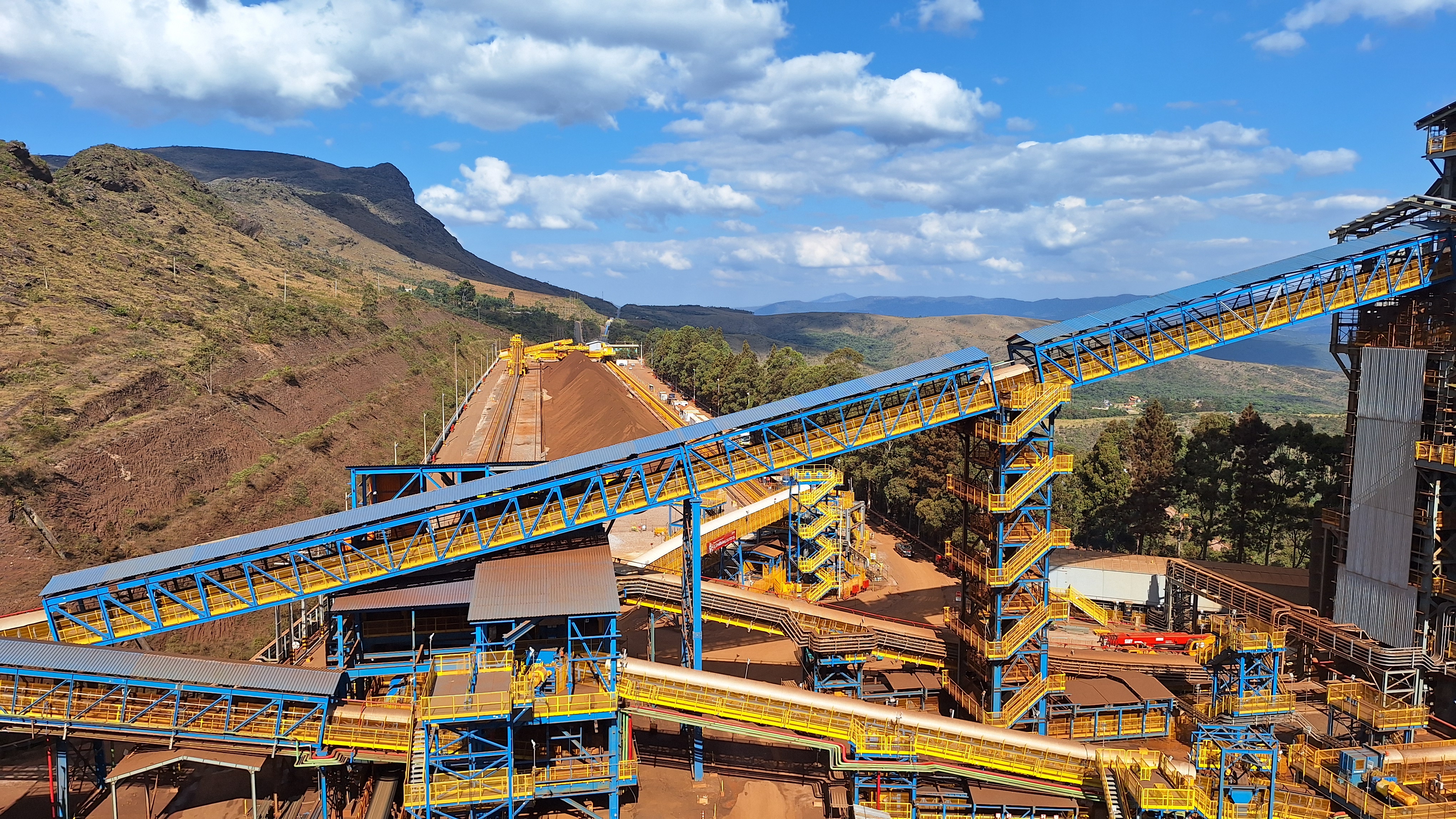
By Brazil Stock Guide – Vale (VALE3, NYSE: VALE) updated its long-term projections for iron ore, copper and nickel, signaling steadier volumes, tighter cost control and a more predictable legacy-liability path. The miner now expects ~360 Mt of iron ore in 2030, 420–500 kt of copper, and 210–250 kt of nickel, supported by annual capex between US$ 5.4 billion and US$ 5.7 billion.
Stronger guidance through 2035
Vale sees ~335 Mt of iron ore in 2025, maintaining 335–345 Mt in 2026. Copper output should rise from ~370 kt in 2025 to ~700 kt by 2035, while nickel stays in the 175–200 kt range through 2026. The company targets a lower iron-ore C1 cash cost of US$ 20–21.5/t in 2026, reinforcing its efficiency strategy.
Maintenance spending continues to dominate capex, and growth investment should remain near US$ 1.1 billion per year. Cash outflows tied to Brumadinho, Mariana and dam decharacterization are set to decline from US$ 4.2 billion in 2025 to US$ 2.6 billion in 2026, falling below US$ 1 billion annually after 2029.
New copper push in Canada
Subsidiary Vale Base Metals signed an agreement with Glencore to evaluate an integrated development of copper deposits in the Sudbury Basin. The project would use Glencore’s existing Nickel Rim South shaft and could produce 880,000 tonnes of copper over 21 years, with an estimated capital cost of US$ 1.6–2.0 billion.
The brownfield expansion reflects Sudbury’s polymetallic profile: in addition to copper, the partners expect production of nickel, cobalt, gold and PGMs. Detailed engineering, permitting and consultation are planned for 2026, with a final investment decision targeted for the first half of 2027.
The move underscores Vale’s effort to rebuild valuation multiples and rebalance its portfolio toward energy-transition metals. A successful Sudbury project would mark Vale’s most significant copper expansion in over a decade and help strengthen its position in global critical-minerals supply chains. At the same time, declining legacy-related outflows and stable iron-ore volumes may support more predictable free-cash-flow generation.




Leave a Reply