
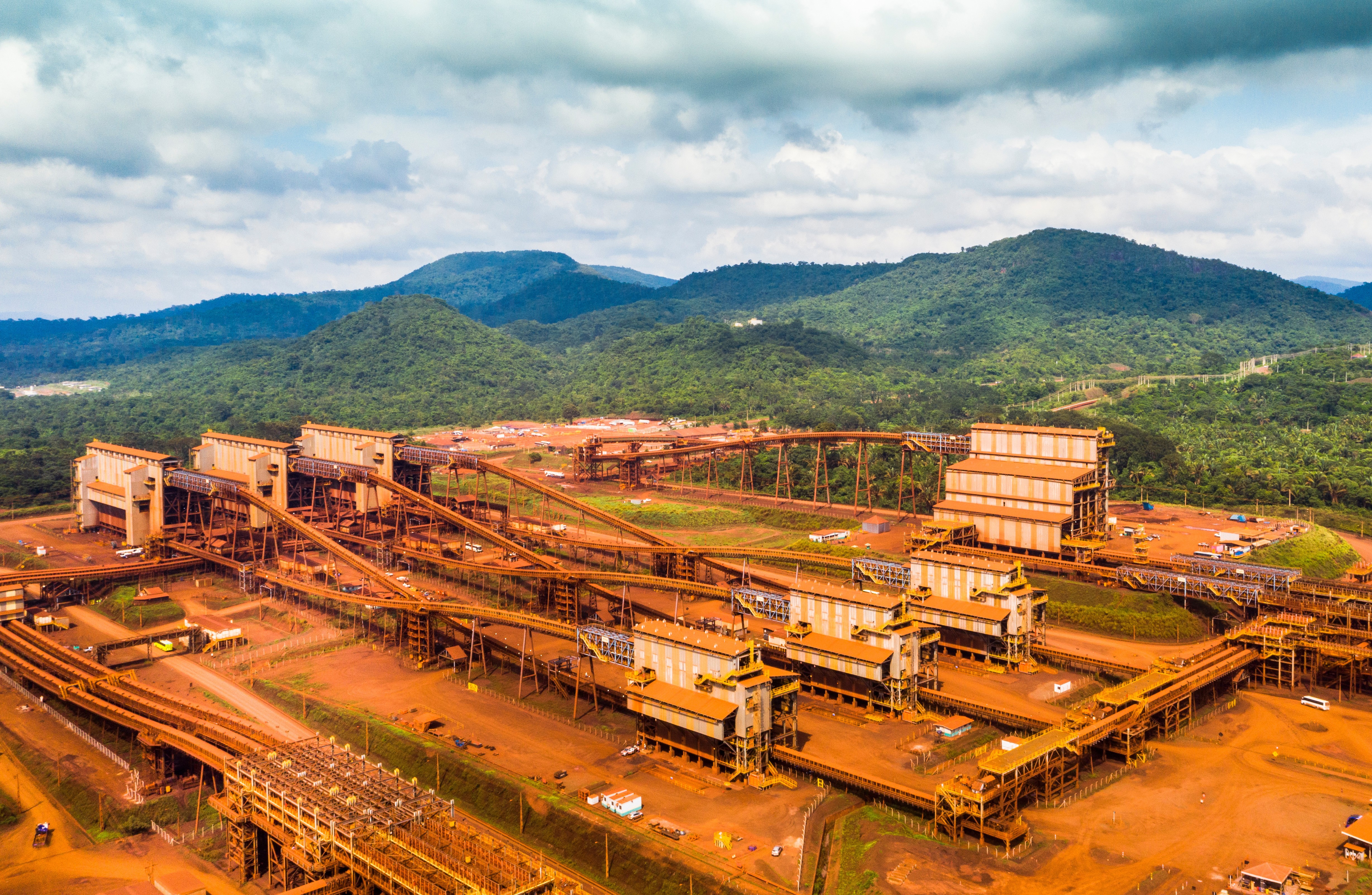
By Brazil Stock Guide — Vale (NYSE: VALE; B3: VALE3) reported its strongest second-quarter iron ore production since 2018, supported by record output at the S11D complex and additional volumes from the Capanema and VGR1 projects.
The Brazilian miner produced 84.3 million metric tons of iron ore in the second quarter of 2026, up 0.8% from a year earlier. Sales rose 3.1% to 79.7 million tons, reflecting both higher production and the sale of inventories.
The performance reinforces signs of greater operational stability at Vale’s main iron ore system, even as pellet production remained under pressure. Pellet output fell 7% from a year earlier to 7.3 million tons after the temporary suspension of operations at the company’s plants in Oman during part of the quarter. Pellet sales, however, increased 3.5% to 7.7 million tons.
Vale also posted a stronger performance in base metals, one of the main pillars of its strategy to increase exposure to commodities linked to electrification and the energy transition.
Copper production rose 6.3% to 98,400 tons, the company’s best result for a second quarter since 2017. The increase was driven by record production at Salobo, as well as higher output at Sossego and Voisey’s Bay. Copper sales climbed 9.7% to 97,600 tons.
Nickel production increased 4.2% to 42,000 tons, marking the strongest second-quarter performance since 2020. Higher production at Onça Puma and record output at Long Harbour more than offset the impact of scheduled maintenance at Sudbury’s downstream facilities. Nickel sales rose 7.2% to 44,400 tons.
Commercial conditions also improved during the quarter. Vale’s realized price for iron ore fines averaged $95 per ton, up 11.6% from the first quarter and 8.7% from a year earlier. The company’s total iron ore all-in premium reached $4.40 per ton, compared with $4.10 a year earlier, although it declined from $6.20 in the previous quarter.
The quality premium on iron ore fines improved, but the overall premium was held back by a lower contribution from the pellet business.
Vale maintained its 2026 production guidance of 325 million to 345 million tons of iron ore, 350,000 to 380,000 tons of copper and 175,000 to 200,000 tons of nickel.
The report leaves the company entering the second half with stronger production momentum across its main businesses, while continued execution at S11D, Capanema and the base metals operations will be key to sustaining output growth and meeting its full-year targets.


Leave a Reply