

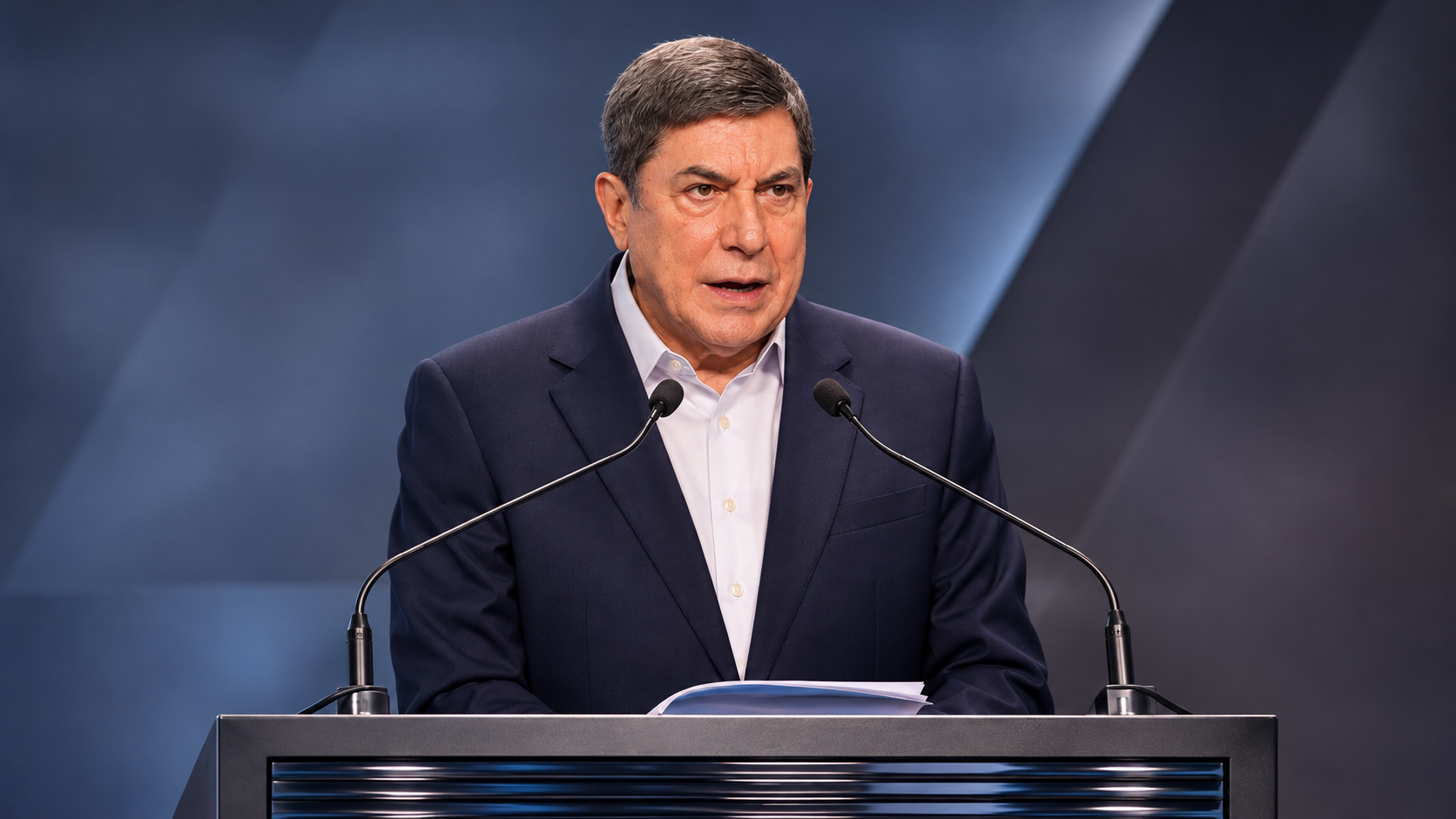
Ten days before accepting President Luiz Inácio Lula da Silva’s invitation to lead Brazil’s Finance Ministry, Luiz Carlos Trabuco Cappi published an article calling on Congress, the judiciary and the business community to share responsibility for balancing the country’s public finances. He advocated dialogue between fiscal and monetary authorities, the recovery of Brazil’s investment-grade credit rating and the preservation of social investment.
These were hardly new ideas. Over nearly three decades of articles and interviews published in O Estado de S. Paulo, a leading Brazilian newspaper where he became a regular columnist, the chairman of Bradesco has left an extensive record of his economic, political and social convictions.
Brazil Stock Guide has compiled dozens of these statements to shed light on the thinking of Brazil’s incoming finance minister. They reveal an advocate of fiscal discipline, free enterprise and structural reforms, but also a banker deeply concerned with inequality, education, environmental sustainability and the strength of democratic institutions.
His intellectual references range from Adam Smith and John Maynard Keynes to Brazilian statesman Rui Barbosa, Aristotle and Thomas Aquinas. One word runs consistently through his writings, regardless of who occupies the presidency: consensus.
Here is Trabuco, in his own words.
A — Agribusiness
“Brazilian agribusiness is ready to offer modern and sustainable solutions for production processes.”
Column published April 24, 2023.
Trabuco sees Brazilian agriculture as an example of the country’s ability to embrace technology, increase productivity and compete internationally. He identifies further opportunities in biofuels, precision agriculture and the energy transition.
B — Budget
“If the financing is deferred, society ultimately pays through taxes, debt or the loss of public services.”
Column published November 16, 2026.
Trabuco argues that the costs of budgetary decisions must be made explicit. Creating new spending commitments and granting benefits without corresponding funding sources ultimately shifts the burden onto the population.
C — Capitalism
“These ideas were complemented by the economic liberalism of Adam Smith, who identified the most effective paths to increasing society’s wealth.”
Column published July 17, 2023.
Reflecting on the legacy of the French Revolution, Trabuco links the emergence of modern capitalism to economic freedom, citizenship and the development of democratic institutions.
C — Central Bank
“Opening a dialogue between fiscal and monetary authorities would be fundamental.”
“Seeking coordinated action among the institutions of the Republic is an exercise in pragmatism aimed at finding solutions, without compromising institutional autonomy.”
Column published November 16, 2026.
Trabuco advocates dialogue between the Finance Ministry and Brazil’s central bank while preserving institutional autonomy. He acknowledges that monetary policy is the responsibility of the central bank but stresses that its decisions are influenced by broader economic expectations.
C — Confidence
“Without unity around common objectives, the scope for finding solutions becomes limited.”
Column published November 7, 2022.
Writing shortly after Lula’s election, Trabuco drew on Keynesian economic thought to discuss the importance of expectations in economic decision-making. In his view, confidence influences both productive investment and the valuation of financial assets.
C — Consensus
“In a democracy, the Chamber of Deputies and the Senate are the main forums for building consensus.”
Column published February 1, 2021.
Consensus-building is one of the most persistent themes in Trabuco’s writings. He regards political negotiation and the ability to accommodate competing interests as prerequisites for advancing economic reforms.
D — Deficit
“The government’s top priority in 2024 should be a zero deficit.”
Interview published January 16, 2024.
“Pursuing and achieving a zero deficit is the guarantee that the Brazilian government honors its commitments.”
Column published February 26, 2024.
During Lula’s third term, Trabuco explicitly advocated meeting the government’s primary budget balance target. He linked fiscal credibility to an improvement in Brazil’s sovereign credit rating, lower borrowing costs and conditions conducive to interest rate cuts.
D — Democracy
“A year later, institutions have demonstrated their strength, and democracy has proved robust enough to overcome that period of transition.”
Interview published January 16, 2024.
Reflecting on the January 8, 2023, attacks on Brazil’s democratic institutions, Trabuco highlighted the country’s institutional resilience. Across several articles and interviews, he defended the 1988 Constitution, the separation of powers and democracy as foundations of economic stability.
E — Education
“It would be extraordinary if structural reforms also extended to education.”
Column published December 6, 2021.
“For the economy, upgrading the skills of the workforce is the guarantee that growth will be sustainable.”
Column published September 26, 2022.
Education occupies a central place in Trabuco’s thinking. He considers fiscal, tax and administrative reforms insufficient unless accompanied by improvements in the quality of education. He links education to higher productivity, lower inequality and stronger democratic institutions.
E — Entrepreneurship
“Entrepreneurs embody the energy and growth potential of our nation.”
Column published October 10, 2022.
Trabuco advocates policies that encourage business creation, including training, financing and institutional support. He cites the experience of the U.S. Small Business Administration as a model for fostering entrepreneurship.
F — Financial Markets
“The market’s criticism of Brazil is somewhat exaggerated.”
Interview published January 23, 2014.
During Dilma Rousseff’s first presidential term, Trabuco challenged the prevailing pessimism among investors. Although he advocated strengthening fiscal policy, he believed some of the negative assessments of the Brazilian economy were excessive.
F — Foreign Capital
“Brazil can be a harbor for global capital.”
Interview published March 6, 2020.
Trabuco identifies the size of Brazil’s domestic market, the availability of assets and investment opportunities as favorable conditions for attracting international capital. Regulatory predictability and institutional stability are key to unlocking that potential.
G — Government Spending
“There is no fiscal discipline when the branches of government share the benefits but only one of them pays the bill.”
“Creating permanent spending commitments, expanding tax breaks or preserving privileges without showing how to finance them leads to confusion. Every concession comes at a cost.”
Column published November 16, 2026.
In one of his most recent statements before accepting the Finance Ministry appointment, Trabuco assigned part of the responsibility for fiscal stability to Congress, the judiciary and the business community.
He explicitly included congressional budget amendments in that discussion, alongside tax expenditures and the creation of new spending commitments without corresponding funding sources.
G — Green Economy
“The environmental agenda will accelerate economic growth, establishing new standards of competitiveness.”
Column published September 12, 2022.
“Environmental targets are a window of opportunity for attracting new investment.”
Column published June 19, 2023.
Trabuco views the environmental agenda as an economic opportunity. He believes Brazil’s biodiversity, relatively clean energy mix and renewable energy potential could become significant competitive advantages in the global economy.
G — Growth
“The fewer disruptions the economy experiences, the stronger and more sustained the recovery will be.”
Column published January 17, 2022.
“Growth of 2% or 3% falls short of Brazil’s economic potential. The country needs an agenda that brings together businesses, foreign capital, the government, Congress and the judiciary to restore sustainable growth.”
Interview published January 16, 2024.
Trabuco considers Brazil’s historical pace of economic expansion insufficient. He advocates structural reforms, modernization of the state and investment capable of raising the economy’s potential growth rate.
I — Inequality
“Social responsibility must become the new guiding principle of the contemporary world.”
Column published July 18, 2022.
Trabuco advocated the creation of a Social Responsibility Law that would establish poverty and inequality reduction as enduring state policy rather than the agenda of any particular administration.
The proposal would include indicators to monitor and assess government performance on social policy.
I — Inflation
“A larger increase in the Selic rate prevents transitory inflation from becoming entrenched.”
Column published March 29, 2021.
At the beginning of Brazil’s post-pandemic monetary tightening cycle, Trabuco supported preemptive action by the central bank. He believed that deteriorating inflation expectations could ultimately require even more aggressive increases in the Selic, Brazil’s benchmark interest rate.
I — Infrastructure
“Brazil is a country that needs to rebuild itself.”
Interview published February 3, 2017.
As Brazil emerged from its 2015–2016 recession, Trabuco advocated greater investment in infrastructure and the participation of private banks in financing projects to modernize the country.
I — Interest Rates
“Interest rates are the key price in the economy and must be managed with surgical precision to avoid going too far, because the effects of monetary policy are highly significant for businesses and households.”
Interview published January 16, 2024.
At the time, Trabuco believed declining inflation created room for more aggressive monetary easing. He argued that lower interest rates could stimulate lending, investment and economic growth.
I — Investment Grade
“The rating is no miracle. It reflects the work accomplished, the ability to deliver and a sense of urgency.”
Interview published January 16, 2024.
“It enables virtuous credit cycles, strengthens international investor confidence and increases capital inflows while reducing asset volatility.”
Column published November 16, 2026.
Regaining the investment-grade sovereign credit rating Brazil lost in 2015 is a recurring objective in Trabuco’s economic thinking. He regards a stronger credit rating as the natural consequence of macroeconomic stability and sustainable public finances.
K — Keynes
“Without unity around common objectives, the scope for finding solutions becomes limited.”
Column published November 7, 2022.
Trabuco draws on John Maynard Keynes’s The General Theory of Employment, Interest and Money, published in 1936, to examine the relationship between expectations, confidence and investment decisions.
The British economist is one of the intellectual influences explicitly acknowledged in Trabuco’s columns.
L — Lula
“Lula revived programs that defined his previous administrations and opened a debate on interest rates.”
Column published April 10, 2023.
Assessing the first 100 days of Lula’s third term, Trabuco highlighted the revival of social programs, the restoration of international relationships and the introduction of a new fiscal framework.
He identified ambitious fiscal targets and a gradual approach to budget consolidation as defining features of the economic proposal.
P — Pensions
“Pension reform is more important than the election.”
Interview published December 15, 2017.
“The pension system needs shock treatment.”
Interview published January 22, 2019.
“The census shows that Brazil is experiencing the final years of its demographic dividend.”
Column published July 3, 2023.
Pension reform is one of Trabuco’s longest-held economic convictions. As early as October 1998 and September 1999, he published articles advocating changes to Brazil’s pension system and examining its actuarial imbalances.
He renewed his calls for reform during the administrations of Michel Temer and Jair Bolsonaro. Even after the passage of the 2019 pension overhaul, he continued to warn about the consequences of an aging population and the need for regular adjustments to the system.
P — Pix
“The financial system will become more competitive, inclusive, integrated and innovative.”
Column published October 12, 2020.
Ahead of the launch of Pix, Brazil’s instant payment system developed by the central bank, Trabuco welcomed the innovation.
He believed the platform could expand financial inclusion and foster greater competition and innovation among financial institutions.
R — Reforms
“Resuming the reform agenda is the signal needed at this moment to reset expectations.”
Column published November 8, 2021.
Trabuco advocates a permanent structural reform agenda that transcends electoral cycles. He believes abandoning these initiatives undermines business confidence, investment and the country’s capacity for economic growth.
R — Rui Barbosa
“Rui Barbosa was among the first to champion policies aimed at reducing inequality.”
Column published March 27, 2023.
Marking the centenary of the death of Rui Barbosa, one of Brazil’s most influential jurists and statesmen, Trabuco revisited his positions on the abolition of slavery, equal rights and education.
He linked Barbosa’s legacy to contemporary debates on democracy, development and social responsibility.
S — Sanitation
“The solution requires coordination between the public sector and investors, within an environment of legal certainty.”
Column published June 5, 2023.
Trabuco advocates private-sector participation in expanding universal access to clean water and sanitation. He believes investment in the sector delivers economic, environmental and social benefits while helping reduce inequality.
S — Social Inclusion
“The greatest and most important challenge is to expand inclusion in a sustainable manner.”
Column published January 2, 2023.
“We must include everyone in the most advanced sectors of the economy.”
Column published August 14, 2023.
Trabuco regards social inclusion as a prerequisite for Brazil’s development. He advocates the economic integration of low-income communities, broader employment opportunities and access to the most productive and technologically advanced sectors of the economy.
T — Taxation
“The environment in Brazil has rarely been as favorable for tax reform as it is today.”
Column published February 13, 2023.
Trabuco supported tax reform from the outset of Lula’s third term. He advocated simplifying consumption taxes as a means of increasing productivity, improving corporate competitiveness, encouraging entrepreneurship and creating jobs.
T — Temperance
“It is sad to see that a climate of chaos has become a means of achieving objectives.”
Column published May 6, 2024.
Drawing on the teachings of Plato, Aristotle and Thomas Aquinas, Trabuco advocated moderation, prudence and responsibility in public decision-making.
He criticized the proliferation of demands for additional spending and benefits against a backdrop of limited budgetary resources.
W — Women
“Human capital is the greatest asset for development, and women account for half of it.”
Column published March 13, 2023.
Trabuco links greater female participation in the economy to productivity, economic growth and reduced inequality. He advocates equal opportunities and the removal of barriers to women’s professional advancement.
Z — Zero Deficit Without Sacrificing Social Investment
“Fiscal responsibility is no excuse for sacrificing social investment. Achieving balance requires consistency, fairness and dialogue.”
“If our national ambitions depend on sustainable public finances, everyone must share in the choices and the sacrifices.”
Column published November 16, 2026.
These statements capture two recurring elements of Trabuco’s thinking: his commitment to sustainable public finances and his concern for social inclusion.
Reconciling those objectives will be one of the defining challenges of his tenure as Brazil’s finance minister.


Leave a Reply