Brazil Stock Guide — In a rare point of convergence in Brazil’s presidential race, representatives of five campaigns — from Luiz Inácio Lula da Silva to Romeu Zema, Ronaldo Caiado, Renan Santos and Augusto Cury — on Monday outlined a broadly similar agenda for modernizing the country’s healthcare system: integrating data, reorganizing waiting lists, strengthening regional planning and making more coordinated use of private-sector capacity.
The differences lie less in the diagnosis than in how to execute the reforms. The campaigns diverge over funding, regulation, governance and the size of the state’s role — questions that will ultimately determine who pays for the modernization, how resources are allocated and how much room is given to private providers. Flávio Bolsonaro’s campaign did not send a representative to the event.
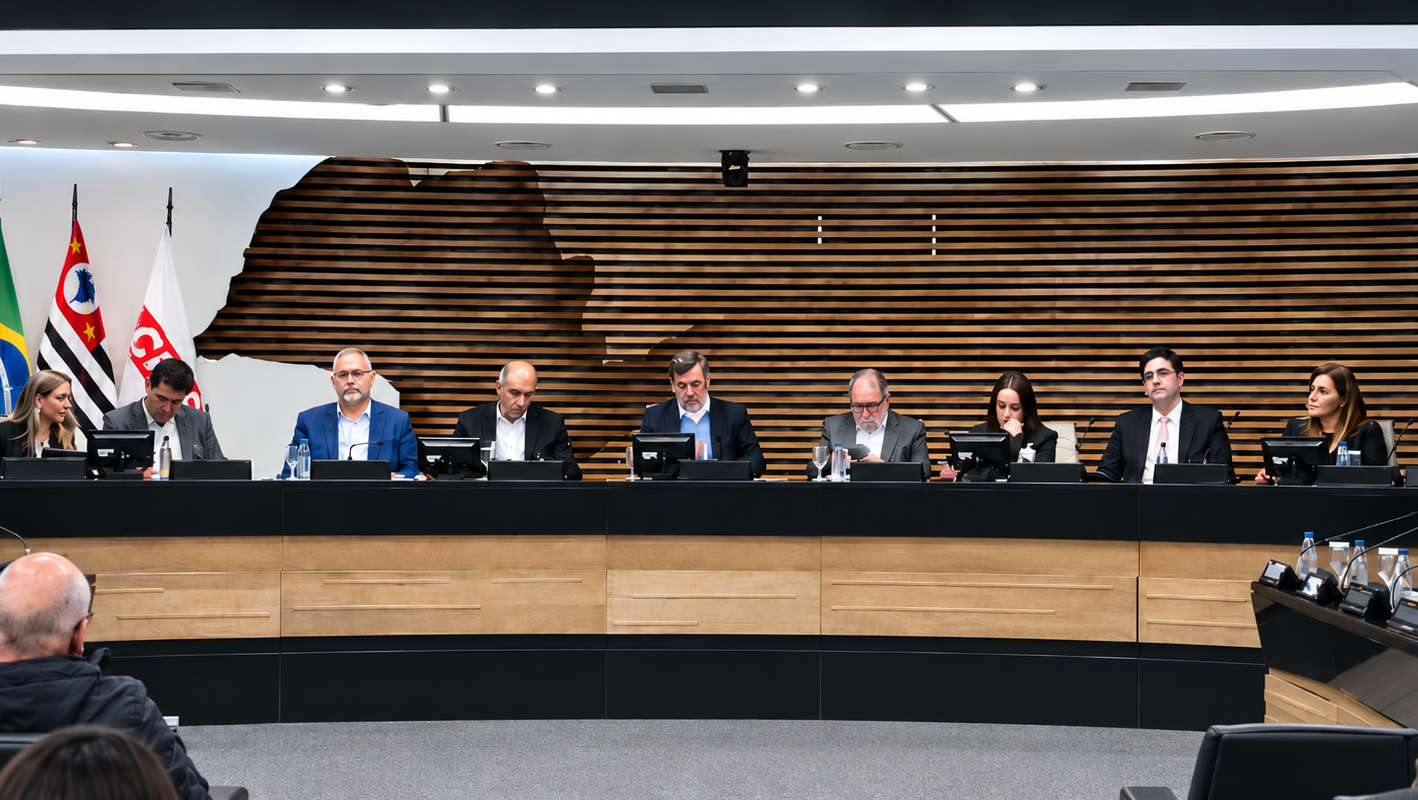
The debate took place at the São Paulo Federation of Industries, or Fiesp, during the launch of a healthcare agenda for the 2027-2030 period. Across the presentations, several areas emerged as common ground: interoperable electronic health records, stronger primary care, regional planning and better management of waiting lists. The disagreements begin with the tools each campaign would use to get there.
Federal lawmaker Adriana Ventura of the Novo party, who presented the healthcare platform of Romeu Zema’s campaign, summarized its approach as the need to “better integrate and manage what we already have.” The proposal combines interoperability between public and private healthcare systems, wider use of telemedicine, reorganization of waiting lists and the use of spare private-sector capacity to ease bottlenecks in Brazil’s public health system, known as SUS.
Zema’s campaign also wants to gradually change the financial incentives built into the system. Rather than paying providers mainly according to the volume of procedures performed, it would give greater weight to clinical outcomes, prevention of hospital readmissions and quality of care. Reducing regulatory requirements it considers unnecessary is another pillar of its efficiency agenda.
Adriano Massuda, executive secretary at Brazil’s Health Ministry and a representative of Lula’s campaign, starts from a different premise. For the incumbent’s camp, greater funding and stronger federal coordination remain necessary to reduce regional inequalities and expand access to care. When it comes to the mechanics of management, however, there is significant overlap with the other campaigns.
Massuda called for regional planning, closer monitoring of waiting lists, more organized use of private-sector capacity by SUS and a deeper digital transformation. He said the Health Ministry’s Secretariat for Information and Digital Health has about R$1.7 billion available for investments in infrastructure, data and software. Interoperability, he argued, should connect not only different layers of SUS but also the public and private systems.
For Massuda, however, digitalization is not an end in itself. The goal is for clinical information to follow patients throughout the system and be used to coordinate care, manage waiting lists and plan regional capacity — rather than simply adding more electronic platforms.
The efficiency debate led to another, less expected area of agreement: how healthcare resources are allocated. Massuda criticized the distribution of congressional earmarks and said the Health Ministry spent about R$2 billion last year treating 4,700 patients under court orders, an average cost of roughly R$400,000 per patient.
Ventura also attacked what she sees as distortions created by earmarks. Lawmakers, she said, can direct millions of reais toward medical equipment without necessarily demonstrating that there is regional demand or even adequate infrastructure to operate it. She said she had encountered equipment bought with public money that remained unopened in boxes because of poor planning. On healthcare litigation, she summed up the problem bluntly: “One stroke of a pen jumps the queue.”
In Renan Santos’s campaign, physician Felipe Roth offered a more specific proposal for tackling waiting lists. Rather than relying overwhelmingly on a first-come, first-served system, he favors public and auditable criteria based on severity, risk of deterioration, loss of functional capacity, social vulnerability and time already spent waiting — a model inspired by Brazil’s organ-transplant system.
Roth also proposes gradually updating the SUS reimbursement schedule, with conditions attached, longer and more predictable contracts and greater use of outcome-based payments. He acknowledged that such a shift would affect providers that currently benefit from volume-based payment models, but argued that more stable contracts and clearer rules for auditing and claim denials could reduce resistance to the transition.
Closer cooperation with the private sector would, however, come with a clear limit. In Roth’s view, private providers should act as contracted partners that complement SUS, not as substitutes for the state. The proposal therefore seeks to combine greater use of private capacity with preservation of the system’s public and universal character.
Henrique Mandetta, a former health minister representing Ronaldo Caiado’s campaign, placed that principle at the center of his presentation. He rejected proposals to privatize SUS and called for a more professional management structure at the Health Ministry, with less party-political interference in its administration.
Mandetta also acknowledged that there is broad agreement among the campaigns on electronic health records, regionalization, artificial intelligence and telemedicine. His assessment captured the broader tone of the meeting: there is less disagreement over what needs to be modernized than over the institutional and financial arrangements required to do it.
It was on industrial policy that Mandetta added a distinct dimension to the debate. He called for rebuilding Brazilian supply chains for medicines, medical inputs and equipment, pointing to the pandemic as evidence of the vulnerabilities created by dependence on foreign suppliers. In his view, the scale of SUS and its purchasing power could be used to strengthen domestic production capacity and diversify supply.
On regulation, Mandetta also proposed reviewing the composition of Conitec, the body responsible for assessing technologies for incorporation into SUS, while calling for greater transparency in decisions involving new technologies and pricing.
Paula Távora, representing Augusto Cury’s campaign, brought greater emphasis to issues that featured less prominently in the other presentations, including longevity, mental health and neurodiversity. Her proposal is to make primary care more capable of resolving patients’ needs at the first level, reducing unnecessary referrals and using technology to identify the specific healthcare demands of each region.
Her vision of a digital SUS combines prevention, personalization, patient participation, predictive capabilities and proximity to the individual. On waiting lists, she summed up the urgency in a phrase: “A queue is not a delay. A queue is harm.” Waiting, she argued, is not merely an administrative inefficiency: it can allow disease to worsen, make treatment more complex and increase future costs for the system.
Távora was equally explicit about cooperation between the public and private systems. “Private healthcare has to work hand in hand with SUS. We have to move forward together,” she said, arguing for greater use of diagnostic, technological and training capacity available outside the public network.
Healthcare industrial policy produced another area of convergence among ideologically distant campaigns. Massuda advocated using SUS’s purchasing power to stimulate domestic production; Mandetta called for rebuilding strategic supply chains and diversifying suppliers geographically; and Roth proposed special economic zones focused on healthcare, research, artificial intelligence and the production of medical inputs.
The instruments differ, but they reflect a broader shift in perspective: healthcare is being framed not only as social policy, but also as an economic sector, a technology agenda and an issue of national sovereignty. Medicines, equipment, data, artificial intelligence and genomics are increasingly part of the same debate over Brazil’s ability to produce and control technologies considered essential.
The Five Non-Negotiables and the search for a long-term national agenda
Part of that convergence reflected the agenda presented by healthcare industry groups at the meeting itself. At the end of the event, FESAÚDE and SindHosp launched “The Five Non-Negotiables for Health — An Agenda for Brazil’s Political Leaders, 2027-2030,” with institutional support from ARCA, a healthcare think tank.
Francisco Balestrin, president of FESAÚDE and SindHosp, describes the initiative as an attempt to establish an agenda capable of surviving changes in government and electoral cycles. “This is a long-term national agenda, above party politics and permanent, requiring commitment, cooperation and a long-term vision,” he says in the report.
The five pillars are Unique Patient Identity, Structured Data, Qualified Access, Standardized Care and Reduced Waste. The underlying argument is that Brazil’s main challenge is not necessarily to create new institutions, but to make existing structures work together more effectively.
“The next transformation of Brazilian healthcare will not be institutional. It will be systemic,” the document says. Drawing comparisons with international systems, the report argues that countries that have made progress on quality and efficiency have combined a unique patient identity, integrated data, planned access, quality standards and durable governance. “Brazil has the assets. What it lacks is the architecture to connect them.”
That architecture would include a clinical identity that follows patients throughout their lives, data that can move between providers and systems, better access planning, quality standards and mechanisms to identify waste. The idea is to coordinate existing regulatory tools and institutions more effectively rather than necessarily beginning with a sweeping institutional overhaul.
The report also attempts to put an economic figure on the problem. It estimates that structural waste in Brazilian healthcare could amount to R$240 billion to R$360 billion a year, applying an international benchmark under which 20% to 30% of healthcare spending may be associated with activities that deliver little or no value.
The document itself makes an important caveat: Brazil still lacks a nationwide, systematic and comparable measure of clinical, operational and administrative waste across SUS and the private healthcare system. Developing that metric — and identifying where resources are actually being lost — is itself part of the proposed agenda.
And waste, in this context, means more than fraud or corruption. It includes unnecessary repeat tests, low-value clinical practices, failures in care coordination, avoidable adverse events, bureaucracy and administrative inefficiencies. The aim is not simply to cut spending, but to free up resources currently used inefficiently and redirect them toward access, quality and prevention.


Leave a Reply