

By Leonardo Attuch, special for Brazil Stock Guide
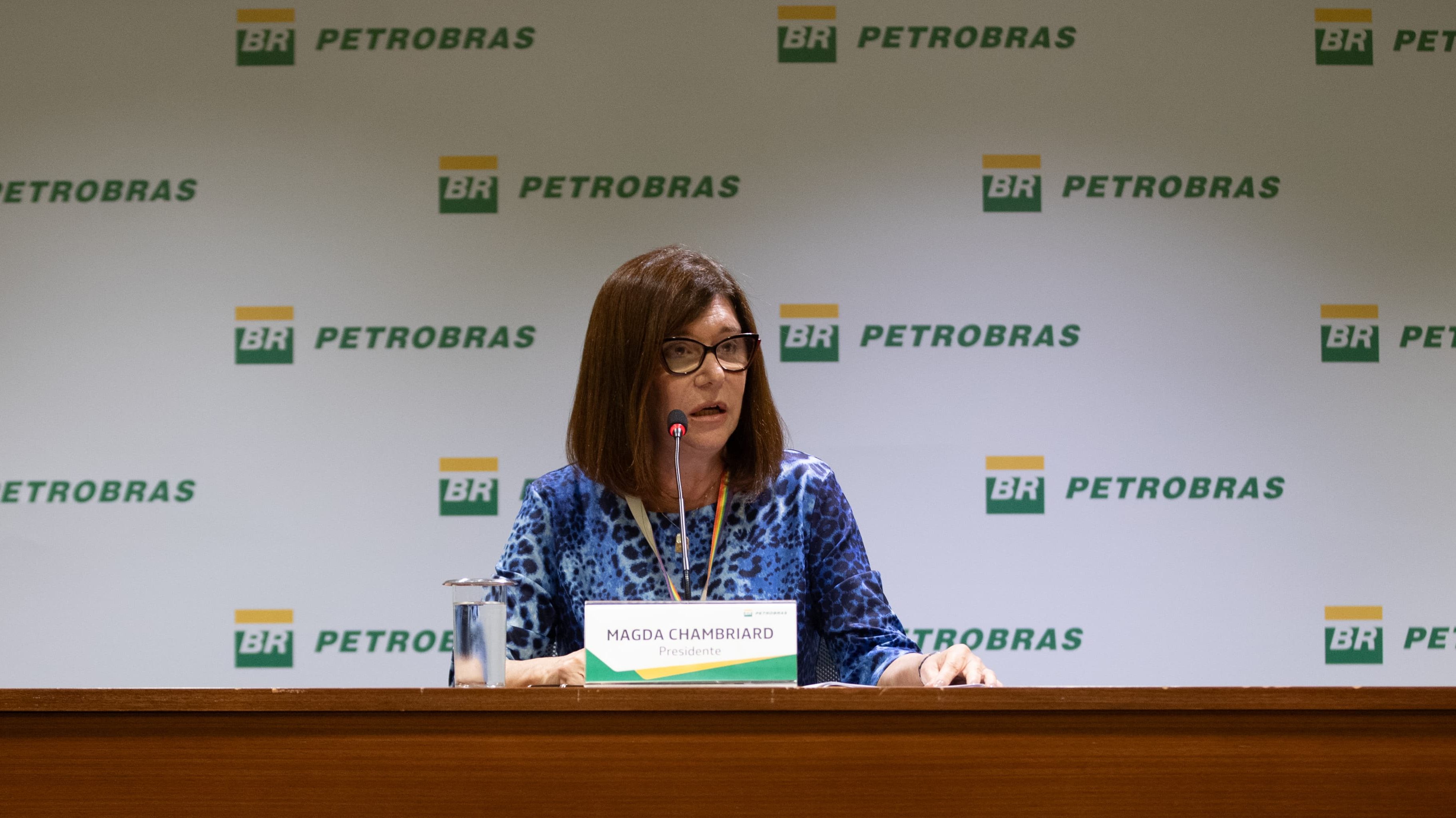
The most consequential figures in a government are not always those who attract the most attention. Some executives prefer delivering results to occupying the headlines, focusing on their responsibilities rather than seeking the spotlight. Magda Chambriard, CEO of Petrobras, embodies this management style. She was one of the successes of President Luiz Inácio Lula da Silva’s third term and could prove equally valuable in his fourth.
An engineer with extensive experience in the oil and gas industry and public administration, Chambriard has brought a low-profile, results-oriented approach to Petrobras. Her leadership also underscores the importance of women in senior positions across Brazil’s public institutions and corporations. In an industry traditionally dominated by men, her tenure highlights the contribution of female executives, both at the helm of Petrobras and across its senior management team.
Petrobras’ strong financial performance has benefited from international market conditions, particularly the impact of the war in Iran on global oil prices. But favorable external circumstances are no substitute for operational expertise, planning, financial discipline and efficiency. Petrobras has demonstrated its ability to translate these opportunities into results.
The company’s new business plan, which envisages $122 billion in investments between 2027 and 2031, is particularly relevant to Brazil’s economic outlook. Spanning Lula’s entire fourth term, the program could make Petrobras one of the main drivers of national development. Investments in oil and gas exploration and production, refining, shipbuilding, fertilizers, petrochemicals, biofuels and the energy transition could generate tens of thousands of skilled jobs.
At a time when Brazil is grappling with fiscal constraints and the impact of high interest rates on economic activity, Petrobras’ investment capacity takes on greater significance. Each offshore platform, vessel, industrial facility and infrastructure project can support extensive supply chains, create skilled jobs, encourage innovation and strengthen Brazil’s engineering capabilities.
One of the defining features of Chambriard’s management has been her ability to combine industrial expansion with financial strength. Alongside its $122 billion investment program, Petrobras projects operating cash flow of $230 billion to $250 billion and ordinary dividend payments of $55 billion to $60 billion over the five-year period.
These figures challenge a longstanding assumption in Brazil’s economic debate: that a state-controlled company must choose between supporting national development and delivering returns to shareholders. A well-managed company can do both. It can invest, create jobs, develop technology and strengthen national sovereignty while generating consistent financial returns.
This becomes particularly relevant in light of Petrobras’ experience during Operation Car Wash, the sweeping anti-corruption investigation known in Brazil as Lava Jato. The governance crisis, suspension of investments, disruption of supply chains and erosion of domestic engineering capabilities put at risk assets and expertise built over decades. The necessary fight against corruption should never have come at the expense of the country’s productive capacity.
The rebuilding of Petrobras therefore goes beyond the interests of a single company or administration. It concerns Brazil’s ability to pursue an independent development strategy, translate its natural resources into economic prosperity and strengthen its position in the global economy.
Chambriard now faces the challenge of turning the business plan into reality. If the investments are executed as planned, Petrobras could play a significant role in accelerating Brazil’s economic growth over the next four years.
The central lesson of her tenure is that Brazil need not choose between a strong Petrobras and a profitable one, between national development and financial discipline, or between energy sovereignty and shareholder returns. These objectives can complement one another when supported by effective management and strategic planning.
Through her understated leadership, Magda Chambriard demonstrates that one of the most effective ways to deliver public policy is through results. For Brazil, few things illustrate that principle better than a major domestic company investing, growing and building for the future.
Leonardo Attuch is a Brazilian journalist and founder of Brasil 247.
This is an opinion article. The views expressed are those of the author and do not necessarily reflect the editorial position of Brazil Stock Guide.


Leave a Reply