
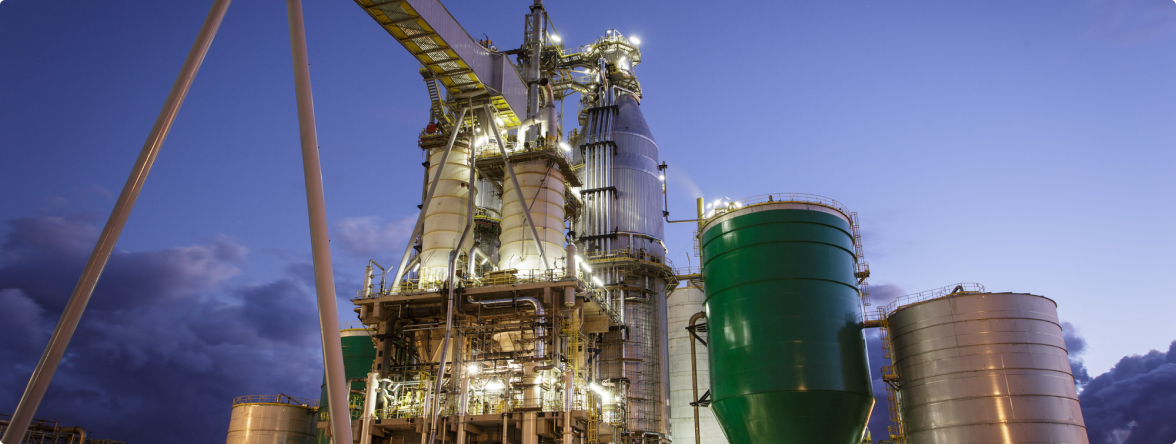
By Brazil Stock Guide – At Klabin Day 2025, Klabin (B3: KLBN11) formally reshaped its equity story from a growth-driven narrative to a cash-yield and balance-sheet discipline thesis, announcing R$1.1 billion in interim dividends and a 1% share bonus via an R$800 million capital increase. The structure was deliberately designed to lock in shareholders’ economic rights under Brazil’s current tax regime, ahead of the upcoming taxation of dividends, while preserving the company’s accelerated deleveraging trajectory.
The dividends were declared based on 2025 retained earnings and will be paid throughout 2026 in four equal quarterly installments of R$0.18 per share or R$0.91 per unit. The record date is December 15, 2025, with shares trading ex-dividends from December 16. The 1% share bonus will be completed still in 2025, with shares trading ex-rights from December 18.
According to the new CFO Gabriela Woge, the engineering of the distribution explicitly takes advantage of the legal framework created by Lei 15.270, which paves the way for future dividend taxation. In practical terms, the company is crystallizing the shareholder’s right under the old regime, even though cash will be disbursed in 2026 — a clear case of regulatory timing as a capital-allocation tool.
Dividends as Strategy
CEO Cristiano Teixeira made the strategic shift explicit. “Dividends are no longer a residual variable. They are now a permanent component of the business model,” he said. The statement marks the company’s transition from a pure expansion story to a hybrid equity proposition anchored in recurring income, industrial scale and contract-backed cash flows.
That inflection follows a more than R$25 billion investment cycle, spanning the Puma 27 and Puma 28 machines, aggressive growth in corrugated packaging, the strategic acquisition of pine-based forestry assets from Arauco, and the modernization of critical sites such as Monte Alegre, where a new recovery boiler adds over 40 years of operational life.
Deleveraging Without Payout Cuts
Despite the heavy emphasis on shareholder distributions, management reiterated that deleveraging remains the company’s top financial priority. The difference, according to Teixeira, is that debt reduction will come from operating cash generation, structurally lower capex and strict cost discipline, not from dividend suppression.
Capital spending guidance reflects that shift. After an expected R$3.3 billion in capex in 2025, investments are projected to fall toward the R$2 billion range in subsequent years, almost entirely focused on maintenance and forestry, with no major short-term capacity expansions.
At the same time, cost control remains a defining pillar. Between 2023 and 2026, while cumulative inflation in Brazil approaches 14%, the company expects to keep its cash cost per ton broadly flat, with a further real decline projected for 2026, supported by ramp-up gains and fixed-cost dilution.
Tax Shield and Capital Allocation
By advancing the legal declaration of dividends ahead of the tax transition, Klabin effectively transforms the new law into an active capital-allocation instrument. The shareholder’s economic right is secured under the current regime, while the company preserves financial flexibility by spreading cash payments through 2026.
In practice, the move combines tax protection, dividend predictability and balance-sheet discipline in a single structure — a strategy still rarely applied with such clarity among Brazilian corporates.
Forest Assets and Valuation Gap
Another core pillar of the income thesis lies in forestry. Klabin controls one of the world’s largest bases of long-fiber pine plantations, concentrated in Paraná and Santa Catarina, among the most productive regions globally for this type of fiber. Management reiterated that the company’s current market capitalization does not fully reflect the economic value of its productive land base.
Selective sales of non-core land continue to act as a cash optimization lever. In 2025 alone, these transactions contributed roughly R$70 per ton to the cash-cost structure, with 20% to 40% value uplift over original purchase prices, without compromising the strategic forestry footprint.



Leave a Reply