
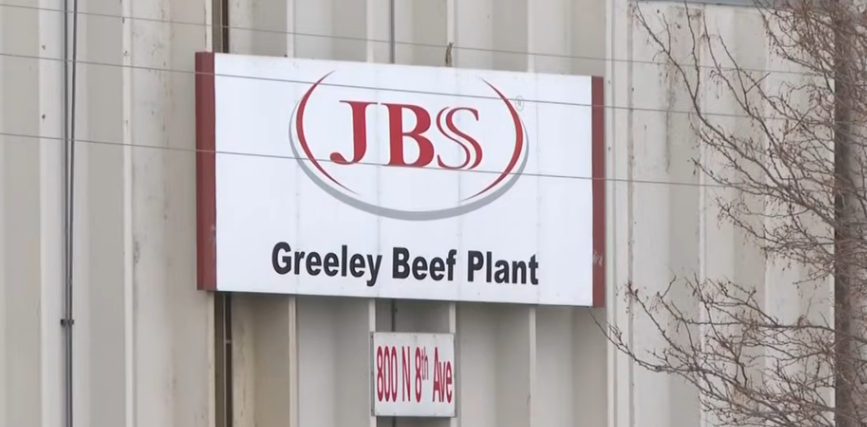
By Brazil Stock Guide – JBS (NYSE: JBS; B3: JBSS32) posted a net loss of R$485.5 million in the second quarter of 2026, reversing a R$3.37 billion profit a year earlier, as margins narrowed across most of its businesses and financial expenses increased.
The loss attributable to controlling shareholders was R$515.5 million, compared with a R$2.99 billion profit in the second quarter of 2025. Earnings per share swung to a loss of R$0.48 from a profit of R$2.70.
Net revenue rose 1.4% to R$120.65 billion, but the increase in sales did not translate into stronger profitability. Adjusted EBITDA fell 27.4% to R$7.22 billion, while the margin narrowed to 6% from 8.4%.
Gross profit dropped 18.6% to R$13.06 billion as cost of goods sold increased 4.5%, more than three times the pace of revenue growth. The gross margin consequently fell to 10.8% from 13.5%.
Operating profit was cut by more than half, declining to R$3.01 billion from R$6.26 billion.
The results show that JBS’s diversification across geographies and proteins helped support revenue but did not shield earnings. An improvement in the loss-making North American beef business was not enough to offset weaker margins at Seara, Pilgrim’s Pride, the U.S. pork operations and Australia.
Sales to international markets rose 11.5% to R$33.69 billion, while domestic-market revenue declined 2% to R$86.95 billion.
U.S. beef improves but remains in the red
The North American beef business narrowed its adjusted EBITDA loss to R$395.2 million from R$1.32 billion a year earlier. The margin improved to negative 1% from negative 3.4%, while revenue increased 1.7% to R$39.22 billion.
The roughly R$925 million improvement in EBITDA was the main offset to weaker results elsewhere. Still, the business remained in the red during a quarter that typically benefits from seasonally stronger U.S. beef demand.
In Brazil, revenue rose 14.1% to R$23.14 billion, while adjusted EBITDA increased 5% to R$1.36 billion. The margin nevertheless narrowed to 5.9% from 6.4%, indicating that the stronger top line came with additional cost pressure.
Seara’s revenue increased 5.3% to R$12.93 billion, but adjusted EBITDA fell 13.5% to R$1.92 billion. Its margin declined to 14.9% from 18.1%.
Pilgrim’s Pride recorded one of the steepest deteriorations. Revenue fell 13.4% to R$23.34 billion, while adjusted EBITDA dropped 45.2% to R$2.54 billion. The margin narrowed to 10.9% from 17.2%.
Revenue from the U.S. pork business declined 10% to R$10.50 billion, while adjusted EBITDA fell 59% to R$589.2 million. Its margin dropped to 5.6% from 12.3%.
In Australia, revenue rose 15.9% to R$12.95 billion, but adjusted EBITDA declined 29.2% to R$1.16 billion. The margin narrowed to 9% from 14.7%.
JBS said escalating geopolitical tensions in the Middle East increased the cost of packaging, transportation and ocean freight, while also requiring the use of alternative shipping routes. The company did not quantify the impact on quarterly earnings.
Financial expenses add to the pressure
The operating weakness was compounded by a net financial loss of R$3.51 billion, up 64.6% from R$2.13 billion a year earlier.
Interest expenses increased to R$2.67 billion from R$2.14 billion. JBS also recorded a R$542.1 million loss from fair-value adjustments on derivatives, compared with a R$60.3 million loss in the second quarter of 2025.
Taxes, levies, fees and other financial items totaled R$983.9 million, more than three times the R$322.7 million recorded a year earlier.
During the first half, JBS recognized R$888.3 million in expenses related to the early redemption of agribusiness receivables certificates and bonds originally due between 2027 and 2037.
The amount included R$691.6 million in premiums paid to repurchase senior notes, R$189.3 million from the write-off of previously capitalized issuance costs and R$7.4 million in tender-related expenses.
The quarter was also affected by a R$624.1 million equity-method loss, compared with a R$44.3 million gain a year earlier. A R$635.6 million income-tax benefit, mostly related to deferred taxes, partially offset the pressure on the bottom line.
Adjusted EBITDA excluded several items, including R$670 million in antitrust settlement expenses, R$121.9 million in costs related to U.S. plant closures, R$87.5 million in restructuring charges and R$48.5 million associated with special tax settlement programs.
Cash declines after dividends and investments
JBS ended June with gross debt of R$117.25 billion, up 1% from December. Cash and cash equivalents fell 28.5% over the same period, to R$17.96 billion from R$25.12 billion.
Gross debt minus cash and cash equivalents increased to R$99.30 billion from R$90.93 billion over the six-month period.
JBS generated R$3.91 billion in operating cash flow before interest during the first half. After R$4.17 billion in interest payments and R$408.7 million in interest received, operating cash generation net of interest totaled just R$152.1 million.
Capital expenditures totaled R$6.07 billion, while dividend payments consumed another R$5.25 billion. JBS ended June with R$17.4 billion in committed and undrawn credit facilities in Brazil and the United States.
The debt maturity profile remains long-dated. Of the R$110.34 billion classified as long-term borrowings, R$97.98 billion is due after 2031. The company said it remained in compliance with all financial covenants.
For the first half as a whole, revenue rose just 0.5% to R$234.24 billion, while adjusted EBITDA fell 30.2% to R$13.17 billion. Net income plunged 88% to R$784.5 million from R$6.62 billion a year earlier.


Leave a Reply