
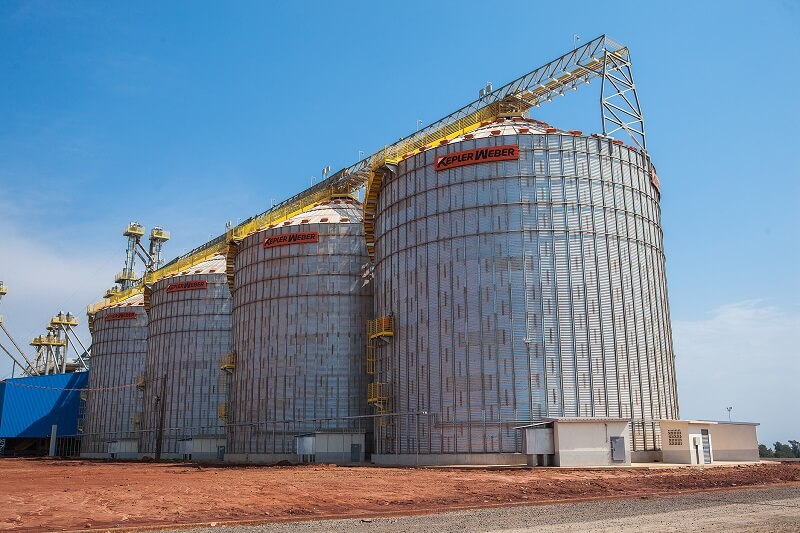
By Brazil Stock Guide – A U.S.-based agribusiness equipment group is moving to acquire Brazil’s Kepler Weber in a deal that could reshape the global market for grain-storage infrastructure and accelerate consolidation in South America’s farm economy.
Kepler Weber (KEPL3), a century-old manufacturer of silos and post-harvest systems headquartered in southern Brazil, agreed to a merger-of-shares transaction with Grain & Protein Technologies (GPT), owner of the GSI brand. GPT has offered R$ 11 per share in cash plus a potential R$ 1 per share contingent payment, valuing the Brazilian company at a roughly 48% premium to its recent average trading price.
The transaction, if approved by shareholders and cleared by regulators, would lead to Kepler Weber’s delisting from São Paulo’s B3 exchange.
A Strategic Push Into South America
Founded in 1972 in Illinois, GPT has grown into what it describes as the world’s largest manufacturer of steel grain-storage bins and related equipment, generating about $1 billion in annual revenue. Backed by private-equity firm American Industrial Partners (AIP), GPT designs and manufactures equipment used in grain, seed, poultry and swine production across multiple continents.
The acquisition would deepen GPT’s footprint in South America, where demand for storage and logistics infrastructure has expanded alongside record soybean and corn harvests in recent years. Brazil is the world’s largest soybean exporter and a leading corn supplier, but still faces structural deficits in on-farm and commercial storage capacity.
Kepler Weber, founded in 1925 in Panambi, Rio Grande do Sul, operates manufacturing facilities in Brazil and sells to more than 50 countries. The company became a public listing in 1980 and has long been seen as a bellwether for capital spending in the farm sector.
Deal Structure With Safeguards
Under the proposed structure, Kepler Weber shareholders can elect between two alternatives. The first provides R$ 11 in cash at closing plus a R$ 1 retained portion, payable in tranches over up to 10 years and subject to offsets tied to specific legal contingencies. The second option offers R$ 8 in cash, 0.4299 equity quotas in GPT’s Brazilian unit and the same retained R$ 1 component.
Shareholders choosing the equity alternative would have a 60-day right to reverse their decision and sell the quotas back at a price economically equivalent to the all-cash option.
The valuation is based on financial statements as of Sept. 30, 2025, under a “locked-box” mechanism, meaning certain cash outflows before closing could reduce the final cash consideration. Part of the payment will be adjusted for Brazil’s benchmark CDI interest rate for a defined period after signing, a provision intended to compensate investors for deal timing.
Kepler Weber’s board requested additional confirmation of financing before convening the shareholder meeting, including a funding letter from the financial agent and a formal indication of capital support from AIP. Those documents are not formal closing conditions but highlight the board’s effort to secure funding visibility ahead of a vote.
A Sector at a Crossroads
The timing of the transaction reflects shifting dynamics in the farm economy. After a boom in 2022 driven by high commodity prices, investment in storage and handling equipment has moderated amid tighter credit conditions and lower grain margins. Kepler Weber’s revenue fell in 2025 compared with earlier peaks, although it remained above historical averages.
For GPT and its backers, the move suggests a longer-term bet: that South America’s export role will continue to expand and that producers will eventually need more sophisticated and reliable storage systems to manage scale and volatility.
The proposed deal marks the latest in a series of cross-border acquisitions targeting agricultural infrastructure, a segment increasingly viewed as strategic as global food supply chains adapt to climate pressure, trade realignments and geopolitical risk.
If completed, the combination would pair a U.S.-based global platform with a Brazilian manufacturer embedded in the heart of the farm belt—potentially creating one of the largest integrated players in grain-storage equipment worldwide.


Leave a Reply