
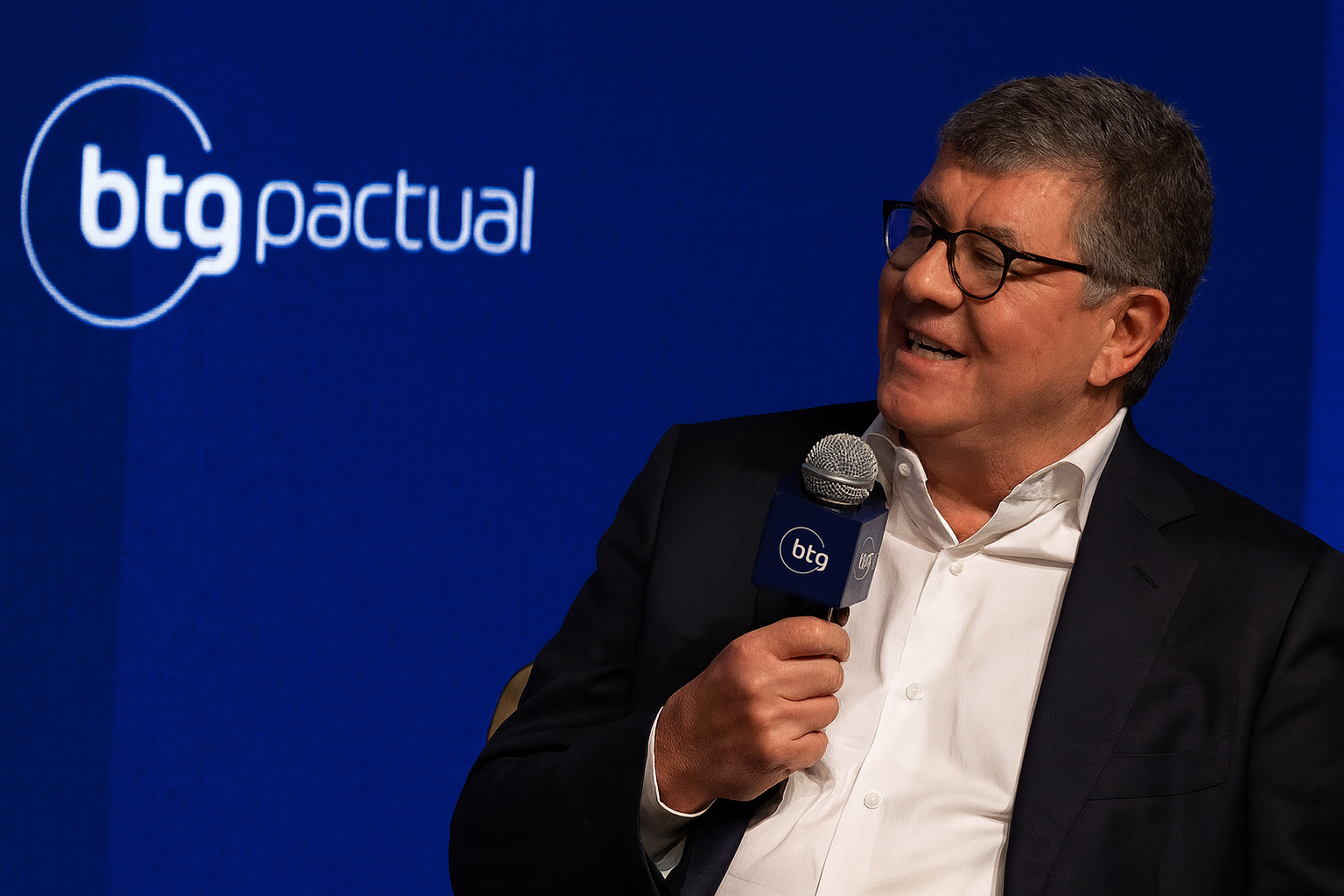
By Brazil Stock Guide – Rubens Ometto is trying to draw a line between a debt problem and an extinction story. In an interview with Estadão, the founder and chairman of Cosan S.A. (CSAN3) said the Brazilian holding company “will not disappear, absolutely,” pushing back after CEO Marcelo Martins said it was “quite reasonable” to say Cosan could cease to exist in three to five years. Ometto said the remark had been misinterpreted and that the group would remain controlled by the family, with what he described as an owner-led culture, but in a leaner and less leveraged form.
The message matters because Cosan has become one of Brazil’s most visible examples of what happens when a long-term infrastructure and energy investment story collides with high interest rates. The holding, which controls or influences assets such as Raízen S.A. (RAIZ4), Rumo S.A. (RAIL3), Compass, Moove and Radar, needed a R$10 billion capital injection from BTG Pactual, Perfin Investimentos and the Ometto family after leverage at the parent company came under pressure. Ometto’s new target is blunt: eliminate holding-level debt by the end of this year.
Vale’s shadow
The reset also carries the shadow of Vale. Ometto sought to turn Cosan’s investment in the mining giant into a broader strategic move, but those plans were frustrated — leaving the group with debt pressure, limited influence and a painful lesson on the cost of ambition.
Debt before growth
The founder’s argument is that Cosan’s assets are not broken. The capital structure is. Ometto told Estadão that Brazil’s interest-rate environment made highly indebted holding companies difficult to sustain, because operating returns struggle to compete with the cost of capital. The answer, he said, is simplification: a debt-free holding that receives dividends from operating companies and keeps control of key assets.
That is a more defensive version of Cosan than the market had become used to. For years, the group sold itself as a builder of platforms across logistics, energy, gas, lubricants and land management. Now the pitch is discipline. Ometto said the company may use dividends, partnerships or partial asset sales to reduce debt, but any move would be designed to preserve control. Rumo, the rail logistics company seen as one of the group’s crown jewels, has attracted interest, he said, while stressing that any transaction, if it happens, would keep Cosan in command.
Raízen’s hard lesson
The most important correction is at Raízen. Ometto defended the sugar, ethanol and fuel-distribution company as profitable and strategically relevant, pointing to more than 20% market share, about 7,500 service stations in Brazil and 850 in Argentina under the Shell brand. He also highlighted Raízen’s scale in sugarcane processing, saying it is far ahead of the second-largest producer.
But he acknowledged that Cosan “overdid it” on investments. The group spent about US$1.5 billion to buy Shell’s Argentina operation, another US$1.5 billion on Biosev and a similar amount on second-generation ethanol. Total investments reached around US$6 billion, according to Ometto. Those moves helped build an advanced renewable-energy platform, but they also increased leverage at precisely the wrong moment in Brazil’s rate cycle.
That admission is important. Cosan is not abandoning the energy-transition thesis, but it is narrowing the way it executes it. Ometto said Raízen will continue investing in second-generation ethanol, biogas and hydrogen, but also confirmed a push to simplify the portfolio, reduce less strategic operations and focus on stronger clusters. The company is also exiting electricity trading, he said.
Owner culture, tighter leash
Ometto said he does not plan to leave the boards while he has health and energy, and described a succession plan in which professional executives remain in place while his descendants are prepared to become better shareholders and board members. The phrase is revealing: Cosan wants to remain a professionalized owner-led company, not a financial holding in liquidation.
Still, the old model has clearly changed. After the rescue capital from BTG, Perfin and the family, Cosan remains centered on Ometto, but under tighter financial scrutiny. The company can still own scarce assets in logistics, gas, lubricants and renewable fuels. What it no longer has is the same freedom to fund large strategic bets with debt and wait for the cycle to turn.
The line from Ometto that best captures the reset was not about finance, but posture. He said Cosan needs to “come down from its high horse” and do simpler things with first-class assets and entrepreneurial people. For investors, the question is whether that is a temporary crouch before another jump — or the beginning of a permanently more cautious Cosan.



Leave a Reply